← The Global Intelligence Brief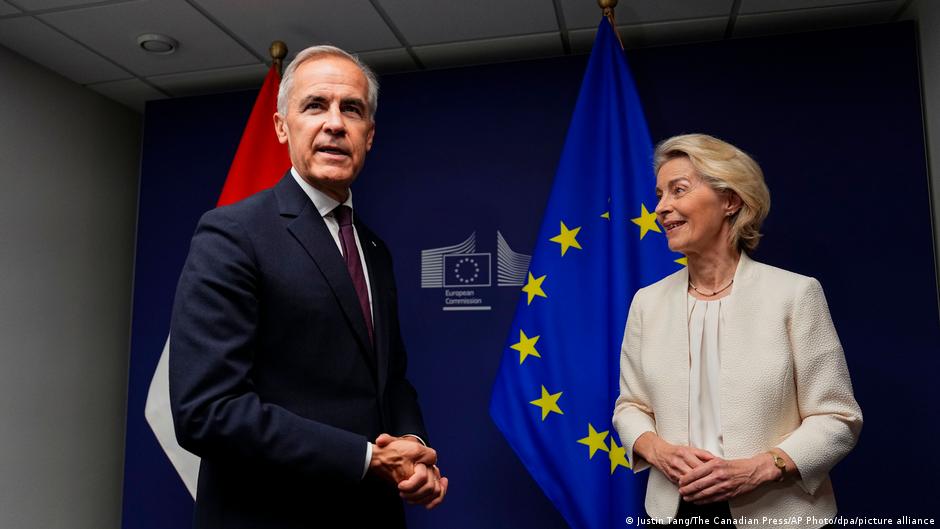

 2 sources
Morning Edition · Thursday, October 29, 2026Published at 1:12 AM EDT · New York
EU governments block an "associate membership" offer to Canada before the Montreal summit
Germany led the objections to Ursula von der Leyen's proposal, and the summit statement will offer Canada "ever closer association" instead.
The European Union (EU) has withdrawn its offer to begin talks on making Canada an "associate member" after member states disagreed just before an EU-Canada summit, The Guardian reported. A weaker statement to be issued at the end of the Montreal summit will instead offer "ever closer association."
European Commission President Ursula von der Leyen had wanted to give Canada a special status within the bloc, but Germany and other member states objected, Deutsche Welle reported. Germany pushed hardest to remove the label from the draft, while France, Italy and Belgium were also skeptical, according to Il Foglio. The paper reported that at least six other governments joined the objections, which focused on giving the relationship a name before deciding what it would mean.
Canada did not ask for membership. Prime Minister Mark Carney has said he wants a "unique alliance" with the EU, and the summit will focus on his proposal, called the Alliance for the Future, Il Foglio reported. Ottawa's interest is to reduce its dependence on the US market and on US security guarantees. Berlin and Paris are protecting the treaty structure that gives them control over the EU's membership decisions.
Part of a tracked trend
Middle Powers Build Security Blocs Outside Washington
States that once relied on American guarantees keep forming their own mutual defense arrangements, redirecting arms procurement away from Western suppliers and creating overlapping commitments that make regional crises harder to contain.
Veracity: Corroborated
85/100- If true, who benefits
Berlin and Paris keep control over who gets a formal status in the EU, and Ottawa still gets closer trade and defense ties through Carney's own proposal without accepting a label it never asked for.
- The nuance
Il Foglio and Investment Executive report that the objecting governments opposed the "associate membership" label, not closer ties with Canada. Presenting the change as a rejection of Canada would overstate the dispute, which concerns what the EU should call the relationship.
An open-source-intelligence read of how likely this story is true with its real nuance, not a judgment of any outlet. It assesses the claim, weighing independent and adversarial reporting. How we label confidence.
What this means
This episode shows the limits of alignment among Western middle powers. Canada wants trade and security options that do not run through Washington. The European Commission wants to show that the EU can attract partners. Large member states will not create a new legal category that would weaken their control over enlargement and set a precedent for the United Kingdom, Norway or Ukraine. For businesses, practical access is what counts: procurement, defense-industrial cooperation and regulatory recognition. A new label would add little. The consensus reading treats the outcome as a setback for EU-Canada ties. The more likely result is cooperation in specific sectors without institutional change. The EU-Japan Economic Partnership Agreement of 2019 is the precedent: trade grew without any political integration. The desk's read is that within months the summit will produce concrete agreements on defense procurement and critical minerals rather than a membership track. A Commission push to revive the associate-membership concept in the next EU treaty discussion would prove that wrong.
Synthesized from: Deutsche Welle · The Guardian
Townsquare
Start a discussion in Townsquare.
More from this edition
- Fed holds rates at 3.75% to 4% while two officials vote to raise them
- US tells Middle East allies to prepare for several days of strikes on Iran after the midterm elections
- Alphabet falls about 9% after hours as AI search features slow its ad growth
- Flávio Bolsonaro claims election fraud from Miami after losing Brazil's runoff to Lula
- Saudi, Pakistani and Turkish security chiefs go to Tehran to negotiate a regional security framework
- Bitcoin falls below $80,000 as a technology sell-off and the Fed hold trigger $356 million in liquidations
- World Bank expects commodity prices to rise 23% this year as the Middle East war disrupts energy and shipping
Comments
0No comments yet.