← The Global Intelligence Brief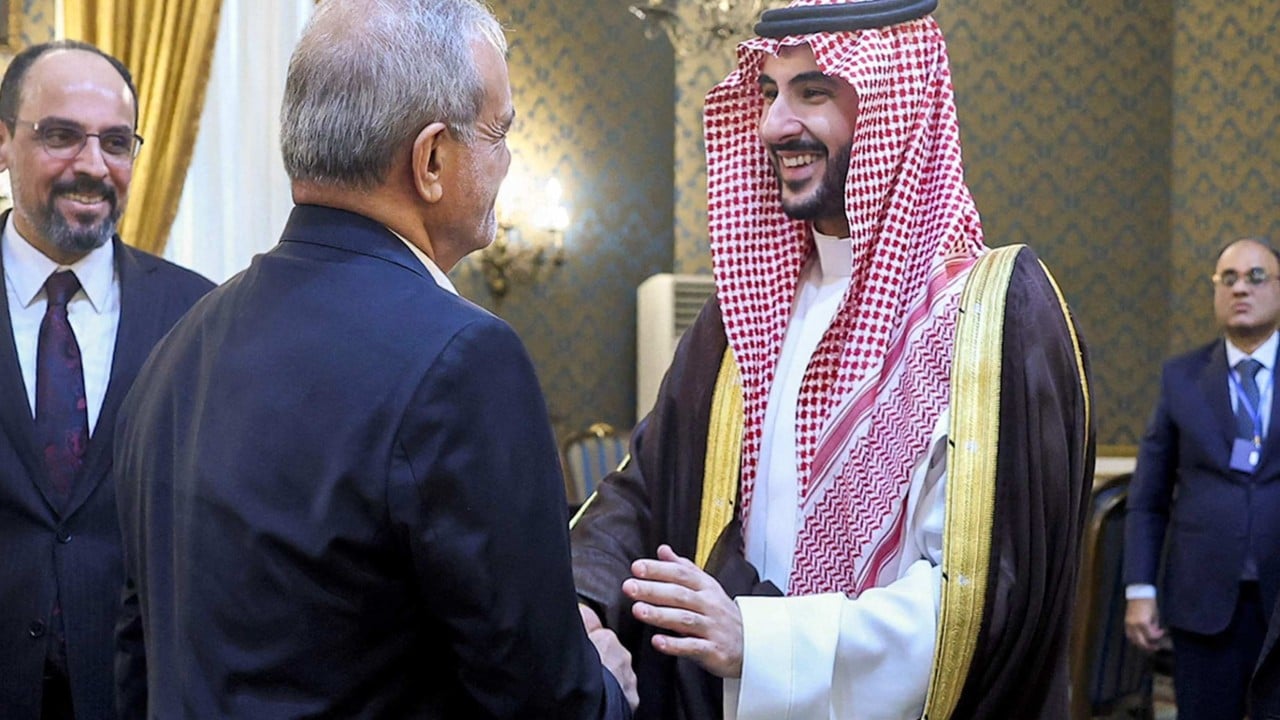


 3 sources
Morning Edition · Thursday, October 29, 2026Published at 1:12 AM EDT · New York
Saudi, Pakistani and Turkish security chiefs go to Tehran to negotiate a regional security framework
The three members of the Makkah defense pact met Iran's top security official on Monday, with Saudi Arabia entering the talks directly, while Washington briefs the same governments on possible strikes.
Muslim-majority allies of the United States in the Middle East have sped up talks with Tehran on a new regional security framework because they fear further fallout from the Iran war, the South China Morning Post reported. Saudi Arabia, which had not previously taken part directly, joined the talks on Monday and sent the king's younger son.
The delegation consisted of Saudi Defence Minister Khalid bin Salman, Pakistan's army chief Asim Munir and Turkish intelligence chief Ibrahim Kalin, China's CGTN reported. They met Mohsen Rezaei, secretary of Iran's Supreme National Security Council. The three visiting countries signed the Makkah Joint Defense Agreement in August, under which an attack on one counts as an attack on all, according to Siasat. The talks covered regional security, Israeli military activity, and developments in Palestine and Lebanon.
Washington is sending a different message. President Donald Trump denied reports that US negotiations with Iran had resumed and said recent contacts concerned humanitarian aid and medicines, BFM.ru reported. At the same time, US officials have told regional allies to prepare for strikes after the midterm elections.
Energy analysts doubt that diplomacy will bring prices down quickly. OilPrice argued that the regional talks will not keep crude below $100 for buyers, because supply damage and risk premiums persist regardless of the diplomatic outcome.
Part of a tracked trend
Middle Powers Build Security Blocs Outside Washington
States that once relied on American guarantees keep forming their own mutual defense arrangements, redirecting arms procurement away from Western suppliers and creating overlapping commitments that make regional crises harder to contain.
Veracity: Corroborated
82/100- If true, who benefits
Riyadh, Islamabad and Ankara gain a direct channel that could keep their territory and energy assets out of Iran's target list, and Tehran gains regional legitimacy just as Washington prepares possible strikes.
- The nuance
The meeting and the participants are confirmed by Gulf and Pakistani outlets (Kuwait Times, Sabq), and Pakistan's army chief Asim Munir reportedly proposed the format. No outcome or written commitment has been published, so whether the talks produced anything beyond the meeting itself is unknown.
An open-source-intelligence read of how likely this story is true with its real nuance, not a judgment of any outlet. It assesses the claim, weighing independent and adversarial reporting. How we label confidence.
What this means
Riyadh's interest here is clear. Its refineries and export terminals sit within range of Iranian missiles, and the United States is planning an operation that Iran has said it will answer. A direct channel to Tehran reduces the chance that Saudi facilities become targets. The pact adds Pakistan, a nuclear-armed state, and Turkey, a North Atlantic Treaty Organization (NATO) member, to that hedge. For investors, the channel that matters is the risk premium on Gulf infrastructure and sovereign debt. A credible regional understanding would lower it, while a US strike that triggers retaliation against Gulf states would raise it. The consensus treats Gulf states as US clients that follow Washington's lead. This week they negotiated with Washington's adversary while Washington briefed them on its war plans. The precedent is the 2023 Saudi-Iran normalization brokered by China, which reduced direct attacks between the two states but did not stop proxy fighting. The desk's read is that the framework will produce an understanding to limit attacks on each other's territory within months, but it will not stop a US campaign. The test is whether Iran spares Saudi facilities if strikes come after November 3.
Synthesized from: South China Morning Post · OilPrice · BFM.ru
Townsquare
Start a discussion in Townsquare.
More from this edition
- Fed holds rates at 3.75% to 4% while two officials vote to raise them
- US tells Middle East allies to prepare for several days of strikes on Iran after the midterm elections
- Alphabet falls about 9% after hours as AI search features slow its ad growth
- Flávio Bolsonaro claims election fraud from Miami after losing Brazil's runoff to Lula
- Bitcoin falls below $80,000 as a technology sell-off and the Fed hold trigger $356 million in liquidations
- World Bank expects commodity prices to rise 23% this year as the Middle East war disrupts energy and shipping
- Moscow's mayor says 613 drones flew toward the capital region overnight as the Kremlin sets Ukraine talks for after November 4
Comments
1Oct 29, 5:12 AM
If the framework holds, Iranian retaliation after any US strikes should fall on US and Israeli assets rather than Saudi infrastructure, which would cap the Gulf supply risk in Brent.