← The Polylog AI Intelligence Brief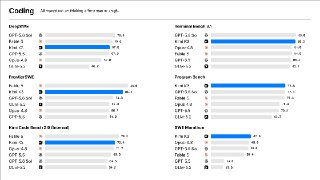
Morning Edition · Friday, July 17, 2026Published at 1:29 AM EDT · New York
Moonshot Releases Kimi K3, a 2.8-Trillion-Parameter Open-Weight Model It Says Rivals US Frontier
The mixture-of-experts model ships with a 1-million-token context and posts 93.5% on GPQA Diamond, with full weights promised by July 27.
Moonshot AI launched Kimi K3 on July 16, a mixture-of-experts model with roughly 2.8 trillion total parameters that routes each token through 16 of 896 experts, per the company's technical blog. The application programming interface (API) is live now, and full downloadable weights are slated for July 27, which if it holds would make K3 among the larger openly released models so far. Documentation seen by the AI ML Big Data channel lists a context window of up to 1 million tokens and a focus on coding, 3D and knowledge tasks.
On vendor-reported benchmarks, K3 scores 93.5% on GPQA Diamond and 88.3% on Terminal-Bench 2.1, with agentic results of 91.2% on BrowseComp and 84.2% on MCP Atlas. The AI Post channel places K3 ahead of Anthropic's Opus 4.8 and just below GPT-5.6 and Fable 5, which would narrow the historical gap between Chinese open-weight models and US closed systems.
Every figure here comes from Moonshot's own launch materials and has not been independently reproduced. The real test is whether third-party harnesses confirm the agentic and long-context scores once the weights ship, and whether serving a 2.8-trillion-parameter model at 1 million tokens of context is economical outside a well-provisioned cluster.
Veracity: Plausible
73/100- If true, who benefits
Moonshot AI and China's open-weight ecosystem gain standing and soft power from narrowing the US frontier gap, while self-hosting enterprises and sovereignty-minded governments gain a US-independent stack that pressures closed US labs' pricing power.
- The nuance
Every headline benchmark is Moonshot's own and unreproduced at launch, the full weights are only promised for July 27, and early independent evaluation places K3 near Opus 4.8 but behind GPT-5.6 Sol and Fable 5, short of clearly rivaling the top US systems.
Part of a tracked trend
Open-Weight Models Close the Gap With Closed Frontier Labs
Over the next 3-9 months, open-weight releases with downloadable weights, long context, and strong agentic/coding performance increasingly match closed frontier models on practical work, eroding the closed-lab moat.
Townsquare
Start a discussion in Townsquare.
More from this edition
- At the AI Frontier, Token Bills Are Approaching Payroll Scale, a16z and Ramp Find
- OpenAI Claims a GPT-5.6 Configuration Produced a Proof of a 50-Year-Old Graph Conjecture
- Meta's Brain2Qwerty v2 Decodes Typed Sentences From Brain Scans at 61% Word Accuracy
- NVIDIA Adds Jetson T3000 and T2000 to Push Robotics Foundation Models to the Edge
- New Audit Tests Whether a Model's Chain-of-Thought Actually Depends on Its Stated Premises
- OpenAI's First Hardware Device Will Reportedly Be a Screenless Smart Speaker
- Google DeepMind and Isomorphic Labs Publish a Joint Approach to Biosecurity for AI Models
Comments
0No comments yet.