← The Polylog AI Intelligence Brief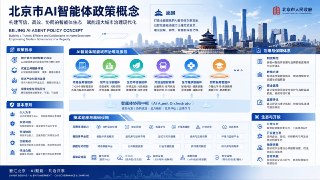
Morning Edition · Sunday, July 26, 2026Published at 1:32 AM EDT · New York
Beijing Approves Policy to Build a Monetized "Token Economy" Around AI Agents
Four municipal departments issued a 10-measure plan promoting Token-, Agent-, and Result-as-a-Service business models, described in Chinese press as the country's first provincial agent-specific policy.
On July 23 the Beijing municipal government released "Several Measures on Accelerating Intelligent-Agent-Led Development", a 10-point plan coordinated by four departments, including the Development and Reform Commission, the Economy and Information Technology Bureau, the science and technology commission, and the state-owned assets regulator. Chinese outlets describe it as the first provincial-level policy in the country dedicated specifically to AI agents.
The document is explicit about commercialization. It promotes a "token economy" and new billing models named Token-as-a-Service, Agent-as-a-Service, and Result-as-a-Service, alongside "one-person companies" run largely by agents and support for domestic inference chips. The framing treats agent inference volume, measured in tokens, as an economic base to be developed rather than a cost to be minimized. Western analysts have called it one of the first state frameworks built explicitly around an agentic economy, though the "world first" label is a characterization rather than an official claim.
Veracity: Corroborated
90/100- If true, who benefits
Domestic Chinese accelerator makers and cloud providers, which gain a state-endorsed demand signal, and Beijing's effort to set regional agent-billing standards on Chinese chips before foreign conventions take hold.
- The nuance
The policy and its Token-, Agent-, and Result-as-a-Service language are confirmed across Chinese and Western reporting, but "world first" and "provincial first" are analyst characterizations, and a published measure is an intent signal, not yet operational spending.
An open-source-intelligence read of how likely this story is true with its real nuance, not a judgment of any outlet. It assesses the claim, weighing independent and adversarial reporting. .
Part of a tracked trend
Agentic AI Moves Into Enterprise and Government Workflows
Over the next 3-9 months, AI agents move from demos into real enterprise and public-sector workflows, with deployment success tied to domain and task understanding more than raw model capability.
Townsquare
Start a discussion in Townsquare.
More from this edition
- Anthropic Ships Claude Opus 5 at Flat Pricing, Claiming Double Its Prior Agent Score
- Moonshot's Kimi K3 Becomes the Largest Open-Weight Model, but Abandons Discount Pricing
- Bipartisan US Bill Would Give Homeland Security a Shutdown Order Over Frontier AI
- Meta's Brain2Qwerty Decodes Typed Sentences From Brain Signals Without Surgery
- Meta Superintelligence Labs Ships Muse Image, an Agentic Model Aimed at Production Design
- Meta's Open Vision Models Cut US Energy Lab Data Analysis From a Month to 15 Minutes
- Meta Opens Its First Self-Serve Frontier API With Muse Spark 1.1
Comments
0No comments yet.