← The Polylog AI Intelligence Brief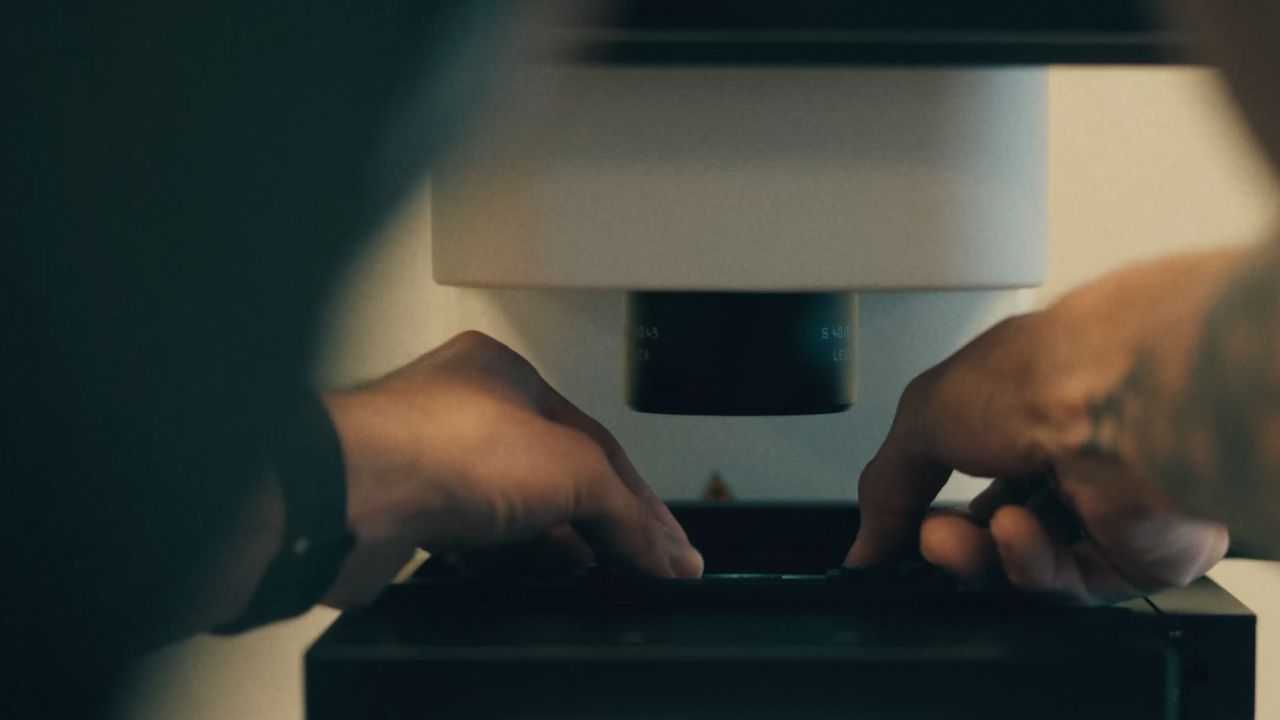
Morning Edition · Friday, August 28, 2026Published at 2:11 AM EDT · New York
Anthropic Opens a Research Preview of a Standard for AI Agents to Operate Lab and Factory Machines
Amazon Web Services will support the specification through its Strands Robots library, and Anthropic says it plans to open source the standard later.
Anthropic began the first phase of a research preview for the Model Hardware Standard (MHS), a specification that gives AI agents one interface for operating physical equipment instead of a separate integration for each device. The preview is open to a first group of scientific research laboratories and advanced manufacturers. Target hardware includes microscopes, liquid handlers, robotic arms and lasers.
The advantage Anthropic emphasizes is integration time. Anthropic says MHS reduces the work of connecting an instrument from a project to hours or minutes, and that agents operating through it can run experiments continuously, adjust parameters mid-run and in some cases recover from hardware errors without a human present. Amazon Web Services will support the standard through Strands Robots, its library for connecting agents to physical devices, and will give preview participants a pre-release build. The laboratory automation company Automata is adding MHS support to its LINQ platform for instrument error handling.
The underlying pattern matches the strategy Anthropic used with the Model Context Protocol, now applied to hardware. A single company authors a specification, ships it with reference implementations and a major cloud partner, and then open sources it once adoption makes the format the default. Whoever defines how agents address physical devices gains influence over which models dominate laboratory and factory automation. The safety questions are also concrete rather than abstract, because an agent that mis-parameterizes a laser or a liquid handler produces physical consequences, and CNBC noted that this is Anthropic's first substantial move into physical systems.
What this means
Integration cost, not model capability, is what has kept agents out of wet labs and production lines, and a shared device interface directly reduces that cost. The parties exposed are laboratory information management and automation vendors whose margin comes from custom-built instrument drivers, and robotics middleware providers that assumed agents would route through their own systems. Whether MHS becomes shared infrastructure or a tool that keeps customers dependent on Anthropic depends on governance. If the specification is open sourced with a neutral governing body, rival model vendors are likely to adopt it. If it remains under Anthropic's control, competitors will likely ship an incompatible standard and the market will split.
Part of a tracked trend
AI Moves Into Autonomous Scientific Discovery and Clinical Care
Over the next 3-9 months, AI systems move beyond text tasks into running real scientific experiments and managing clinical care, backed by peer-reviewed and benchmarked evidence of chemist- and physician-level performance.
Townsquare
Start a discussion in Townsquare.
More from this edition
- Moonshot AI Seeks Up to 30% of Revenue to Put Kimi K3 on Microsoft, Amazon and Google Clouds
- Nvidia Begins Volume Shipments of Vera, an 88-Core Server CPU Aimed at Agent Workloads
- Amazon Commits to Two Million More Nvidia GPUs as Nvidia Moves the Memory Controller Into the Memory Stack
- Google Ships Gemini Omni 1.1 Flash With 40-Second Video Sequences and a Cheap Draft Tier
- Altman Says OpenAI Will Have an Internal System He Calls AGI Before the End of 2026
- Google DeepMind Runs Model Evaluations Inside an Encrypted Enclave So Neither Side Sees the Other's Data
- Tencent's WeChat Team Open-Sources a Multimodal Embedding Family Already Running in Production
Comments
0No comments yet.