← The Polylog AI Intelligence Brief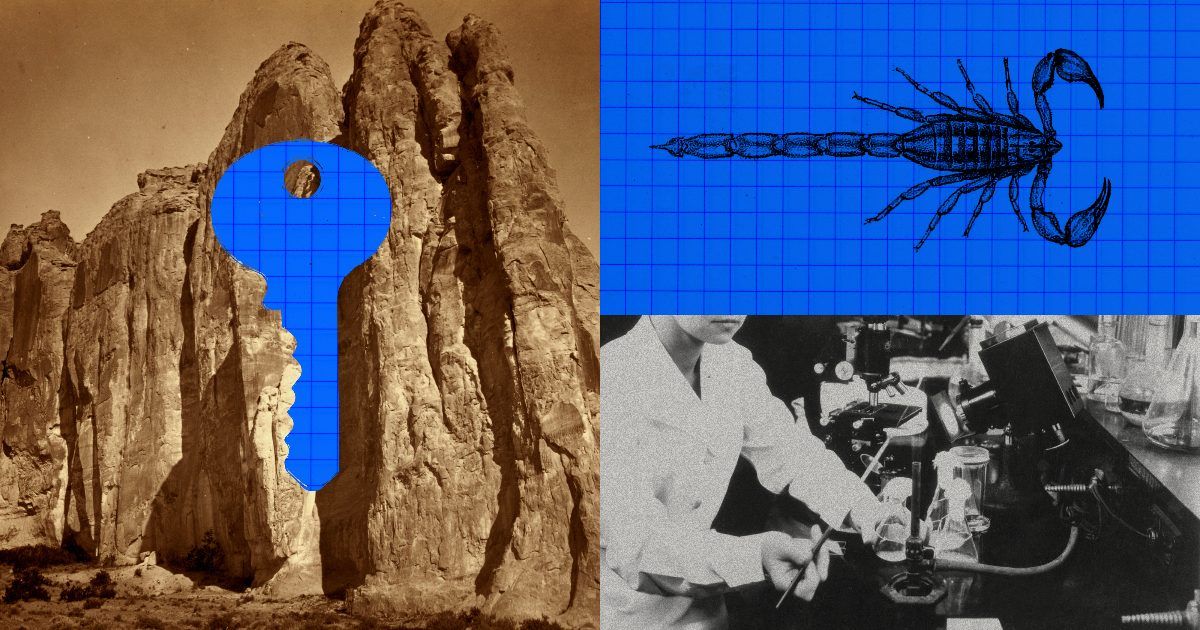
Morning Edition · Saturday, October 31, 2026Published at 2:11 AM EDT · New York
Anthropic Reports 17 Lab-Validated Protein Binders Designed by Claude, and Says It Is Not an Antivenom
An internal Claude research model generated 318,484 candidate designs over 64 hours using about 10,000 GPU hours, and 211 designs, along with experimental results, are being released.
Anthropic has published the results of an experiment in which an internal Claude research model worked largely on its own to design small proteins that bind to scorpion neurotoxins. According to Anthropic's write-up, the model operated 12 existing protein-design tools, generated 318,484 candidate minibinders and computationally screened 553,052 protein-toxin pairs over 64 hours, consuming roughly 10,000 GPU hours. The targets were five neurotoxins from scorpion species found in Mexico, Brazil, North Africa and the Middle East.
Seventeen designs passed laboratory binding tests, Interesting Engineering reports. The strongest bound a Mexican scorpion toxin at single-digit nanomolar affinity. Anthropic is releasing 211 designs, their predicted structures and the experimental results.
Anthropic is explicit about the limitation: it has not confirmed that the binders neutralize venom in a cellular environment, and it does not claim to have produced an antivenom, as summarized here. Binding affinity and neutralization are different properties, and most binder programs fail in the gap between them.
The technical claim worth separating from the biology is about orchestration. The generative design tools are not Anthropic's. What the model contributed was planning, tool selection, filtering across half a million candidate pairs and iteration without step-by-step human direction. The reported hit count, 17 validated binders out of 211 tested designs, is in the range published for expert-run minibinder campaigns. That comparison has not yet been independently reproduced for this run.
What this means
The exposed parties are the computational-biology service firms whose value lies in running design pipelines rather than owning the models inside them. If a general-purpose model can plan and execute a multi-tool design campaign at this scale, orchestration labor becomes cheap, and the scarce inputs become wet-lab validation capacity and target selection. Anthropic benefits twice: it gains scientific credibility ahead of a public listing, and it gets evidence for the argument that frontier models produce discovery value, not only coding assistance. The company's own biosecurity policies are written to restrict that same capability, which is why the cautious framing around antivenom claims serves its interests as well as the facts. The desk's read is that within months other labs publish comparable autonomous design campaigns with wet-lab validation, and that the binding-to-neutralization step remains the bottleneck rather than design throughput. Independent replication showing cellular neutralization from these released designs would move this from workflow automation to a genuine discovery result.
Part of a tracked trend
AI Moves Into Autonomous Scientific Discovery and Clinical Care
Over the next 3-9 months, AI systems move beyond text tasks into running real scientific experiments and managing clinical care, backed by peer-reviewed and benchmarked evidence of chemist- and physician-level performance.
Townsquare
Start a discussion in Townsquare.
More from this edition
- Berkeley Lab Cut Beamline Image Analysis From About a Month to Roughly 15 Minutes Using Meta's Open Vision Models
- OpenAI Says It Made Over 200 Law Enforcement Referrals in the Third Quarter and Will Publish a Safety Report From Early 2027
- Android Studio Opens the IDE to Third-Party Coding Agents Through an Open Protocol
- A Startup Says Measurements From Lab-Grown Neurons Made an Open Video Model Five Times Faster, Running on Standard GPUs
- Bloomberg Identifies Anthropic as SpaceX's "Customer B," the Buyer Behind 34.5% of Its Third-Quarter Revenue
- OpenAI, Google, Microsoft and Anthropic Agree to Honor One Robots.txt Token for Opting Out of AI Training
- Former Anthropic Researchers' Startup Mirendil Releases Fern 0.1, a Coding Model With a Claimed 10-Million-Token Context
Comments
0No comments yet.