← The Polylog Crypto Intelligence Brief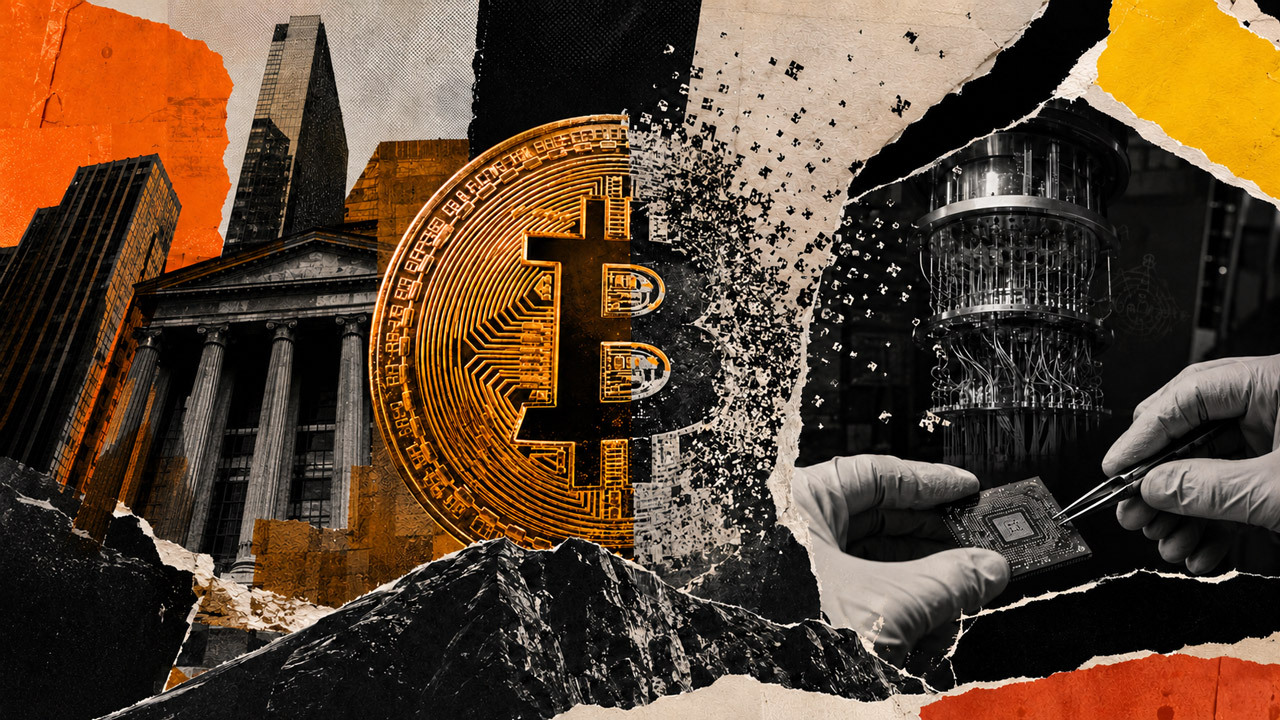
Morning Edition · Friday, July 24, 2026Published at 1:23 AM EDT · New York
Nine Financial and Crypto Firms Form a Bitcoin Security Consortium to Fund Quantum-Resistance Work
The members pledged a combined 15 million dollars over three years, and Galaxy Digital alone committed up to 5 million dollars in developer grants.
Nine firms announced on July 23 the formation of a Bitcoin Security Consortium, pledging a combined 15 million dollars over three years to fund the developers and researchers who maintain and strengthen the security of Bitcoin. The founding members are BlackRock, Coinbase, Strategy, Anchorage Digital, ARK Invest, Block, Blockstream, Fidelity Digital Assets and Galaxy Digital.
The money will not be pooled or centrally allocated. Each member independently chooses which developers or organizations to fund, with day-to-day coordination handled on a volunteer basis by Mike Schmidt, executive director of the open-source funding nonprofit Brink. Galaxy Digital separately committed up to 5 million dollars in grants for work on quantum resistance.
The organizing concern is the eventual arrival of quantum computers capable of deriving a private key from a public key, which would expose coins held at addresses whose public keys are already visible on the ledger. Coinbase says it is building a post-quantum custody system and does not consider the threat imminent, while BlackRock has formally listed quantum computing as a risk factor in its spot Bitcoin exchange-traded fund filings and argues the network can migrate in time if it acts early.
The first-principles problem is that any fix requires a consensus change across a deliberately slow-moving network, and roughly 460 billion dollars of Bitcoin sits at addresses with exposed public keys, including early pay-to-public-key coins and long-dormant balances whose owners may never sign a migration transaction.
Veracity: Corroborated
93/100- If true, who benefits
BlackRock, Coinbase and the other custodians, who reduce a named risk factor on exchange-traded-fund and custody balances they are liable for, and who gain a reassurance narrative for institutional holders.
Part of a tracked trend
Quantum Risk Moves From Theory to Crypto Roadmaps
Over the next 3-6 months, quantum-resistance becomes a concrete design and custody concern across major chains and institutional custodians, driving opt-in post-quantum schemes and 'long-dormant coin' risk discussion.
Townsquare
Start a discussion in Townsquare.
More from this edition
- Coinbase Opens Business Accounts to Dollar-Stablecoin Payments From AI Agents
- Clarity Act Expected to Miss Its Window as Goldman Splits From Wall Street to Back It
- DeFi Loses Roughly 35 Million Dollars in July to Oracle and Governance Attacks as an Executive's Account Is Hijacked
- Uniswap Adds Permissioned Pools to Trade Tokenized Securities On-Chain
- Ethereum Researchers Argue Coordination Design, Not Speed, Is Crypto's Last Bottleneck
- Privacy Chains Reframe Confidential Execution as a Prerequisite for Institutional Use
- European Union Targets 14 Crypto Platforms and 94 Banks in New Russia Sanctions Package
Comments
0No comments yet.