← The Polylog Crypto Intelligence Brief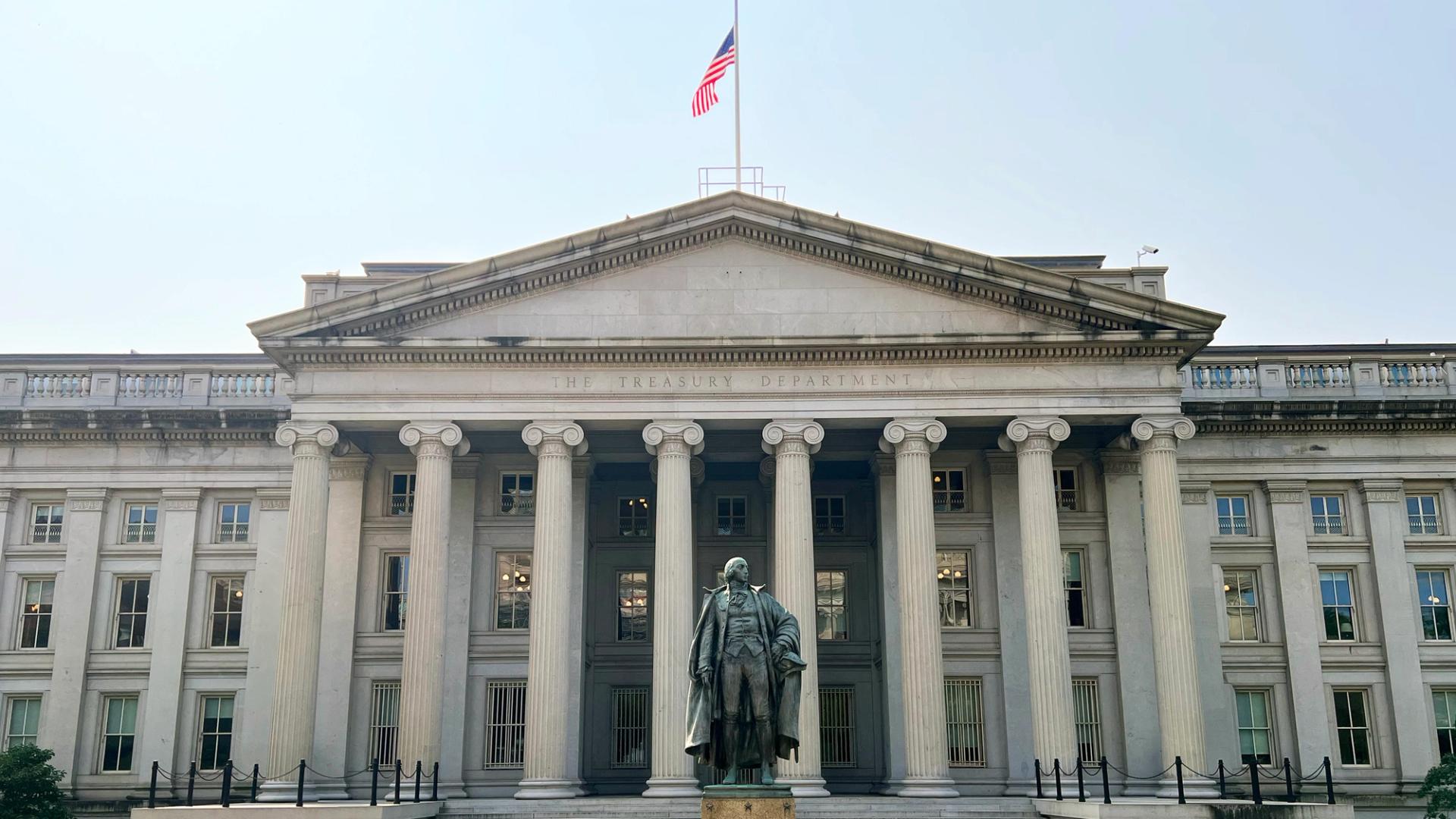
Morning Edition · Tuesday, August 18, 2026Published at 1:51 AM EDT · New York
Treasury Opens Comment on the Rule That Decides Who May Issue a Dollar Stablecoin
The proposal defines when a token is issued or sold in the United States, and it arrives days after the Office of the Comptroller of the Currency (OCC) conditionally cleared a Trump-linked issuer to run its own trust bank.
The United States Department of the Treasury has issued a notice of proposed rulemaking under the GENIUS Act, the stablecoin statute Congress passed last year, and opened it for public comment. The proposal is narrow by design. It sets out when a person is treated as issuing a payment stablecoin in the United States and when a token counts as offered or sold to someone in the country.
Those definitions determine how the whole regime functions. From the law's effective date in January 2027, issuing a payment stablecoin domestically without a federal or state license is prohibited. The proposal also addresses foreign issuers, whose tokens digital asset service providers generally could not make available unless the issuer can comply with lawful orders and a reciprocal arrangement exists with its home jurisdiction. Treasury is taking comments for 60 days after publication in the Federal Register.
The numbers show why the distinction matters. Stablecoin supply stands at $307.07 billion, with Tether's USDT at $182.95 billion and Circle's USDC at $71.99 billion, according to DeFiLlama. Tether is the largest issuer and is domiciled outside the United States, so the treatment of foreign tokens determines how much of that supply American venues can legally distribute.
Separately, the OCC granted preliminary conditional approval for World Liberty Trust Company to operate as a national trust bank, which would let the Trump-linked issuer mint and custody its USD1 stablecoin directly instead of relying on a third-party custodian. USD1 circulation stands at $4.02 billion. The charter is not final until preopening conditions are met.
Veracity: Corroborated
90/100- If true, who benefits
Licensed domestic issuers, including Circle, bank subsidiaries and now World Liberty, gain distribution and reserve float at the expense of offshore-domiciled Tether and of custodian banks such as BitGo, which currently holds and issues USD1.
Part of a tracked trend
Regulatory Perimeter for Crypto Hardens in EU and US
Over 3-6 months, enforcement deadlines and rulemaking debates narrow who can operate, with MiCA culling unlicensed EU firms and US regulators weighing durable rules over fragile exemptions.
Townsquare
Start a discussion in Townsquare.
More from this edition
- Galaxy Research Confirms $115 Million Stolen From Coldcard Wallets After Firmware Randomness Failure
- Aztec Discloses Critical Proving-System Flaw in Its Live Privacy Network
- Ethereum Opens Platåberget Testnet and Warns Tooling Built on a Fixed Gas Cap Will Break
- Monad Offered Early Backers Up to $60 Million to Sell, and Almost None Took It
- Compound Approves $52 Million Program and New Leadership to Chase Institutional Lending
- Oracle Manipulation Proof of Concept Published as Bridge and Payment Exploits Stay Unexplained
- BitMart Founder Rejects Audit Calls as Users Report Blocked Withdrawals
Comments
0No comments yet.