← The Global Intelligence Brief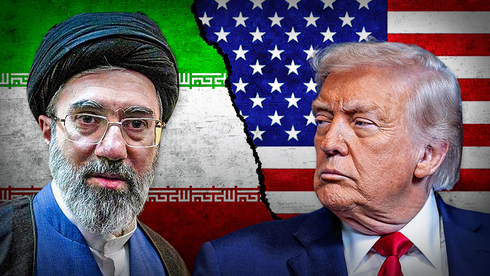
Morning Edition · Saturday, June 6, 2026Published at 7:14 AM EDT · New York
Iran Demands Cash Up Front as a Nuclear Deal Stalls Over Frozen Billions
Tehran says it wants $12 billion released immediately and calls the funds its own, putting Washington in a bind that recalls earlier negotiations.
As missiles struck targets across the Gulf, the diplomatic dispute over Iran's frozen assets grew more difficult. The Israeli outlet Ynet reported that Tehran is demanding the immediate release of $12 billion in cash, part of roughly $100 billion in Iranian funds held abroad, and that Iranian officials are presenting the money not as an incentive offered by Washington but as their own property. "It is not a reward, it is ours," officials were quoted as saying.
The report describes a political problem for the American president, who, according to Ynet, faces the same difficult position that constrained a previous administration during earlier nuclear diplomacy. Washington has insisted that no money change hands before an agreement is finalized, while Tehran has declared a "victory of the resistance" and pressed for funds in advance. The two positions leave little room for compromise, and the cash demand has become a central obstacle to any broader settlement.
The standoff is directly connected to the military escalation. The same negotiations that might unlock Iranian funds are the ones whose breakdown preceded Saturday's strikes on Kuwait and Bahrain, and Iranian salvoes against United States allies have continued even as the financial terms are debated. The Hindu, reporting from the region, tied the fresh attacks to the absence of a deal.
The dispute is fundamentally an argument about control over money and the credibility of sanctions. For Tehran, recovering frozen reserves would prove that Western financial pressure can be reversed. For Washington, releasing cash before a verified agreement would weaken the leverage that the entire maximum-pressure campaign depends on.
Veracity: Corroborated
80/100- If true, who benefits
Iran gains by framing recovered reserves as proof Western sanctions can be reversed, and an Israeli outlet gains by depicting Washington as cornered.
- The nuance
The $12 billion demand is widely reported, but the funds are largely held in Qatar, CNN cites a $24 billion deadlock figure, and the "$100 billion" total and "victory of resistance" language are Iranian characterizations.
An open-source-intelligence read of how likely this story is true with its real nuance, not a judgment of any outlet. It assesses the claim, weighing independent and adversarial reporting. How we label confidence.
What this means
How the frozen billions are handled will signal whether sanctions can still coerce behavior or whether a sanctioned state can extract its reserves by force and negotiation. That precedent matters far beyond Iran, because it shapes how China, Russia and others judge the durability of dollar-based financial pressure.
What to watch
Townsquare
Start a discussion in Townsquare.
More from this edition
- Oil Holds Near Triple Digits as Hormuz Disruption Drives Airlines Into a Fuel Crisis
- Iran Fires Missiles at US Bases in Kuwait and Bahrain After American Strikes on Its Coast
- Russia Closes St. Petersburg Forum Touting Billions in Deals and a Sanctions-Proof Order
- Bitcoin Drops Below $62,000 as Traders Weigh a Coming SpaceX Listing
- Fitch Lifts South Africa's Rating for the First Time in About Two Decades
- Putin Says Sanctions on India Would "Boomerang" as Moscow Courts New Delhi
- Zelensky Writes an Open Letter to Putin Proposing a Meeting and a Full Ceasefire
- Trump's Drive in Latin America Squeezes China, and Nicaragua May Be Next
Comments
0No comments yet.