← The Global Intelligence Brief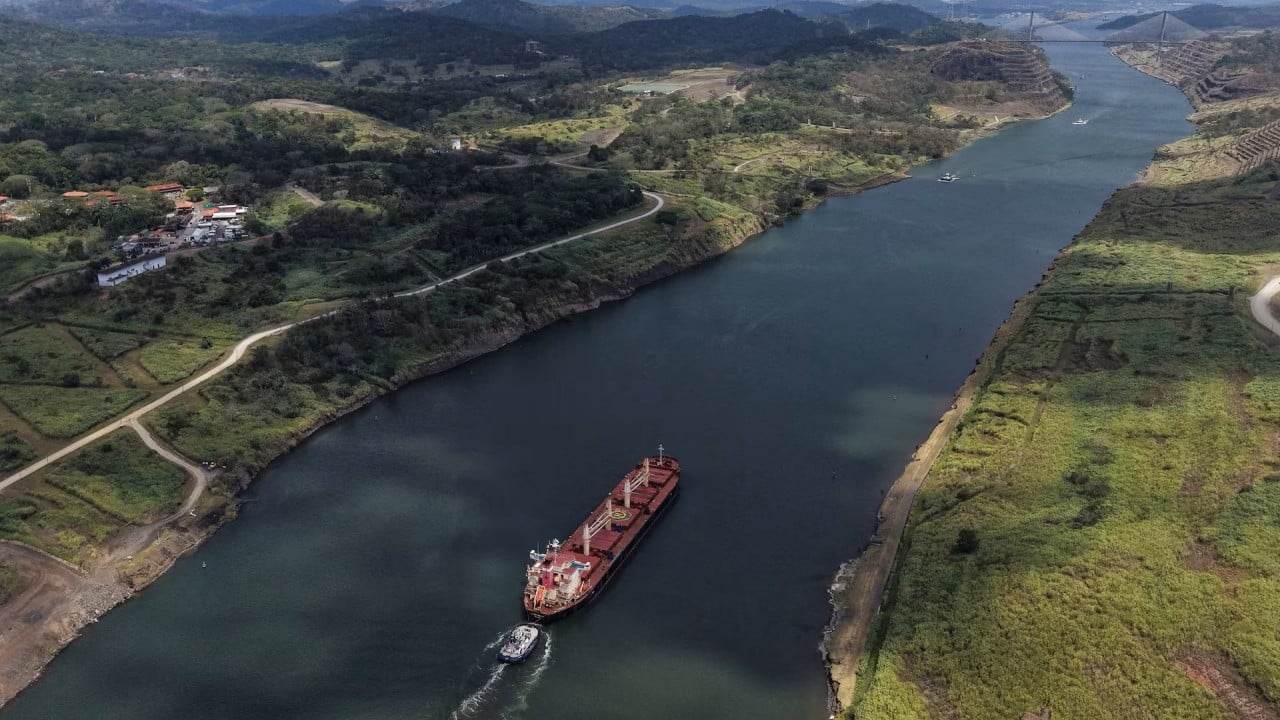

 2 sources
Morning Edition · Saturday, June 6, 2026Published at 7:14 AM EDT · New York
Trump's Drive in Latin America Squeezes China, and Nicaragua May Be Next
After pressuring Beijing's interests in Cuba, Panama and Venezuela, Washington's campaign to reassert dominance in its own hemisphere is turning toward Managua.
The United States president's effort to reassert American supremacy in Latin America has already pressured China's economic foothold in Cuba, Panama and Venezuela, and a scholar quoted by the South China Morning Post warned that Nicaragua could become the next battleground between the two powers. The argument is that Washington is systematically working to displace Chinese influence from the countries nearest its own borders.
The campaign has an economic logic and a military dimension. Control of ports, canals and infrastructure financing determines who shapes trade routes in the hemisphere, and Beijing has spent years building exactly those positions. Washington's counter-push combines tariffs, financial pressure and, increasingly, military activity, including a sustained maritime operation against vessels the United States alleges are carrying drugs off the Latin American coast.
The human cost of the region's distress runs beneath the geopolitical contest. The New York Times reported from Caracas on the collapse of ordinary financial life under Venezuela's long crisis, describing a debt collector who uses public humiliation to force repayment. The scene is a reminder that great-power competition occurs in economies where basic credit and contract enforcement have broken down.
For a global investor, the contest matters because it reorders supply chains and political risk across a hemisphere that supplies oil, metals and food. A more assertive American posture may secure the region near its borders, but it also pushes affected governments to weigh whether Chinese capital still offers a useful alternative despite the resulting tension.
Veracity: Plausible
74/100- If true, who benefits
Washington's account of hemispheric dominance and Beijing's account of US aggression both gain, and the China-owned South China Morning Post gains a frame favorable to its readership.
- The nuance
That Nicaragua is "next" is a scholar's forecast tied to a hypothetical canal revival, not an action taken, and the "squeezed China" framing is analytical interpretation rather than a single documented event.
An open-source-intelligence read of how likely this story is true with its real nuance, not a judgment of any outlet. It assesses the claim, weighing independent and adversarial reporting. How we label confidence.
What this means
The competition for Latin America is a test of whether the United States can reduce Chinese economic influence in its own hemisphere without resorting to measures that destabilize fragile economies. The outcome will shape control of canals, ports and commodity flows that the global economy depends on.
What to watch
Synthesized from: South China Morning Post · The New York Times
Townsquare
Start a discussion in Townsquare.
More from this edition
- Oil Holds Near Triple Digits as Hormuz Disruption Drives Airlines Into a Fuel Crisis
- Iran Fires Missiles at US Bases in Kuwait and Bahrain After American Strikes on Its Coast
- Iran Demands Cash Up Front as a Nuclear Deal Stalls Over Frozen Billions
- Russia Closes St. Petersburg Forum Touting Billions in Deals and a Sanctions-Proof Order
- Bitcoin Drops Below $62,000 as Traders Weigh a Coming SpaceX Listing
- Fitch Lifts South Africa's Rating for the First Time in About Two Decades
- Putin Says Sanctions on India Would "Boomerang" as Moscow Courts New Delhi
- Zelensky Writes an Open Letter to Putin Proposing a Meeting and a Full Ceasefire
Comments
0No comments yet.