← The Global Intelligence Brief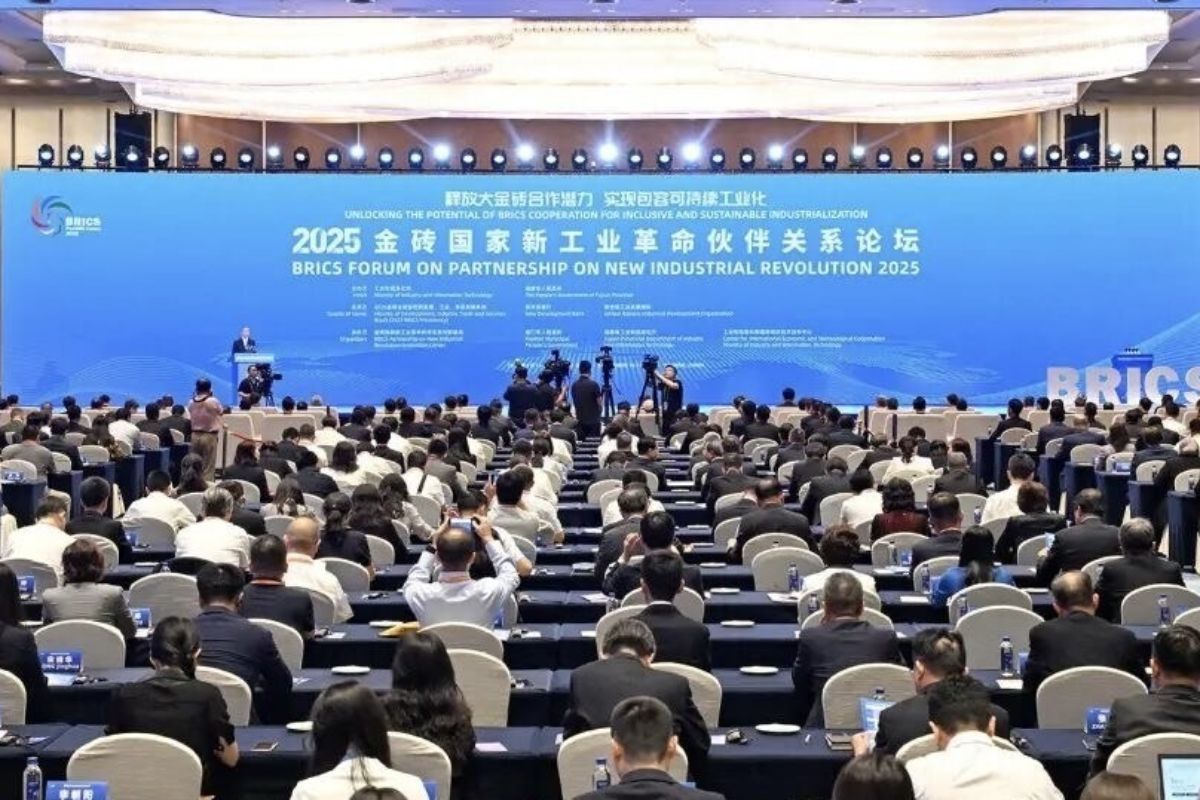

 2 sources
Morning Edition · Tuesday, June 9, 2026Published at 6:19 AM EDT · New York
Indonesia Presses Industrial Ambitions at BRICS Forum in China
Jakarta uses the BRICS industry forum to advance smart manufacturing and clean energy, indicating its move toward non-Western blocs.
Indonesia reaffirmed its effort to accelerate industrial transformation through cooperation at the 2026 forum of the BRICS group, the state news agency Antara reported. Speaking at the forum on the New Industrial Revolution, held in the Chinese city of Xiamen, Indonesia's Ministry of Industry set out three priorities. They are digital and smart-factory development, a shift to clean-energy-based green industry, and stronger innovation and workforce skills.
The choice of location is significant. Indonesia, the largest economy in Southeast Asia, joined BRICS as the bloc has expanded to include more developing economies that are seeking arrangements to reduce their dependence on Western institutions and the dollar. By aligning its manufacturing agenda with the group, Jakarta is signaling where it expects much of its future industrial partnership to come from.
The substance is connected to a national strategy known as Making Indonesia 4.0, which promotes digitalization, domestic processing of raw materials and the adoption of modern technology in manufacturing. The country sent eight national teams to a BRICS industrial innovation contest in categories including artificial intelligence and green industry, an effort to build domestic capability rather than remain a supplier of unprocessed commodities.
The wider significance is the direction of the change. As a resource-rich economy that has restricted raw exports to force more processing at home, Indonesia is positioning itself within a bloc that presents economic cooperation as an alternative to a Western-centered order, a gradual but steady move toward a more multipolar arrangement of trade and finance.
Veracity: Corroborated
78/100- If true, who benefits
The Indonesian government and the BRICS bloc, which both benefit from framing a routine industry forum as evidence of a shift away from Western institutions.
- The nuance
The account rests entirely on Indonesian state media and ministry messaging, the event was the PartNIR forum in Xiamen, and no concrete investment or technology agreements were announced, so the "multipolar realignment" reading is interpretation rather than result.
An open-source-intelligence read of how likely this story is true with its real nuance, not a judgment of any outlet. It assesses the claim, weighing independent and adversarial reporting. How we label confidence.
What this means
Indonesia's engagement with BRICS reflects a broader effort by large developing economies to build industrial and financial ties outside Western institutions. Its policy of requiring domestic processing of raw materials, combined with non-Western partnerships, is a concrete part of the slow shift toward a multipolar economic order.
Synthesized from: Antara · Antara (Indonesian)
Townsquare
Start a discussion in Townsquare.
More from this edition
- Chipmakers Recover a $1 Trillion Selloff as SpaceX and OpenAI Advance Toward Record Listings
- Oil Eases Toward $93 as Iran and Israel Halt Direct Strikes
- Russian Stocks Fall Below 2,500 as War and Sanctions Pressure Mount
- German Exports Rise for a Third Month, but Factory Output Lags
- A Caution Signal in Stablecoins as Bitcoin Steadies Near $64,000
- Pentagon Adds Alibaba, Baidu and BYD to Its Chinese Military List
- Iran and Israel Pause Direct Strikes, but Israel Keeps Hitting Lebanon
- US-Iran Talks Stall as Both Sides Insist on Declaring Victory
Comments
0No comments yet.