← The Global Intelligence Brief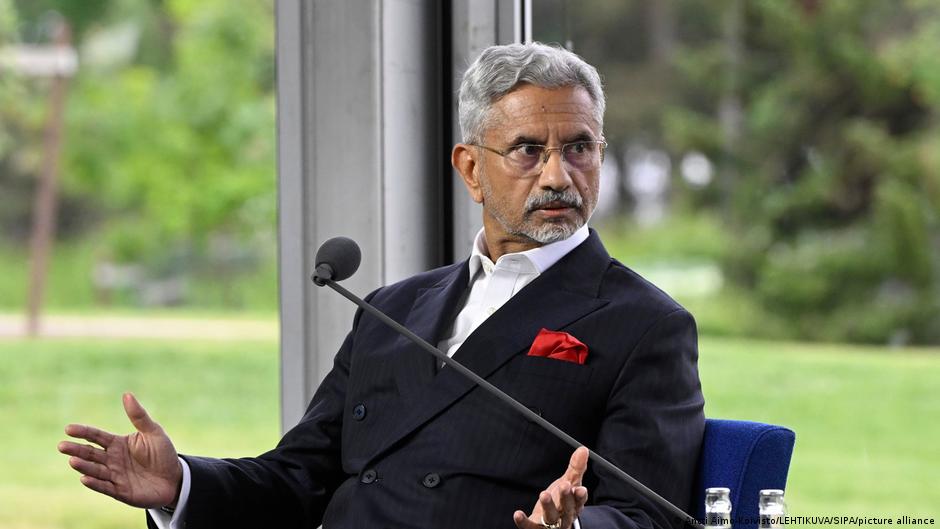

 2 sources
Morning Edition · Friday, June 12, 2026Published at 6:11 AM EDT · New York
India Defends Russian Oil Purchases and Says Washington Once Asked for Them
Foreign Minister S. Jaishankar told a forum in Finland that the United States had urged India to keep buying Russian crude to steady markets, then imposed tariffs over the same purchases.
India's external affairs minister, Subrahmanyam Jaishankar, defended his country's energy ties with Moscow at a conference in Finland and rejected European criticism of those purchases, Deutsche Welle reported.
Jaishankar said the United States had specifically asked India to buy Russian oil to stabilize the global market and prevent a damaging price surge, then later placed tariffs on India over the same trade before lifting some sanctions again. He argued that much of the oil available was Russian because European buyers had absorbed the Middle Eastern supplies that traditionally went to India, and that "I don't think making this about sanctimony is really warranted."
The remarks capture a structural shift. India has become one of the largest buyers of discounted Russian crude since Western sanctions redirected those flows, a realignment that has helped Moscow sustain export revenue and given New Delhi cheaper energy. The pattern fits a broader move by Russia to reorder its commerce around partners outside the Western financial system.
The dispute also exposes the contradictions in the Western sanctions regime. As Jaishankar's account makes plain, the same purchases were encouraged to calm prices and then penalized on political grounds, leaving exporters and importers uncertain which rules actually govern the oil trade.
Veracity: Plausible
68/100- If true, who benefits
New Delhi, which uses the account to justify discounted Russian crude, and Moscow, which keeps export revenue, while advancing a narrative of Western inconsistency.
- The nuance
Jaishankar did make the remarks, but Washington's request was to keep buying under a price-cap mechanism to maintain supply, a condition his framing of an open-ended "ask" compresses.
An open-source-intelligence read of how likely this story is true with its real nuance, not a judgment of any outlet. It assesses the claim, weighing independent and adversarial reporting. How we label confidence.
What this means
India's stance shows how sanctions intended to isolate Russia have instead rerouted trade and entrenched new buyers, weakening the leverage of the dollar-based system. When a major economy publicly questions the consistency of Western sanctions, it accelerates the search for arrangements that do not depend on Washington's approval.
What to watch
Synthesized from: Deutsche Welle · The Hindu
Townsquare
Start a discussion in Townsquare.
More from this edition
- Oil Slides Toward Eight-Week Low as Iran Deal Hopes Lift Stocks and Bonds
- Trump Says Iran Accord Is Close, Tehran Says Nothing Is Final
- SpaceX Set to Begin Trading at 1.8 Trillion Dollars in Largest Listing on Record
- China Urges Open Trade Before Summits That Could Set Off a Clash With Europe
- Russia and Ukraine Trade Overnight Strikes as Energy War Grinds On
- China Steps Up Public Enforcement but Frames It as Routine, Not a Crackdown
- Iran War Keeps Inflation Elevated Across Europe as Energy Costs Linger
- China Detains American Researcher on Suspicion of Spying
Comments
0No comments yet.