← The Global Intelligence Brief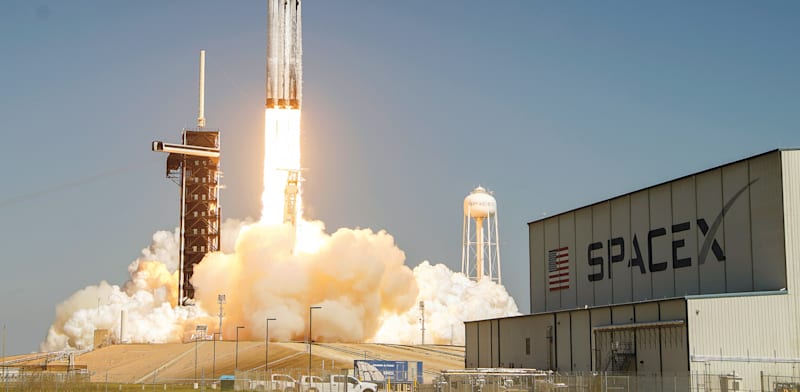

 3 sources
Morning Edition · Friday, June 12, 2026UpdatedPublished at 5:02 PM EDT · New York
SpaceX Set to Begin Trading at 1.8 Trillion Dollars in Largest Listing on Record
Elon Musk's rocket and satellite company priced its shares at 135 dollars, then rose 19 percent on its Nasdaq debut, the largest initial public offering on record and the moment that made Musk the world's first trillionaire.
Updated at 5:02 PM EDT
SpaceX completed its debut: shares priced at 135 dollars, gained about 19 percent to close at 160.95 in the largest IPO on record, lifted the company's value above 2 trillion dollars, and made Musk the world's first trillionaire.
SpaceX began trading on the Nasdaq on Friday under the ticker SPCX and gained about 19 percent on its first day, closing at 160.95 dollars after the company had set a fixed offering price of 135 dollars a share, Globes reported and CNBC confirmed. The company sold about 555.6 million shares to raise roughly 75 billion dollars, which bankers describe as the largest initial public offering on record, ahead of Saudi Aramco's 1.7 trillion dollar listing in 2019. The shares opened near 150 dollars and at one point rose more than 30 percent, briefly valuing SpaceX above 2.25 trillion dollars, and closed with a market capitalization above 2 trillion dollars, placing it among the most valuable companies listed in the United States.
The debut made Elon Musk the world's first trillionaire, NPR reported. Among the other large beneficiaries are early investors who built positions when the company was valued at only tens of billions of dollars, including the fund manager Ron Baron, who has said he expects SpaceX to become one of the most valuable companies in the world.
The listing will reshape the major United States indices in stages. SpaceX entered the Nasdaq immediately but must wait before it can join the S&P 500, a second Globes analysis explained, with two further large offerings also expected. The Financial Times was more skeptical about valuing a company whose revenue depends heavily on the Starlink satellite business and on government contracts, summarizing the uncertainty bluntly.
The timing is notable. The offering arrived as investors rotated into technology shares this week, with the chipmakers Micron and Advanced Micro Devices (AMD) rising sharply, suggesting that appetite for risk has returned alongside falling oil prices.
What this means
A 1.8 trillion dollar debut concentrates an enormous claim on future cash flows into a single stock priced largely on expectations rather than current earnings. From an Austrian economics perspective, listings of this scale tend to cluster late in a cycle of cheap credit and abundant liquidity, when investors extend valuations furthest into the future. Index inclusion will also force passive funds worldwide to buy, regardless of price.
What to watch
- The first-day trading range and whether the shares hold the 135 dollar offer price.
- The timeline and criteria for SpaceX's entry into the S&P 500.
- Disclosure of Starlink revenue and government-contract dependence in coming filings.
Observations to monitor, not financial advice.
Synthesized from: Globes · Globes · Financial Times
Townsquare
Start a discussion in Townsquare.
More from this edition
- Oil Slides Toward Eight-Week Low as Iran Deal Hopes Lift Stocks and Bonds
- Trump Says Iran Accord Is Close, Tehran Says Nothing Is Final
- China Urges Open Trade Before Summits That Could Set Off a Clash With Europe
- India Defends Russian Oil Purchases and Says Washington Once Asked for Them
- Russia and Ukraine Trade Overnight Strikes as Energy War Grinds On
- China Steps Up Public Enforcement but Frames It as Routine, Not a Crackdown
- Iran War Keeps Inflation Elevated Across Europe as Energy Costs Linger
- China Detains American Researcher on Suspicion of Spying
Comments
0No comments yet.