← The Global Intelligence Brief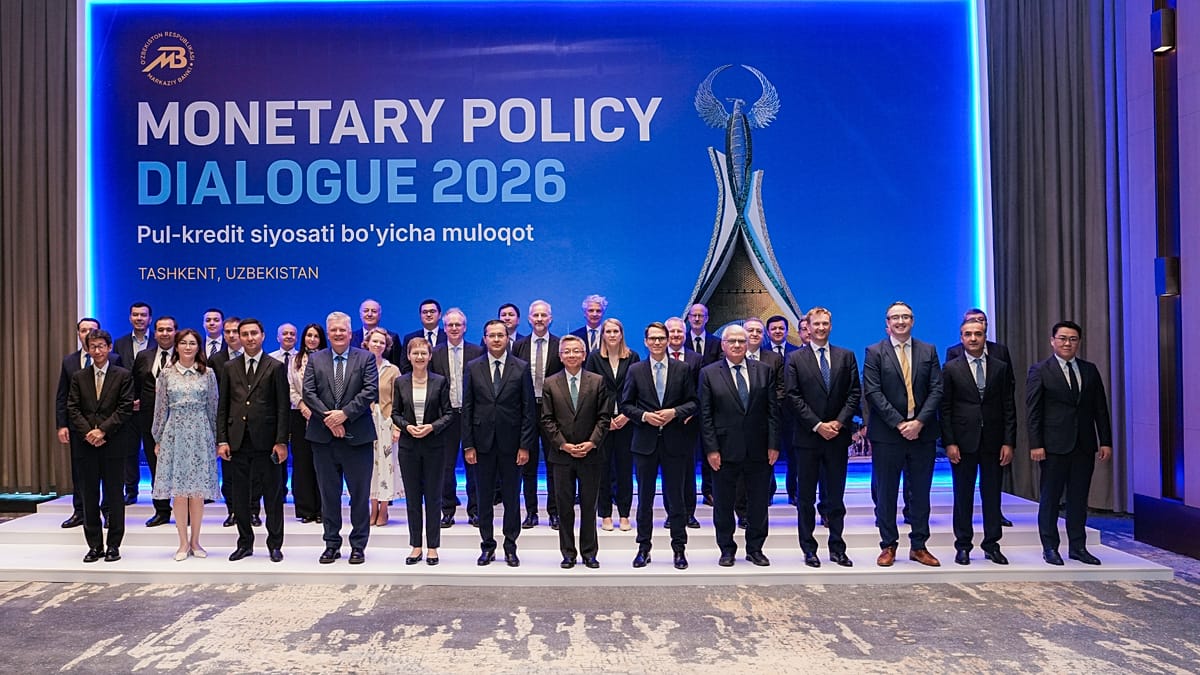
 1 source
Morning Edition · Thursday, July 9, 2026Published at 1:13 AM EDT · New York
Economists Warn Premature Rate Cuts Would Cost Central Banks Their Credibility
At a monetary-policy forum in Tashkent, officials pointed to Uzbekistan's falling inflation and reduced dollar use as proof that credibility, not speed, anchors prices.
Economists gathered at the Tashkent Monetary Policy Dialogue warned that cutting interest rates too early could lock inflation above target and erode the trust that makes monetary policy work, Euronews reported. They cited Uzbekistan as a case study, where lower inflation, falling inflation expectations and reduced dollarization followed a period of restraint.
The timing is significant. Many major central banks had signaled readiness to ease, and the energy shock now working through prices makes those cuts harder to justify without appearing to abandon their inflation targets.
The Uzbek example carries a lesson that reaches well beyond Central Asia. Reduced dollarization, meaning citizens hold more of their savings in the local currency rather than in dollars, is a result of credibility. When a central bank loses that trust, people move out of its currency into the dollar or into hard assets, and the currency's usefulness shrinks. This is the underlying mechanism behind the gradual global shift toward parallel monetary channels.
For a sound-money reader, the warning is welcome but incomplete. Credibility is not a communications exercise. It rests on whether a central bank will actually tolerate slower growth to defend the value of its money, a test that arrives precisely when governments most want cheap financing.
Part of a tracked trend
Renewed Fed Tightening Fears Rattle Global Markets
Over the next 3-6 months stronger US data revives expectations of Fed rate hikes, driving a firmer dollar, equity selloffs in export-heavy markets, and pressure on hard assets as the IMF warns of recurring economic shocks.
What this means
The exposed actor is any central bank tempted to cut into an energy-driven inflation impulse, and the channel is expectations. If households and firms conclude the bank will not defend its target, they begin to expect higher inflation, long-term borrowing costs rise, and savers shift out of the currency into dollars or hard assets. Emerging markets that fought to lower dollarization have the most to lose, because credibility built over years can reverse in months.
What to watch
- Which major central bank cuts first after the oil move, and whether it treats the move as temporary and to be ignored, or as a signal it will tolerate higher inflation.
- Inflation-expectation surveys in emerging markets, because a rise there is the earliest sign that trust in local money is slipping back toward dollarization.
Observations to monitor, not financial advice.
Source: Euronews
Townsquare
Start a discussion in Townsquare.
More from this edition
- Crude Climbs a Third Day as US-Iran Strikes Reinstate a War Premium in Oil
- Iran Hits Qatar, Bahrain and Kuwait and Attacks Hormuz Ships as US Bombs About 90 Iranian Targets
- IMF Cuts 2026 World Growth Forecast to 3 Percent, Citing the Iran War
- Beijing Will Let Chinese AI Firms Buy Nvidia's H200 Chips Under Case-by-Case Review
- Asian Technology Shares Sell Off as India's Sensex Rebounds More Than 550 Points
- Bain Capital Exits Kioxia After Its Shares Rose More Than 4,800 Percent Since Listing
- Trump Grants Ukraine Authority to Operate Patriot Defenses at Fractious NATO Summit
- Trump Says He Will Remove Syria From the US List of State Sponsors of Terrorism
Comments
0No comments yet.