← The Global Intelligence Brief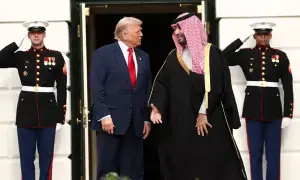

 2 sources
Morning Edition · Wednesday, July 22, 2026Published at 1:17 AM EDT · New York
Trump Approves 30-Year Nuclear Pact With Saudi Arabia That Could Allow Uranium Enrichment
Two officials cited by news agencies say the agreement omits an inspection safeguard that non-proliferation experts consider standard, as fighting between the kingdom and Yemen's Houthis resumes.
President Donald Trump has approved an agreement giving Saudi Arabia a civilian nuclear program, according to reporting relayed by Pakistan's Dawn, which cited two unnamed United States officials and said an announcement was expected on Wednesday. The deal, structured as what is known as a "123 Agreement," would run for 30 years. It would give American firms a central role in building the kingdom's nuclear infrastructure while excluding foreign competitors.
The terms have drawn scrutiny from arms-control specialists. According to accounts summarized by The Japan Times, the pact lacks safeguards that would bar the kingdom from enriching uranium on its own soil, and it does not require Riyadh to adopt the International Atomic Energy Agency's (IAEA) Additional Protocol, which grants inspectors expanded authority to verify that a program stays peaceful. Enrichment is a dual-use technology, because the same process that fuels reactors can, at higher levels, produce weapons material.
The move comes as Saudi Arabia and Yemen's Houthi movement resumed fighting, and it runs against Riyadh's long-stated position, voiced by Crown Prince Mohammed bin Salman, that it would seek a bomb if Iran obtained one. The White House frames the deal as an economic and strategic partnership worth tens of billions of dollars. Trump is expected to seek congressional approval, where non-proliferation concerns are likely to be contested.
Veracity: Corroborated
77/100- If true, who benefits
American nuclear-supply firms win exclusive contracts and Riyadh gains latent enrichment leverage, while the White House books a multibillion-dollar strategic partnership.
- The nuance
The core terms rest on two unnamed US officials and the words "may allow," the final enrichment and inspection provisions are unconfirmed, and the pact still requires congressional review that could alter it.
An open-source-intelligence read of how likely this story is true with its real nuance, not a judgment of any outlet. It assesses the claim, weighing independent and adversarial reporting. How we label confidence.
What this means
The channel is regional security architecture and, through it, energy risk. A Saudi enrichment capability without the strongest inspection regime lowers the barrier to a wider Gulf nuclear contest, which raises the long-run political-risk premium embedded in Gulf oil infrastructure and shipping. American engineering and nuclear-supply firms gain contracts and market position, while the non-proliferation regime centered on the IAEA loses authority. The immediate market effect is indirect, but a Gulf where more states hedge toward weapons capability is a Gulf where every future confrontation carries higher tail risk for crude.
Synthesized from: Dawn · The Japan Times
Townsquare
Start a discussion in Townsquare.
More from this edition
- United States Bombs Iran for an 11th Night as War Cost Reaches $37.5 Billion and Oil Holds Near a Monthly High
- Foreign Carmakers Keep Losing Ground in China as Beijing Exports Its Industrial Surplus
- Samsung Weighs €1 Billion Bet on Mistral as China's Moonshot Rushes to a Hong Kong Listing
- Indian Bank Guidance Cut Sends Bandhan Down 10% Even as Auto and Hotel Earnings Climb
- Russia Strikes Odesa Ports as Ukrainian Drones Ignite a Warehouse Complex in Krasnodar
- Boeing Asks Washington to Challenge a Record European Loan to Airbus
- Indonesia Restarts a Contested South China Sea Gas Field Despite Beijing's Objections
Comments
0No comments yet.