← The Global Intelligence Brief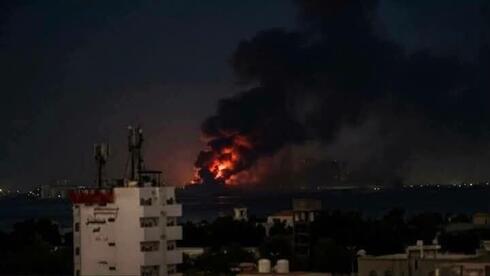


 3 sources
Morning Edition · Saturday, July 25, 2026UpdatedPublished at 7:01 AM EDT · New York
Saudi Arabia Strikes Yemen's Hodeidah After Attack on Its Red Sea Shipping
The Houthi movement answered what it called a dangerous escalation by striking a Saudi Aramco refinery at Jazan, where a large fire broke out.
Updated at 7:01 AM EDT
Houthi retaliation is now confirmed: a missile and drone strike hit the Aramco refinery at Jazan, causing a large fire, escalating beyond the earlier "reported launches."
The Gulf conflict widened on Friday when Saudi Arabia struck the Yemeni port city of Hodeidah after an attack on a ship sailing under the Saudi flag in the Red Sea. Israel's Ynet reported that Riyadh responded to the vessel strike with attacks on the port city and on what it described as weapons depots. Shortly after the strike on Hodeidah, the Houthi movement carried out its promised retaliation, and Saudi Arabia's southern industrial city of Jazan was hit. Houthi forces said they attacked Jazan with ballistic missiles and drones, and a large fire broke out at a refinery operated by the state oil company Saudi Aramco, according to Yemeni and regional reporting.
The two sides describe the same strikes differently. Saudi Arabia says it hit military targets used to threaten commercial vessels, while the Houthi movement says civilian sites in Hodeidah, including telecommunications facilities, were struck and called the operation a dangerous escalation that it would answer, according to Deutsche Welle. Al Jazeera reported that the Saudi-led coalition said the Hodeidah strikes targeted sites used to threaten shipping, while Houthi-run media said the strikes hit civilian infrastructure. Separately, The Hindu's running coverage reported that the United States military had disabled a tanker that it said was trying to evade a blockade of an Iranian port.
The involvement of Saudi Arabia matters beyond Yemen. The confirmed strike on the Aramco refinery at Jazan turns a US-Iran confrontation into a broader regional exchange that has now directly reached Gulf energy infrastructure and the shipping lanes that carry it, the same lanes whose disruption pushed crude toward $100 earlier in the week.
Part of a tracked trend
Hormuz Chokepoint Repricing
Recurring Gulf conflict forces energy exporters and importers to build costly workarounds around the Strait of Hormuz, permanently raising the risk premium embedded in Gulf trade and infrastructure.
Veracity: Corroborated
77/100- If true, who benefits
Framing the Houthis as the aggressor supports the Saudi and US case for the campaign, while the rising war-risk premium benefits insurers, tanker owners and Gulf producers selling at elevated prices.
- The nuance
The vessel strike and Saudi retaliation are confirmed, but the target is disputed: the Saudi coalition says it hit military sites and that Hodeidah port stayed open, while Houthi media reports civilian and telecom facilities were struck.
An open-source-intelligence read of how likely this story is true with its real nuance, not a judgment of any outlet. It assesses the claim, weighing independent and adversarial reporting. How we label confidence.
What this means
The more actors that join the fighting, the harder it is to price a clean de-escalation, because a ceasefire now requires Riyadh, the Houthis and Washington to halt operations at the same time. Gulf energy exporters and the insurers and shippers who move their cargo are the most exposed, through higher war-risk premiums and rerouting costs. That cost does not disappear when a truce arrives. It becomes a standing charge on Gulf trade.
What to watch
Synthesized from: Deutsche Welle · Ynet · The Hindu
Townsquare
Start a discussion in Townsquare.
More from this edition
- Oil Falls Nearly 4% as China and Pakistan Press to Restart US-Iran Talks
- Trump Reimposes Near-Universal Tariffs on 60 Economies, Citing Forced Labor
- Gold Holds Near $4,030 as Markets Weigh a Fed That May Still Raise Rates
- Indian Stocks Fall for a Fifth Session as Oil and Foreign Selling Weigh
- SpaceX Flies Starship for the First Time Since Its Public Listing
- Russia Says New START Lapsed Over Washington's Refusal to Respond
- Seven & i Walks Away From Investment in Poland's Zabka Chain
- Japan Courts India and Malaysia to Escape a US-China AI Duopoly
Comments
0No comments yet.