← The Global Intelligence Brief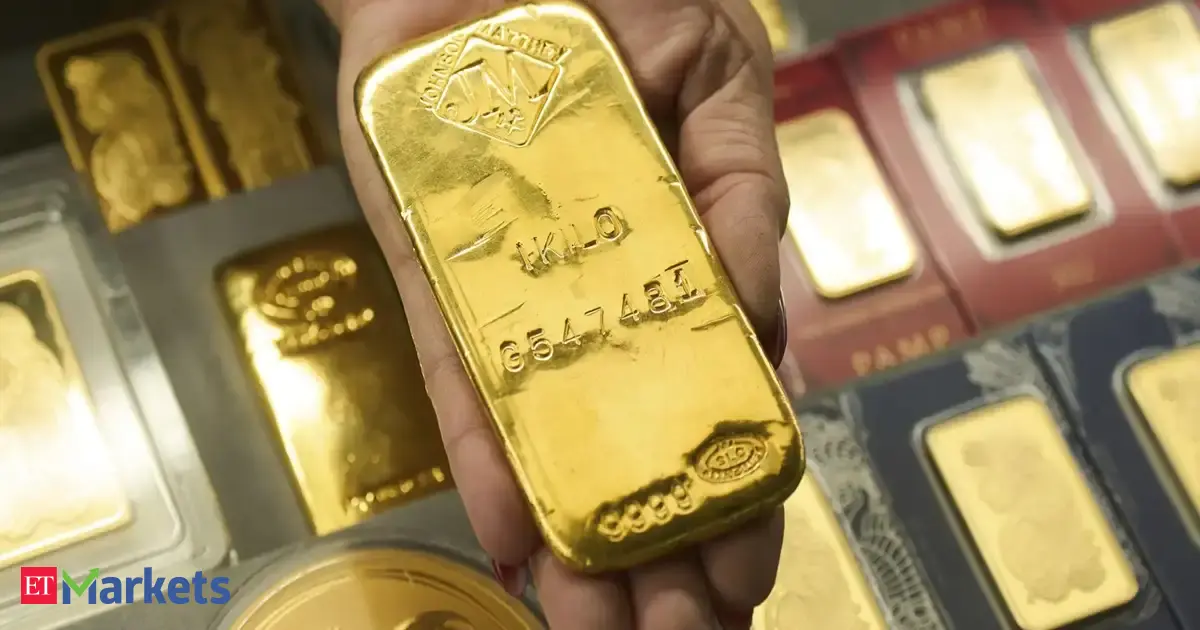
 2 sources
Morning Edition · Saturday, July 25, 2026Published at 1:28 AM EDT · New York
Gold Holds Near $4,030 as Markets Weigh a Fed That May Still Raise Rates
Traders price roughly a one-in-three chance of a hike at the July 29 meeting and stronger odds by September, as oil-driven inflation pressure meets a slowing economy.
Gold traded near $4,030 an ounce heading into the weekend, steadying after a decline of close to 2% in the prior session, as investors weighed whether Middle East inflation pressure will push the Federal Reserve to raise rates at its meeting on Wednesday, July 29. The Economic Times, citing Reuters, noted that bullion firmed during the day as Brent crude eased while traders awaited the rate decision. Money markets now assign roughly a 34% probability to a rate increase next week, according to gold pricing coverage, with the odds of a September move above 80%.
Equities reflected the same unease. United States indexes closed mixed on Friday and finished the week lower as the conflict with Iran and fresh tariffs sustained inflation concerns, the Economic Times reported, though bond yields eased on the day. Other assets that investors treat as inflation hedges were weaker. Bitcoin opened Friday near $65,000, down about 1.6%, after spot bitcoin funds recorded roughly $225 million in net outflows the prior day as higher oil and tariffs lifted yields.
The situation exposes the difficult position central banks now face. Policy must respond to prices it did not cause, because an energy shock generated by war appears as inflation just as growth is weakening. When the cost of money must rise to answer a supply shock rather than a demand boom, the resulting pressure falls hardest on the borrowers and inflated asset positions that the prior era of cheap credit encouraged.
Part of a tracked trend
Renewed Fed Tightening Fears Rattle Global Markets
Over the next 3-6 months stronger US data revives expectations of Fed rate hikes, driving a firmer dollar, equity selloffs in export-heavy markets, and pressure on hard assets as the IMF warns of recurring economic shocks.
What this means
A Fed that even considers hiking into a supply shock is a warning to every rate-sensitive asset. Equities in export-heavy and highly leveraged sectors lose first, through a higher discount rate and a firmer dollar, while hard assets like gold face pressure in both directions, supported as an inflation hedge but weakened when real yields rise. The deciding variable is oil: if the Gulf premium keeps feeding inflation, the case for higher rates remains, and if talks hold and crude falls, the pressure to tighten fades.
What to watch
- The Fed's July 29 statement and whether officials signal that energy-driven inflation, rather than demand, is now the binding constraint on policy.
- Bitcoin exchange-traded fund flows, because sustained outflows alongside a firmer dollar signal that investors are treating digital assets as risk positions to trim rather than as a monetary hedge to hold.
Observations to monitor, not financial advice.
Synthesized from: Economic Times (Reuters) · Economic Times (AP)
Townsquare
Start a discussion in Townsquare.
More from this edition
- Oil Falls Nearly 4% as China and Pakistan Press to Restart US-Iran Talks
- Trump Reimposes Near-Universal Tariffs on 60 Economies, Citing Forced Labor
- Saudi Arabia Strikes Yemen's Hodeidah After Attack on Its Red Sea Shipping
- Indian Stocks Fall for a Fifth Session as Oil and Foreign Selling Weigh
- SpaceX Flies Starship for the First Time Since Its Public Listing
- Russia Says New START Lapsed Over Washington's Refusal to Respond
- Seven & i Walks Away From Investment in Poland's Zabka Chain
- Japan Courts India and Malaysia to Escape a US-China AI Duopoly
Comments
0No comments yet.