← The Global Intelligence Brief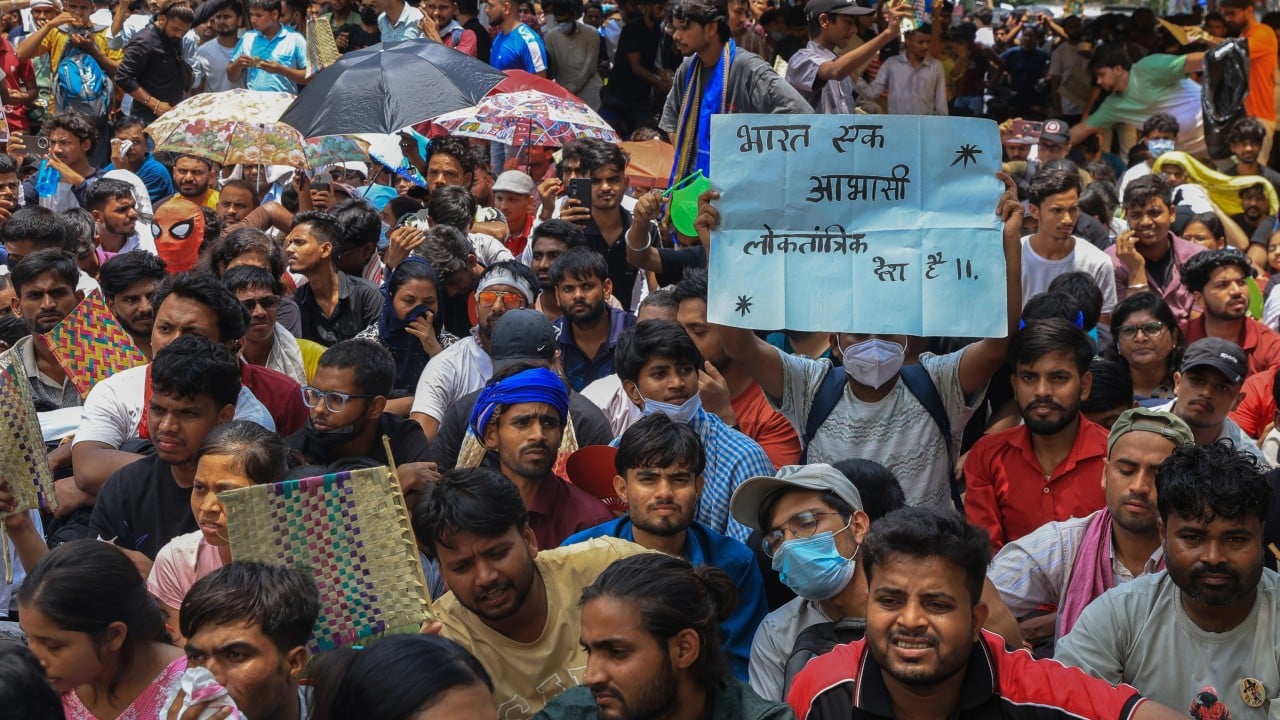


 3 sources
Morning Edition · Sunday, July 26, 2026UpdatedPublished at 7:03 AM EDT · New York
India's Education Minister Resigns, the First Cabinet Exit Forced by Protest Under Modi
Dharmendra Pradhan stepped down and the government accepted the protesters' demands, ending weeks of youth-led demonstrations over leaked entrance exams that forced a retake affecting two million students.
Updated at 7:03 AM EDT
The "cockroach" movement declared victory and called off its protests after the government accepted all its demands, including dropping police cases against protesters and compensating families of students who died.
Dharmendra Pradhan, India's education minister, resigned on Saturday after weeks of nationwide protests over leaked entrance examinations, according to multiple reports. The Japan Times described it as the first time since Prime Minister Narendra Modi took power in 2014 that one of his cabinet ministers had resigned under public pressure.
The demonstrations, driven by a youth movement whose members called themselves "cockroaches," began after leaks in some of India's most competitive national exams forced a retake affecting roughly two million students. After Pradhan's departure, the movement declared victory and called off its protests, saying the government had accepted its demands, which included reforms to the examination system, the dropping of police cases against protesters, and compensation for the families of students who died by suicide after the leaks, according to CNN. The South China Morning Post reported that the scale of participation pointed to the governing Bharatiya Janata Party (BJP) and its failure to connect with a generation that faces scarce job prospects.
The anger extends beyond one ministry. A justice of India's Supreme Court, Ujjal Bhuyan, publicly warned that legitimate activity is being treated as crime and that students who protest are jailed, questioning the courts' approach to bail, according to BBC News Hindi. Supporters of the government describe the resignation and the concessions as accountability at work, while the movement's organizers frame them as a forced retreat wrung from a reluctant administration.
Veracity: Corroborated
90/100- If true, who benefits
The youth-led movement and the opposition, which extract a rare concession and a template for pressure, while Modi and the Bharatiya Janata Party absorb a visible political cost ahead of state elections.
- The nuance
The resignation and the two-million-student retake are confirmed, but "first cabinet exit forced by protest under Modi" is a characterization, and whether this was genuine accountability or a reluctant concession is the framing each side disputes.
An open-source-intelligence read of how likely this story is true with its real nuance, not a judgment of any outlet. It assesses the claim, weighing independent and adversarial reporting. How we label confidence.
What this means
India is the fastest-growing major economy and a favored destination for capital diversifying away from China, so the durability of its governance matters to foreign investors. A government that must retreat under street pressure has less room to pass unpopular economic reforms, from labor rules to land and subsidy changes, that markets have priced into India's growth story. The immediate loser is policy momentum. The immediate winner is a young electorate that has learned it can extract concessions.
Synthesized from: South China Morning Post · The Japan Times · BBC News Hindi
Townsquare
Start a discussion in Townsquare.
More from this edition
- Brent Falls Toward $92 as US-Iran Strike Pause Holds a Second Night
- Gold Holds Near $4,066 as Warsh's Fed Firms the Dollar and Tilts Toward a September Hike
- Iran Accuses Ukraine of Bombing One of Its Ships in the Caspian, Widening the War's Map
- Trade Blocs Harden as China Splits the EU and US Tariffs Hit Seven Southeast Asian States
- Chinese Investors Use Crypto Exchanges to Bypass Beijing's Controls on AI Stocks
- Defense Giants Are Funding Military Start-Ups as Drones Rewrite the Battlefield
- Gulf War Squeezes Pakistan's Informal Dollar Pipeline and Freezes Its Rate Decision
Comments
0No comments yet.