← The Global Intelligence Brief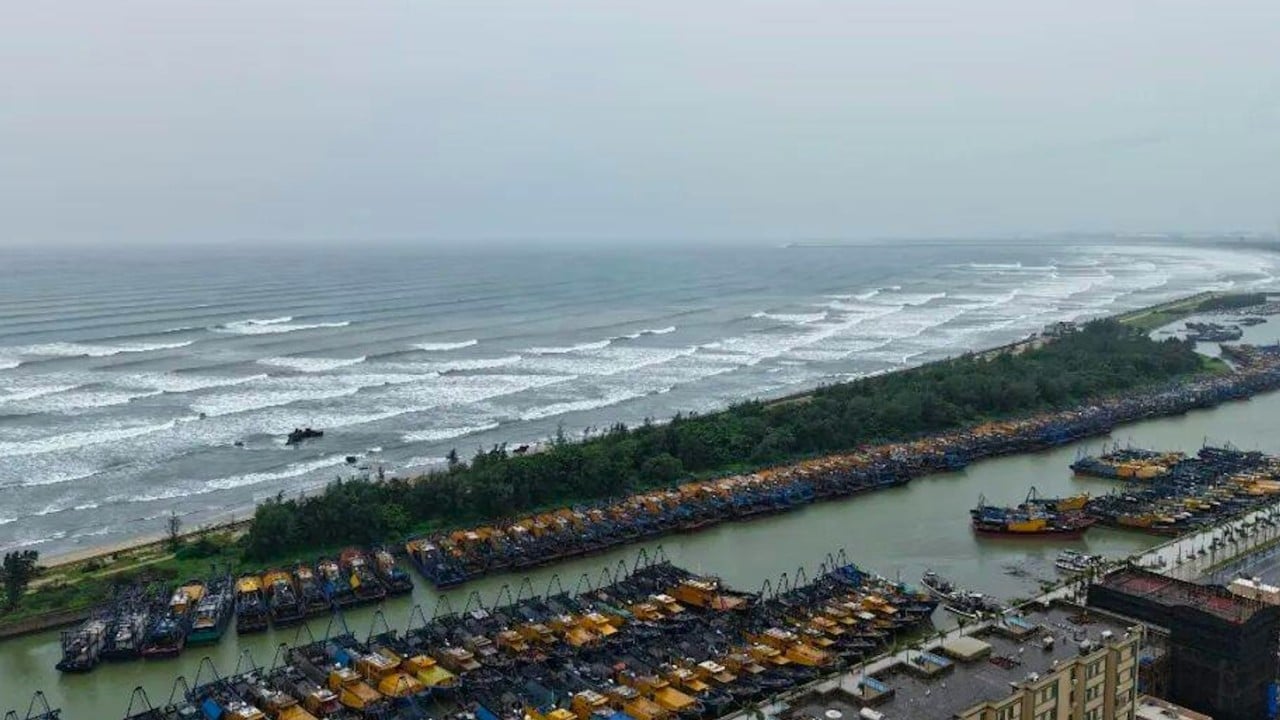

 2 sources
Morning Edition · Sunday, July 26, 2026UpdatedPublished at 7:03 AM EDT · New York
Typhoon Noul Halts Transport Across China's Southern Tech and Manufacturing Hubs
More than 800,000 people were relocated and rail and flights cancelled across Guangdong after the year's strongest storm to hit China made landfall near Shenzhen and Guangzhou.
Updated at 7:03 AM EDT
Authorities relocated more than 800,000 people across Guangdong, and Noul weakened to a tropical storm on Sunday as it moved inland.
Typhoon Noul made landfall in China's Guangdong province, forcing the cancellation of high-speed rail services and flights across a region central to much of the country's electronics manufacturing, the South China Morning Post reported. The outlet described Noul as the strongest typhoon to strike China so far this year, bringing heavy rainfall to Shenzhen, Guangzhou, and the surrounding manufacturing belt. Authorities relocated more than 800,000 people across the province for safety, and a dozen cities suspended classes, work, production, and public transport.
Russian state agency TASS reported that China deployed an interconnected swarm of drones to monitor the typhoon throughout its landfall, which Chinese state television presented as a first for the country's disaster response. The detail underscores how Guangdong's technology base is being turned toward managing the storms that threaten it.
Shenzhen and Guangzhou form one of the densest concentrations of electronics production and export logistics in the world. A multi-day halt to transport disrupts supply chains that operate just in time, delaying components and finished goods bound for global markets. Noul weakened to a tropical storm on Sunday as it moved inland toward Jiangxi, Hunan, and Hubei, though the disruption to Guangdong's export logistics persisted.
Part of a tracked trend
Climate Shocks as Recurring Economic Drag
Intensifying heat waves recur as a measurable drag on European productivity, energy systems and prices, a seasonal risk markets must increasingly price.
What this means
Extreme weather striking a single high-density manufacturing region is a supply shock that markets increasingly have to price, because a few days of halted rail and flights in Guangdong delays electronics shipments worldwide. Manufacturers and importers dependent on just-in-time delivery lose through missed schedules and higher freight costs, while the disruption compounds the pressure on a Chinese economy already dependent on exports. The channel is logistics and production downtime transmitting a local storm into global component availability.
What to watch
- How quickly Guangdong's ports and rail return to full operation, the measure of whether this is a brief delay or a lasting supply disruption.
- Damage reports from Shenzhen and Guangzhou factories, which will show whether production capacity itself was damaged or only transport.
Observations to monitor, not financial advice.
Synthesized from: South China Morning Post · TASS
Townsquare
Start a discussion in Townsquare.
More from this edition
- Brent Falls Toward $92 as US-Iran Strike Pause Holds a Second Night
- Gold Holds Near $4,066 as Warsh's Fed Firms the Dollar and Tilts Toward a September Hike
- India's Education Minister Resigns, the First Cabinet Exit Forced by Protest Under Modi
- Iran Accuses Ukraine of Bombing One of Its Ships in the Caspian, Widening the War's Map
- Trade Blocs Harden as China Splits the EU and US Tariffs Hit Seven Southeast Asian States
- Chinese Investors Use Crypto Exchanges to Bypass Beijing's Controls on AI Stocks
- Defense Giants Are Funding Military Start-Ups as Drones Rewrite the Battlefield
Comments
0No comments yet.