← The Global Intelligence Brief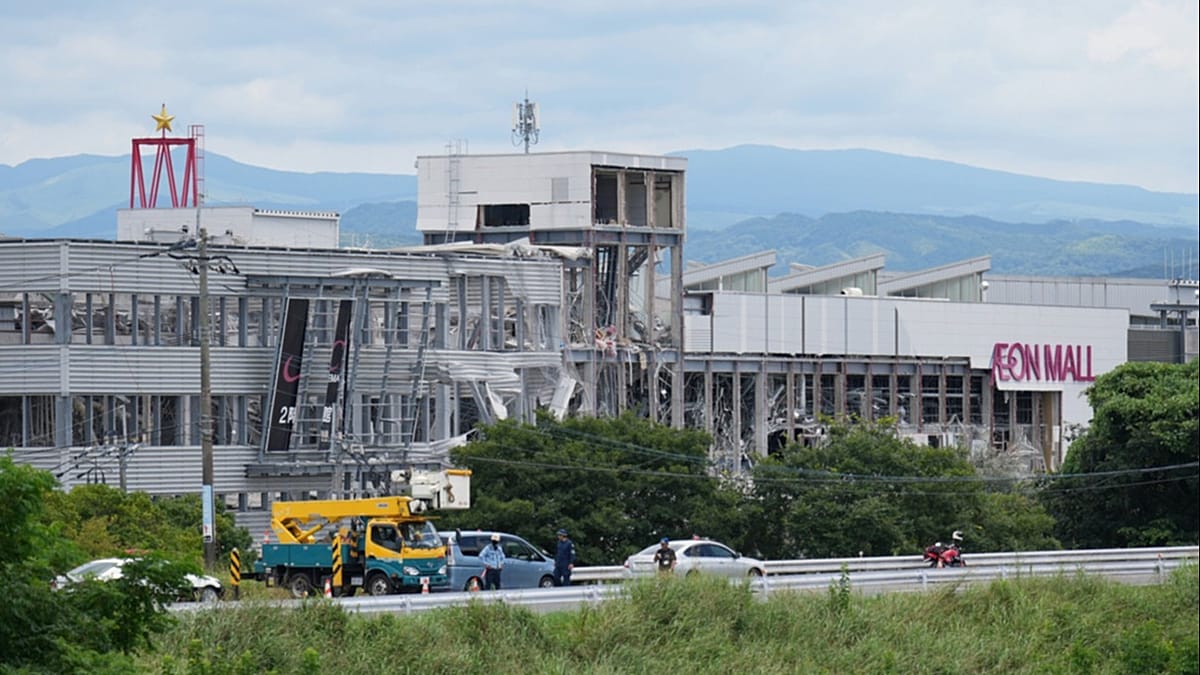


 3 sources
Morning Edition · Wednesday, July 29, 2026Published at 1:17 AM EDT · New York
Powerful Earthquake in Southwestern Japan Kills at Least 13 as a Shopping Mall Collapses
Rescuers searched the rubble of a newly reopened Aeon Mall in Kumamoto after a magnitude 7.1 quake.
A magnitude 7.1 earthquake struck the Kumamoto area on Japan's southern island of Kyushu, killing at least 13 people, with many still missing as rescuers worked through collapsed buildings, the South China Morning Post reported. Japanese Prime Minister Sanae Takaichi confirmed the toll and said the search continued. Among the collapsed structures was a recently reopened Aeon Mall, The Japan Times reported.
Emergency workers were working urgently to find survivors and put out fires within the first 72 hours, the period in which the chance of rescue is highest, while rising summer temperatures complicated the effort, Euronews reported. A magnitude 7.0 earthquake struck the same region in 2016. Reported magnitudes varied between 6.8 and 7.1 across early accounts, reflecting the usual revisions in the hours after a major earthquake.
Kumamoto is home to advanced semiconductor manufacturing, including facilities central to Japan's effort to rebuild domestic chip production, which means the disaster is both a humanitarian emergency and a risk to a globally significant supply chain.
Part of a tracked trend
Disasters as Political and Supply Shocks
Major natural disasters in commodity-producing states translate into political instability and supply disruptions that markets increasingly have to price, recurring as climate and geological shocks hit fragile economies.
What this means
The semiconductor supply chain is the exposed party, because Kumamoto hosts advanced chip fabrication that global electronics and automotive makers depend on, and any damage or extended power and water disruption to those plants would tighten component supply. The channel is concentration. When critical production sits in a seismically active region, a single geological event can translate into a supply shock felt far beyond Japan, adding to the cost pressures already present in the chip sector.
What to watch
- Damage assessments at Kumamoto's semiconductor plants, because confirmed disruption to fabrication or utilities would ripple into global chip supply.
- Aftershock activity and the final casualty count, since both determine the scale of the emergency and the reconstruction demand that follows.
Observations to monitor, not financial advice.
Synthesized from: South China Morning Post · Euronews · The Japan Times
Townsquare
Start a discussion in Townsquare.
More from this edition
- SK Hynix Profit Miss Deepens Global Retreat From AI Chip Stocks as Fed Decision Nears
- Iran Fires Missiles at US Forces in Jordan as Washington and Riyadh Strike Iraq, Lifting Oil
- Ukraine Retools Long-Range Drone Strikes to Keep Russian Refineries Offline Longer
- India's Larsen & Toubro Lifts Profit 14 Percent as Domestic Demand Cushions Global Tech Selloff
- China Holds Six of the Ten Most Innovative Humanoid-Robot Startups, Patent Study Finds
- Trump Hosts Netanyahu for Seventh White House Visit as Israel Heads Toward October Election
- US Diplomats Walk Out of UN Security Council as France Criticizes Washington's Rights Record
Comments
0No comments yet.