← The Global Intelligence Brief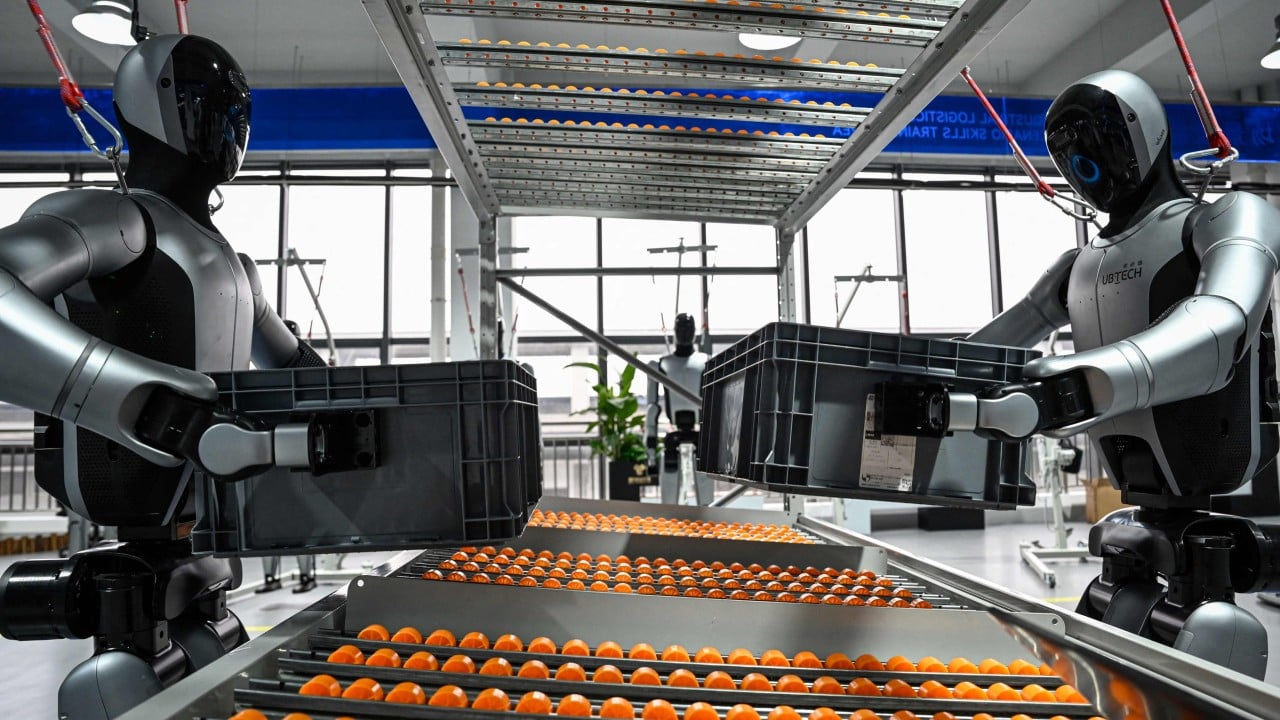
 2 sources
Morning Edition · Wednesday, July 29, 2026Published at 1:17 AM EDT · New York
China Holds Six of the Ten Most Innovative Humanoid-Robot Startups, Patent Study Finds
The report comes as Washington tightens technology export controls, and Beijing widens a lead in a field it treats as strategic.
Chinese companies account for six of the world's ten most innovative humanoid-robot startups, according to a new study of global patent data cited by the South China Morning Post, evidence that Beijing is widening its lead in a field it treats as central to future manufacturing and defense. The report frames the gap as growing even as Washington moves to restrict imports and the flow of advanced components, the paper reported.
The finding comes alongside a rare area of cooperation between the two powers. A senior United States defense official said military communication with China's People's Liberation Army was stronger than it had been in years and described it as an exception within a broadly competitive relationship, according to the South China Morning Post. The combination reflects the current state of relations, with managed dialogue on security while each side works to build a technology base independent of the other.
Export controls intended to slow China have instead accelerated its effort to develop domestic robotics, chips and computing hardware, deepening a split of global technology into competing systems with separate supply chains and standards.
Part of a tracked trend
China Builds a Parallel Technology Stack
United States export controls push China to develop its own chips, computing hardware and artificial-intelligence systems, accelerating a split of global technology into competing spheres that reshapes supply chains and standards.
Veracity: Corroborated
80/100- If true, who benefits
China's technology-sovereignty narrative and its robotics firms courting capital gain, as does the domestic case that United States export controls are backfiring.
- The nuance
The LexisNexis study ranks by patent filings, which measure the volume of claimed inventions rather than commercial scale, product quality, or who ultimately sets factory-automation standards.
An open-source-intelligence read of how likely this story is true with its real nuance, not a judgment of any outlet. It assesses the claim, weighing independent and adversarial reporting. How we label confidence.
What this means
The exposed parties are Western robotics and automation suppliers and the industrial firms that buy from them, because a Chinese lead in humanoid hardware, combined with China's manufacturing scale, could set the cost base and technical standards for the next generation of factory automation. The channel is bifurcation. As controls push China to build a parallel system, buyers increasingly choose between two incompatible ecosystems, which raises costs and fragments a market that once served both.
What to watch
Synthesized from: South China Morning Post · South China Morning Post
Townsquare
Start a discussion in Townsquare.
More from this edition
- SK Hynix Profit Miss Deepens Global Retreat From AI Chip Stocks as Fed Decision Nears
- Iran Fires Missiles at US Forces in Jordan as Washington and Riyadh Strike Iraq, Lifting Oil
- Ukraine Retools Long-Range Drone Strikes to Keep Russian Refineries Offline Longer
- India's Larsen & Toubro Lifts Profit 14 Percent as Domestic Demand Cushions Global Tech Selloff
- Trump Hosts Netanyahu for Seventh White House Visit as Israel Heads Toward October Election
- US Diplomats Walk Out of UN Security Council as France Criticizes Washington's Rights Record
- Iran to Receive Chinese Shoulder-Launched Missiles Within Weeks, Sources Say
Comments
0No comments yet.