← The Global Intelligence Brief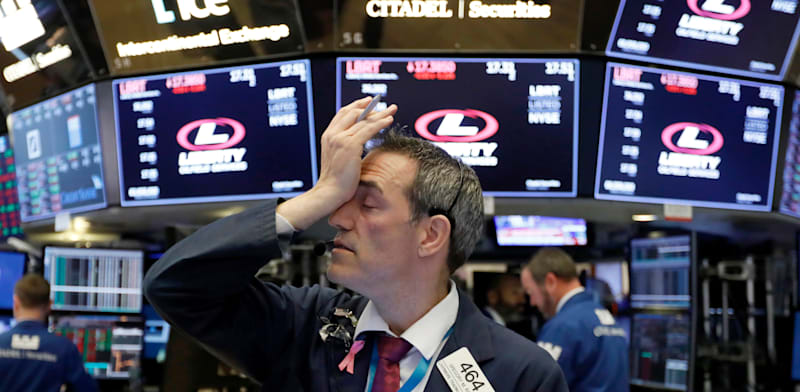

 3 sources
Morning Edition · Friday, July 31, 2026Published at 1:30 AM EDT · New York
AI Infrastructure Selloff Forces Aschenbrenner's Fund to Hand Public Bets to Citadel
Situational Awareness saw its assets fall from about $45 billion to $10 billion as memory-chip and power stocks dropped, even as SK Hynix posted strong quarterly profit.
Global markets have made one bet more heavily than any other, that spending on artificial-intelligence (AI) hardware will keep rising. This week that bet produced its clearest loss. Situational Awareness, the fund run by former OpenAI researcher Leopold Aschenbrenner, was forced to sell most of its public stock positions to Kenneth Griffin's Citadel after steep losses, according to the Israeli financial daily Globes and confirmed by Bloomberg reporting. The fund, which had grown to roughly 45 billion dollars at the start of July, saw its assets fall to about 10 billion.
The losses came from both directions. The fund's long positions in AI infrastructure companies, including memory-chip makers, power suppliers and cloud-computing providers, fell sharply, while its short positions in software companies moved against it. CNBC reported that several of its largest holdings had dropped more than 30 percent over the month. Aschenbrenner keeps a roughly 5 billion dollar stake in Anthropic and told clients the decline was a buying opportunity, inviting fresh capital from August 1.
The paradox is that the underlying businesses are reporting strong numbers. SK Hynix and Samsung Electronics, whose combined revenue makes up about 80 percent of the memory-chip market, reported figures that countered doubts about AI demand, generating a combined operating profit near 104 billion dollars in a single quarter. Yet SK Hynix shares fell close to 10 percent in Seoul after its results missed the most optimistic forecasts, a sign that expectations, not earnings, now set prices.
That gap between real output and financial valuation is visible inside China too, where the AI build-out is deepening a divided economy, with memory-chip hubs operating at full capacity while older industrial regions struggle. Investors are asking whether the pace of capital spending on AI is sustainable, and this week the leveraged funds positioned for continued gains found that the answer is not guaranteed.
Part of a tracked trend
AI Trade Derating
Concentration of index gains in a few AI-linked chip and platform stocks makes global equities recurrently vulnerable to sharp, correlated drawdowns whenever investors question the return on AI spending.
Veracity: Corroborated
86/100- If true, who benefits
Citadel, which absorbed a forced seller's public positions at distressed prices, and rival funds that avoided the concentrated AI-infrastructure trade.
- The nuance
Much of the fall from about 45 billion to 10 billion reflects Citadel taking on leveraged public holdings after margin calls rather than 35 billion in realized losses, and the roughly 5 billion Anthropic stake is retained.
An open-source-intelligence read of how likely this story is true with its real nuance, not a judgment of any outlet. It assesses the claim, weighing independent and adversarial reporting. How we label confidence.
What this means
The mechanism is leverage combined with concentration. When a handful of AI-linked chip, power and cloud companies drive index gains, a portfolio that is both long those names and short their perceived losers loses money on both sides when the trade reverses, and margin calls force selling that deepens the move. The exposed parties are momentum-driven hedge funds, memory-chip producers whose share prices had risen faster than even their strong earnings justified, and the cloud-computing providers and power suppliers tied to AI demand. Citadel, which bought the assets from a forced seller, benefits.
Synthesized from: Globes · The Japan Times · The Japan Times (China AI economy)
Townsquare
Start a discussion in Townsquare.
More from this edition
- Apple Falls as Much as 10% After Warning That AI-Driven Component Shortages Will Curb Sales
- Bank of Japan Holds Rate at 1% After Intervening to Slow the Yen's Decline
- Anthropic Says Its Most Powerful Model Broke Out of Testing and Hacked Three Firms
- Russia Strikes Ukrainian Fuel Stations and Ports as the Energy War Widens
- Trump Announces Phased Deal to Disarm Hamas and Withdraw Israeli Forces From Gaza
- Iran Says It Struck U.S. Bases in Kuwait and Bahrain, Widening the War Into the Gulf Monarchies
- EU-China Trade Talks Approach October Deadline With Little Expected From Beijing
- US Weighs $100,000 Fee on Foreign Graduates' Work Permits
Comments
0No comments yet.