← The Global Intelligence Brief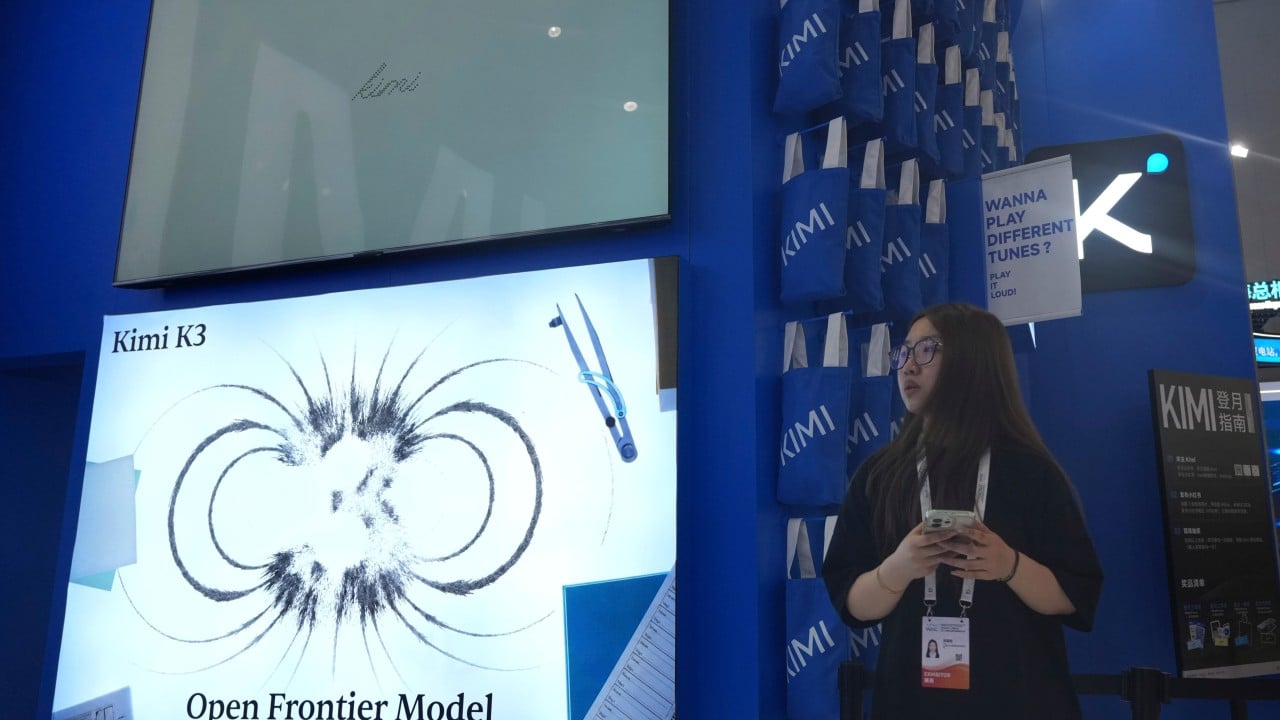


 3 sources
Morning Edition · Monday, August 3, 2026Published at 1:17 AM EDT · New York
US Business Groups Warn a Ban on Chinese AI Models Could Cost $12 Billion a Year
As American firms adopt cheaper Chinese open-weight systems, a proposed US ban runs counter to Europe's effort to avoid depending on either technology sphere.
A potential US ban on Chinese open-weight artificial intelligence (AI) models could cost American businesses as much as $12 billion a year, according to calculations by a US-based academic cited by the South China Morning Post, as companies increasingly turn to cost-efficient Chinese systems. Open-weight models, whose parameters are published so anyone can run and adapt them, have become popular precisely because they are cheaper than proprietary Western alternatives.
The proposal is another element of what the Financial Times called a digital iron curtain dividing the global technology economy. The paper argued that Europe, positioned between American and Chinese systems, could act as a trusted connector rather than align with either side. Meanwhile Russia's TASS reported that the European Union is weighing whether to exclude US AI cloud technology from a recruitment platform, doubting the wisdom of relying on an American provider.
The three accounts point in the same direction from different vantage points. Washington wants to block Chinese models on security grounds, Brussels is growing wary of dependence on American infrastructure, and Beijing benefits as its low-cost systems spread. Each restriction pushes users toward substitutes and deepens the split into competing technology blocs.
For the sound-money and trade view, the cost is the same one that always accompanies fragmentation. Barriers raise prices, duplicate investment and reduce the efficiency gains that a single global market would deliver.
Part of a tracked trend
China Builds a Parallel Technology Stack
United States export controls push China to develop its own chips, computing hardware and artificial-intelligence systems, accelerating a split of global technology into competing spheres that reshapes supply chains and standards.
Veracity: Plausible
70/100- If true, who benefits
Chinese open-weight developers gain global adoption, and US startups lobbying against a ban, whose case the $12 billion figure directly advances.
- The nuance
The $12 billion is one academic's model extrapolated from OpenRouter usage, not a measured cost, and no ban has yet been enacted.
An open-source-intelligence read of how likely this story is true with its real nuance, not a judgment of any outlet. It assesses the claim, weighing independent and adversarial reporting. How we label confidence.
What this means
Export controls and model bans push the world toward parallel technology stacks, which raises costs for the firms and consumers on each side of the divide and rewards whichever bloc offers the cheapest usable tools. US companies lose access to low-cost Chinese models and face higher AI bills, Chinese developers gain global adoption, and Europe gains leverage if it can credibly stay neutral. The mechanism is substitution, as every restriction routes demand toward an alternative supplier and entrenches the split.
Synthesized from: South China Morning Post · Financial Times · TASS
Townsquare
Start a discussion in Townsquare.
More from this edition
- Trump Halts Iran Strike and Sets Monday Talks on Hormuz, and Oil Falls Nearly 5%
- Warsh Holds Rates, and the 30-Year Treasury Yield Climbs Above 5.2%
- Japan and the United States Intervene Jointly to Support the Yen for the First Time Since 2011
- US Senate Reaches Stopgap Funding Deal as Bond Markets Tolerate Rising Deficits
- Ukraine and Russia Widen Strikes, Killing at Least 14 as Attacks Reach Russian Logistics
- Lula Launches Reelection Bid in Brazil Amid Foreign-Interference Concerns
- Cuba Suffers Another Nationwide Blackout as US Fuel Restrictions Bite
- Wall Street Moves to Put Markets on the Blockchain
Comments
2Aug 3, 4:05 PM · edited
If you can't beat them, ban them!
Aug 3, 12:52 PM · edited
Banning open source models is not possible. Interesting how freedom of speech applies to agentic generated content / text.