← The Global Intelligence Brief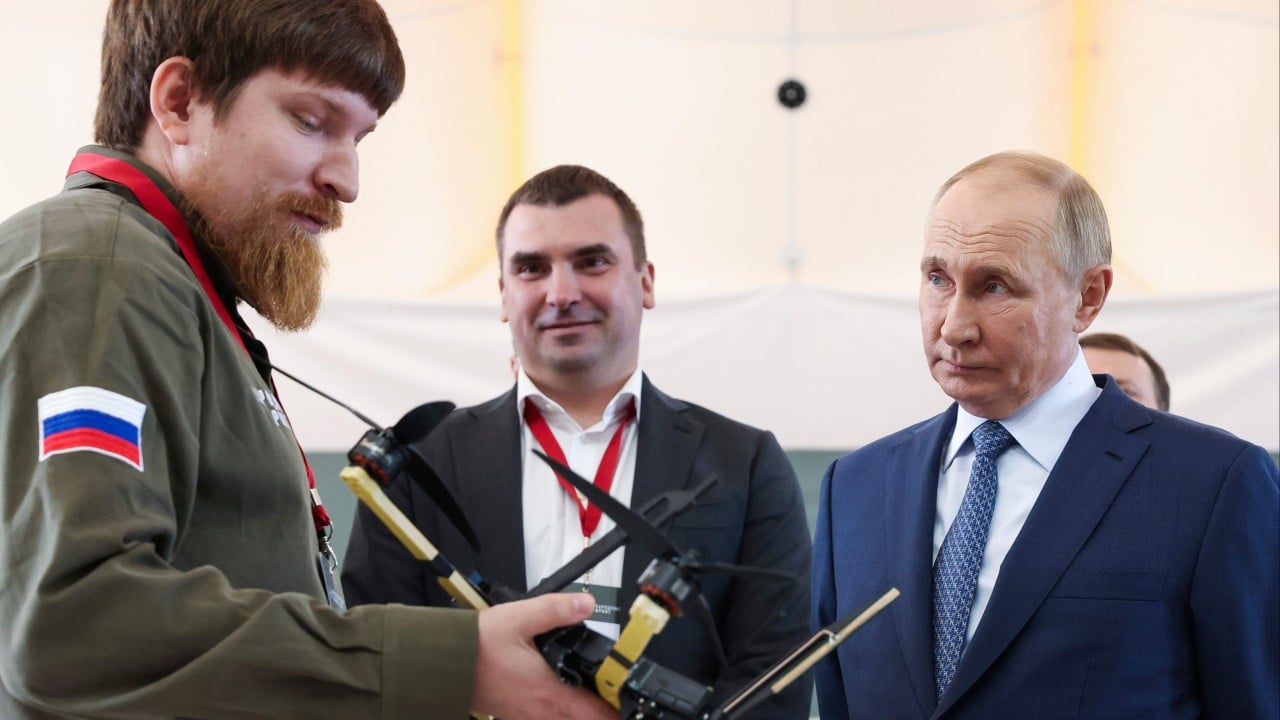


 3 sources
Morning Edition · Thursday, August 6, 2026Published at 1:15 AM EDT · New York
Russia Puts a Ruble Figure on the Kursk Incursion as Sabotage Hits Its Drone Industry
Investigators claim 504.9 billion rubles of damage and 640 civilian deaths, while a car explosion badly wounded the director of a factory supplying drones to the Russian military.
Russia's Investigative Committee said damage from Ukrainian forces in the Kursk region amounts to 504.9 billion rubles, with investigators having examined 186 settlements, according to committee spokeswoman Svetlana Petrenko. The same office put the civilian death toll from the incursion at 640. These are official Russian figures and have not been independently verified.
The accounting arrives as the war continues to reach industrial targets inside Russia. Vladimir Tkachuk, the director of a factory supplying drones to the Russian military, was hospitalized in grave condition after his car exploded, killing his driver, according to reports carried by the state agencies TASS and RIA Novosti. Russian air defenses also reported downing 17 unmanned aircraft over the Kaluga region, southwest of Moscow.
Published damage estimates serve a purpose beyond accounting. They establish a legal record for future reparations claims, they justify federal transfers to affected regions, and they support the domestic argument for continued mobilization of resources. Ukraine has published its own damage figures for the same reasons.
For anyone assessing Russian economic capacity, the relevant number is not the headline claim but the recurring cost. Reconstruction spending in border regions, higher internal security budgets, and insurance and defense costs for industrial sites all draw on the same federal budget that funds the war.
Part of a tracked trend
The War Reaches Russia's Interior
The Ukraine war increasingly manifests inside Russia through drone strikes and attacks on soft targets far from the front, steadily raising the country's domestic risk premium and internal-security costs.
Veracity: Plausible
68/100- If true, who benefits
Moscow gains a documented reparations claim, a justification for federal transfers to border regions and a domestic argument for sustained mobilization, while Russian regional officials gain a case for budget support.
- The nuance
Russian outlets including Interfax and Vedomosti confirm the Investigative Committee said 504.9 billion rubles and 640 civilian deaths, but no independent body has verified either number, the same committee's chairman cited 633 deaths weeks earlier, and Russian investigative journalists working from names verified only about 30 civilian deaths during the occupation, so the reporting is accurate about what Moscow claims and not about what happened.
An open-source-intelligence read of how likely this story is true with its real nuance, not a judgment of any outlet. It assesses the claim, weighing independent and adversarial reporting. How we label confidence.
What this means
Each strike inside Russia converts a military problem into a fiscal one, because rebuilding towns and guarding factories are permanent budget items rather than one-time expenses. Russian regional budgets and state-linked industrial firms carry the cost, and the federal budget absorbs it at a time when oil revenue is under pressure from the same conflict. Investors in Russian domestic debt and in companies with plants near the border face a risk premium that is now attached to physical assets, not only to sanctions.
Synthesized from: Kommersant · RBC · South China Morning Post
Townsquare
Start a discussion in Townsquare.
More from this edition
- Memory-Chip Selloff Spreads to Seoul, Driving the Kospi Down About 5 Percent
- Washington Has Refunded About $100 Billion of Tariffs Voided by the Supreme Court
- Iran and Oman Agree Hormuz Shipping Routes, and Brent Falls Toward $79
- Bank of America Cuts Its Year-End Dollar-Yen Forecast to 149 After Record Tokyo Intervention
- Black Sea Drone War Reaches an American Fuel Pump as Indiana Declares an Energy Emergency
- Ares Shrinks a €1 Billion Private Credit Vehicle After Investors Rejected Its Pricing
- Gold Near $4,278 and Silver Above $62 While Bitcoin Sits Around $64,800
- Hiroshima Marks the Bombing Anniversary as Japan's Prime Minister Reaffirms the Non-Nuclear Principles
Comments
0No comments yet.