← The Global Intelligence Brief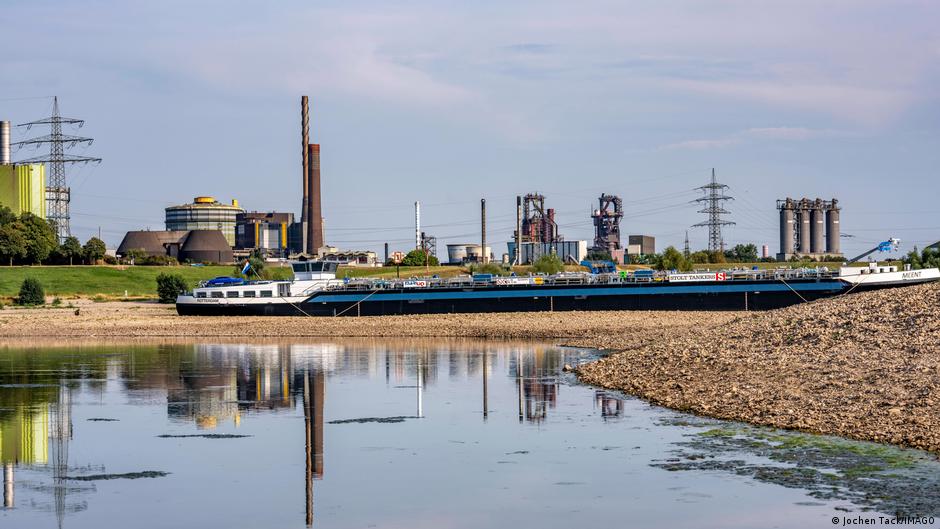

 2 sources
Morning Edition · Friday, August 7, 2026UpdatedPublished at 10:08 AM EDT · New York
Rhine and Danube Hit Record Lows, Threatening European Shipping and Industry
Deutsche Welle reported that the Rhine's gauge at the Dutch border fell to its lowest level ever recorded, and Hungary shut down its only nuclear power plant for the first time in 44 years after the Danube fell too low to cool its reactors, as barges at the Kaub crossing run at roughly a fifth of normal cargo capacity.
Updated at 10:08 AM EDT
The Rhine and Danube drought escalated from a shipping problem to an energy crisis: Hungary shut its only nuclear plant for the first time in 44 years, and Romania shut two reactors last month.
The Rhine and Danube have both reached historically low water levels this summer, Deutsche Welle reported, disrupting shipping and agriculture and raising concern about drinking water supplies across the region. TASS reported that the Rhine has fallen to a historic minimum, attributing the drop to reduced rainfall in recent months.
At the Kaub gauge in Germany, Deutsche Welle reported, barge clearance has dropped to levels not seen since records began in 1880, forcing commercial vessels to cut their loads by as much as 80 percent to avoid running aground. The gauge fell to 21 centimeters, and forecasters projected a further drop to 17 centimeters, according to Bloomberg. Chemicals companies, refineries, and metals producers are among the hardest hit industries, since there is no fully viable alternative to river transport for moving coal, fuel, ore, and chemical raw materials through Germany's industrial corridor.
The drought has since spread from a shipping problem into an energy problem. Hungary shut down its only nuclear power plant, at Paks, for the first time in the facility's 44-year history after the Danube's falling water level left too little water to cool its reactors, according to NBC News. The plant normally supplies roughly 40 percent of Hungary's electricity. Romania shut down two reactors at its Cernavoda nuclear plant for the same reason last month and declared a nationwide state of emergency over the resulting decline in electricity production, the same report said. In Budapest, the Danube fell to 10 centimeters, breaking a previous record low of 33 centimeters set in 2018, according to CNN.
The disruption arrived earlier in the season than usual, with low water already constraining shipping and power generation in early August rather than in autumn, when such conditions traditionally peak.
What this means
Reduced barge capacity forces German manufacturers to shift toward more expensive rail and road transport or to cut production runs, a direct cost that falls on chemicals, steel, and energy companies along the Rhine corridor and ultimately on the prices of goods that depend on that supply chain. Rising freight costs on Europe's most important inland waterway add to the cost of industrial output at a moment when the region's manufacturers are already contending with high energy costs and competition from Chinese exporters.
What to watch
- Rainfall forecasts for the Alps and central Europe over the coming weeks will determine whether river levels recover before autumn or whether the shipping disruption extends through the rest of the year.
- Announcements from German chemical and steel producers about output cuts or reroutes would show how much the water levels are already translating into lost industrial production.
Observations to monitor, not financial advice.
Synthesized from: Deutsche Welle · TASS
Townsquare
Start a discussion in Townsquare.
More from this edition
- US Payrolls Fall 23,000 in July, Fed Rate-Hike Bets Collapse as Gold and Silver Jump
- Saudi Arabia, Turkey, and Pakistan Sign Mutual-Defense Pact in Mecca
- Yen Gives Back Nearly Half of Its Gains From This Week's Joint US-Japan Intervention
- Russia Reports Record Monthly Casualties as Zelenskyy Renews Long-Range Air Campaign
- Ukraine's Black Sea Grain Exports Halt Completely After Russian Strikes on Ports
- Russia's Central Bank Cuts Gold Reserves for a Sixth Straight Month as World's Central Banks Keep Buying
- Volkswagen's Controlling Families Demand Faster Overhaul to Counter Chinese Rivals
Comments
0No comments yet.