← The Global Intelligence Brief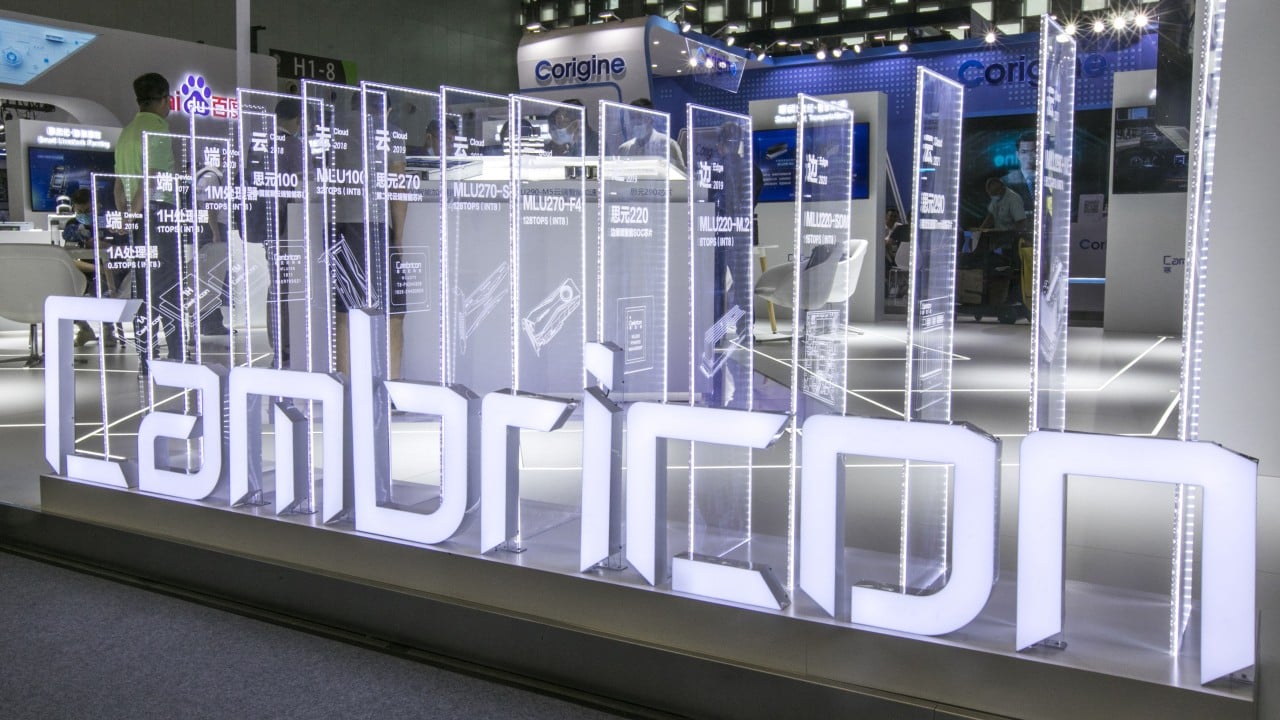

 2 sources
Morning Edition · Friday, August 7, 2026Published at 10:04 AM EDT · New York
China's Cambricon Posts 108 Percent Revenue Surge as Beijing Pushes Domestic AI Chips
The chipmaker's first-half revenue reached roughly $890 million and profit jumped 122.6 percent, as Chinese firms accelerate the replacement of foreign artificial intelligence (AI) hardware with domestic alternatives.
Chinese AI chipmaker Cambricon Technologies reported first-half revenue of 6 billion yuan, roughly $890 million, up 108 percent from a year earlier, South China Morning Post reported. Profit for the period jumped 122.6 percent, to 2.3 billion yuan. The company attributed the growth to a steady increase in domestic demand for AI computing power as Chinese firms move to replace foreign hardware.
Bloomberg reported that Chinese AI chipmakers broadly are positioned to benefit from Beijing's push to develop domestic technology, as export controls from Washington continue to push Chinese buyers toward domestic suppliers regardless of any performance gap with foreign chips. Cambricon's second-quarter revenue of 3.1 billion yuan matched analyst expectations, suggesting the growth is not a one-quarter anomaly tied to a single large order.
Part of a tracked trend
China Builds a Parallel Technology Stack
United States export controls push China to develop its own chips, computing hardware and artificial-intelligence systems, accelerating a split of global technology into competing spheres that reshapes supply chains and standards.
What this means
United States export controls on advanced semiconductors were designed to slow China's AI development, but the practical effect has been to guarantee a captive domestic market for firms like Cambricon, accelerating the buildout of a parallel Chinese chip supply chain rather than preventing it. Global semiconductor equipment makers and Western chip designers lose a share of what would otherwise be their largest growth market, while Chinese fabrication and design firms gain scale and revenue that let them close the technology gap faster than sanctions alone can slow.
What to watch
- Whether Cambricon's chips gain adoption from major Chinese cloud providers beyond current government-linked buyers would confirm the shift to domestic hardware is durable rather than policy-driven procurement.
- Any tightening or loosening of US export-control rules on chipmaking equipment would signal whether Washington is doubling down on this strategy or recognizing its limits.
Observations to monitor, not financial advice.
Synthesized from: South China Morning Post · Bloomberg
Townsquare
Start a discussion in Townsquare.
More from this edition
- US Payrolls Fall 23,000 in July, Fed Rate-Hike Bets Collapse as Gold and Silver Jump
- Saudi Arabia, Turkey, and Pakistan Sign Mutual-Defense Pact in Mecca
- Yen Gives Back Nearly Half of Its Gains From This Week's Joint US-Japan Intervention
- Russia Reports Record Monthly Casualties as Zelenskyy Renews Long-Range Air Campaign
- Ukraine's Black Sea Grain Exports Halt Completely After Russian Strikes on Ports
- Russia's Central Bank Cuts Gold Reserves for a Sixth Straight Month as World's Central Banks Keep Buying
- Rhine and Danube Hit Record Lows, Threatening European Shipping and Industry
Comments
0No comments yet.