← The Global Intelligence Brief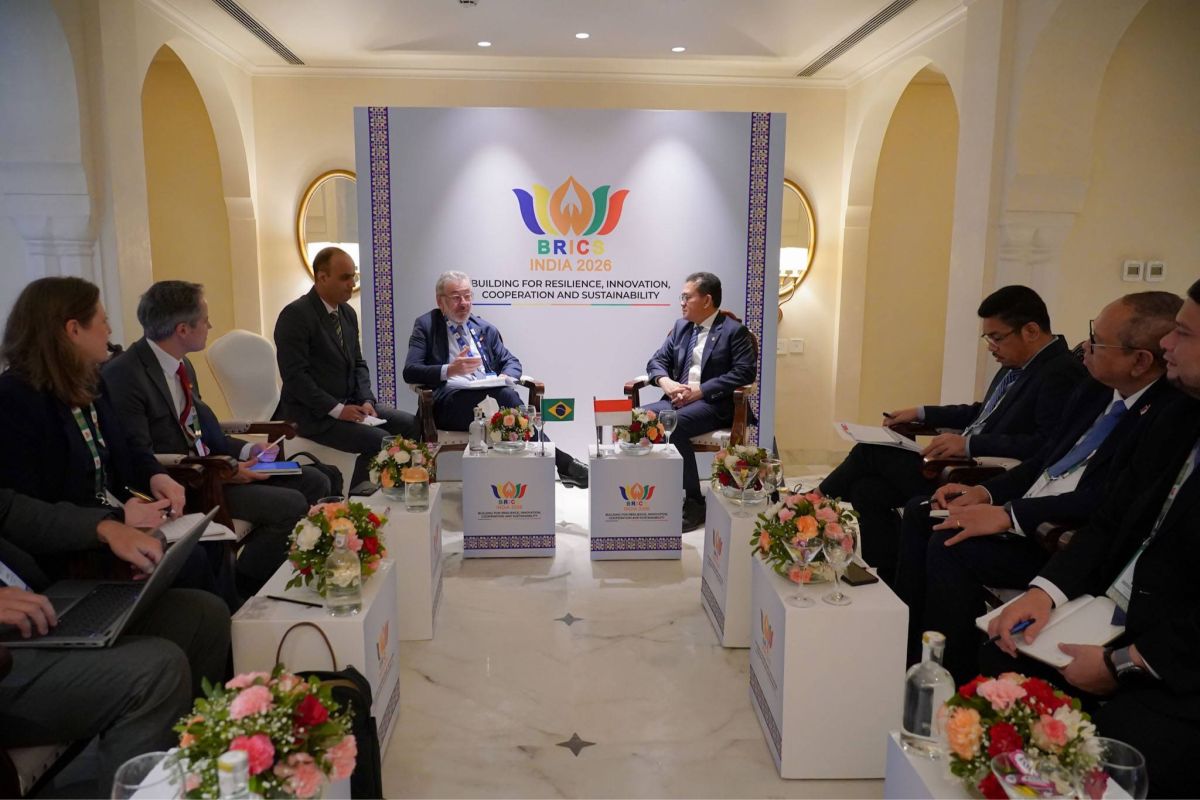
Morning Edition · Sunday, August 9, 2026Published at 2:07 AM EDT · New York
Indonesia pushes for looser trade rules at BRICS and opens talks on a preferential deal with Brazil
Jakarta is negotiating market access through the emerging-economy bloc and separately weighing an agreement that would be its first step toward the South American customs union.
Indonesia used the trade ministers' meeting of BRICS, the emerging-economy group founded by Brazil, Russia, India, China and South Africa, to press for trade rules it describes as fairer and more transparent and for reform of the multilateral system. Trade Minister Budi Santoso told the meeting in Jaipur, held under India's chairmanship, that a rules-based system matters most for micro, small and medium-sized enterprises in developing countries, which lose disproportionately when access depends on bilateral bargaining power.
Alongside the main meeting, Indonesia and Brazil began discussing a preferential trade agreement as a first step toward wider terms with Mercosur, the South American customs union of Brazil, Argentina, Uruguay and Paraguay. A preferential agreement cuts tariffs on a defined list of goods rather than opening markets broadly, which makes it the standard first step when two economies want closer commercial ties without a full negotiation.
The pattern is consistent across the Global South this year. Countries facing higher tariffs into the United States are building partial, overlapping arrangements with each other. None of these deals individually shifts trade flows much. Their significance is cumulative, because each one adds a channel that does not run through Washington or Brussels and does not require either capital's approval.
BRICS itself has kept a common currency off its near-term agenda, focusing instead on payment infrastructure that settles trade in members' own currencies. That is the more consequential project, and the less discussed one.
Veracity: Corroborated
84/100- If true, who benefits
Jakarta gains negotiating leverage and a hedge against United States tariffs, Brasília gains market access for agricultural exports, and India gains a demonstration of BRICS relevance during its chairmanship, while the dollar-erosion framing serves whichever governments want to advertise independence from Washington.
- The nuance
The Jaipur meeting and the Indonesia-Brazil preferential agreement talks are confirmed, but the reporting rests almost entirely on Indonesia's state news agency and describes an exploratory discussion with no product list, no timetable and no Mercosur mandate, and the connection drawn to reduced dollar demand is analysis rather than anything the ministers announced.
An open-source-intelligence read of how likely this story is true with its real nuance, not a judgment of any outlet. It assesses the claim, weighing independent and adversarial reporting. How we label confidence.
What this means
Indonesian palm oil, nickel products and textiles gain preferential entry to South America if the Brazil talks advance, while Brazilian agricultural exporters gain access to a market of 280 million people. The deeper mechanism is settlement: every bilateral arrangement that clears in local currency reduces the volume of trade that requires dollar funding, and reduced dollar demand at the margin is what erodes, over years rather than months, the cost advantage the United States gets from the dollar's role as the world's primary reserve currency (sometimes called the "exorbitant privilege"). The constraint is that local currency settlement requires liquid hedging markets, which most of these country pairs do not yet have.
Townsquare
Start a discussion in Townsquare.
More from this edition
- American payrolls fell by 23,000 in July, and traders abandoned bets on another Federal Reserve rate rise
- Iran says the Strait of Hormuz stays closed until Washington changes course, as the UAE accuses it of striking an Abu Dhabi tanker
- France heads into a budget confrontation with debt interest costs set to reach 74 billion euros in 2027
- Saudi Arabia, Pakistan and Turkey sign a mutual-defence pact that treats an attack on one as an attack on all
- Russian strikes kill four near Kyiv while Ukrainian drones injure 13 in Belgorod
- Shanghai cancels about 1,300 flights and Zhejiang halts port operations as Typhoon Dolphin approaches
- A breakaway bitcoin chain mined two blocks and stopped, ending the BIP-110 fork attempt
Comments
0No comments yet.