← The Global Intelligence Brief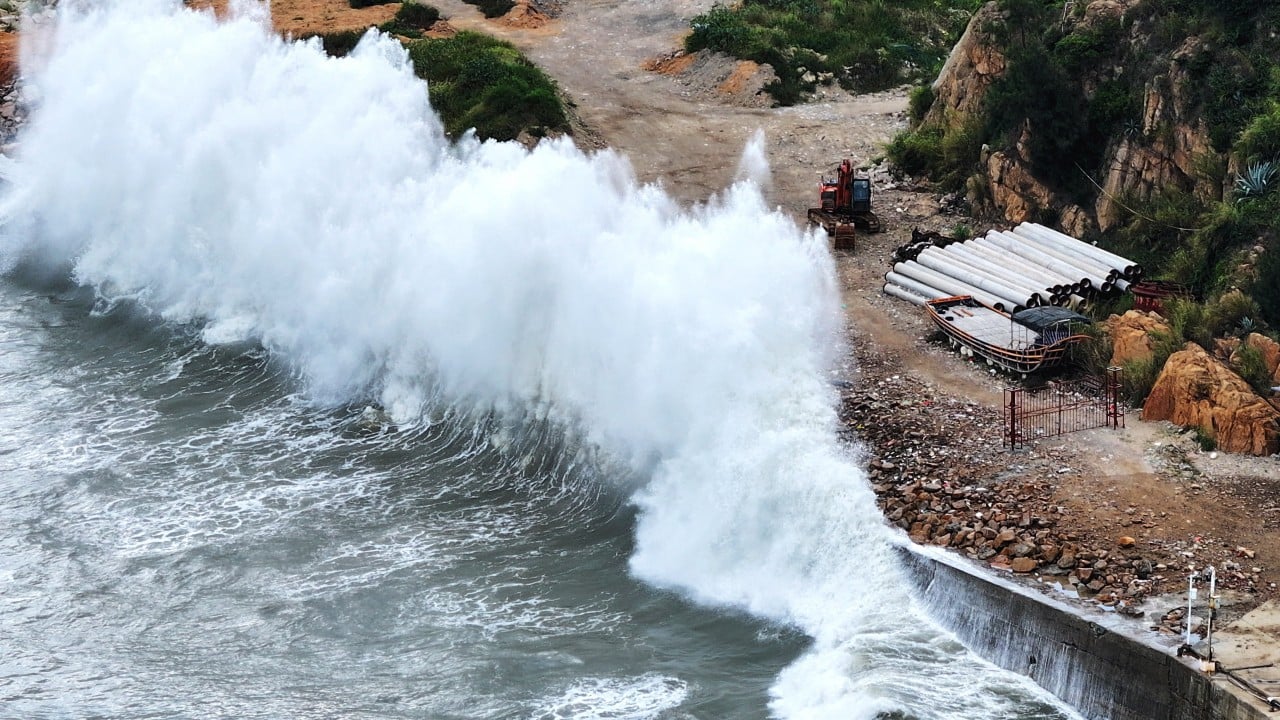


 4 sources
Morning Edition · Sunday, August 9, 2026UpdatedPublished at 7:37 AM EDT · New York
Shanghai cancels about 1,300 flights and Zhejiang halts port operations as Typhoon Dolphin approaches
Typhoon Dolphin made landfall Sunday evening near Yuhuan in Zhejiang province with sustained winds of 151 kilometres an hour, after Shanghai cancelled about 80 percent of flights and more than a million people were moved to safety.
Updated at 7:37 AM EDT
Dolphin has now made landfall (confirmed location, wind speed and evacuation numbers); the morning edition only reported the storm as approaching.
Typhoon Dolphin made landfall near Yuhuan in eastern Zhejiang province at about 5:30 p.m. Sunday (0930 GMT), with maximum sustained winds of 42 metres per second (151 kilometres an hour) near its centre, matching the strength of a Category 1 hurricane, China's meteorological authorities said. Shanghai had cancelled close to 1,300 flights ahead of the storm, and the South China Morning Post reported that cancellations at Hongqiao and Pudong airports reached about 80 percent of Sunday's schedule as the storm closed in, after China's National Meteorological Centre had issued its highest storm warning level.
The maritime and evacuation response is the part that reaches global supply chains. Zhejiang raised its coastal typhoon alert to the top level, halted port operations and suspended 162 passenger ferry routes, and the Shanghai Maritime Safety Administration ordered vessels to seek shelter. More than a million people were moved to safety across eastern China, with the city of Wenzhou alone relocating more than 900,000 residents and opening more than 1,000 emergency shelters. Eastern Zhejiang could still receive more than 600 millimetres of rain through Monday. The affected coast contains Shanghai and Ningbo-Zhoushan, two of the largest container ports in the world.
The storm's outer bands brought the opposite problem to Hong Kong, where the observatory recorded 36 degrees Celsius on Sunday afternoon, the hottest day of the year so far. Descending air on the outer edge of a typhoon compresses and warms, which is why a single storm can cause flooding in one city and heat stress in another 800 kilometres away.
Chinese forecasters described the system as unusual because it formed near the International Date Line and travelled the length of the Pacific before reaching Japan and then China.
Part of a tracked trend
Disasters as Political and Supply Shocks
Major natural disasters in commodity-producing states translate into political instability and supply disruptions that markets increasingly have to price, recurring as climate and geological shocks hit fragile economies.
What this means
Port closures on China's eastern seaboard do not destroy cargo, they delay it, and that delay concentrates into a surge of vessels arriving at Los Angeles, Rotterdam and Singapore roughly three to five weeks later. Shippers absorb the cost through equipment repositioning and missed berth windows, spot container rates on transpacific routes typically rise after a multi-day closure, and manufacturers running lean inventories face component shortages. The scale of the effect depends on whether ports reopen within a day of landfall or whether flood damage to inland rail and road links extends the disruption.
What to watch
- How quickly Ningbo-Zhoushan and Shanghai restart container operations after landfall, since each additional closed day pushes more vessels into a single arrival queue.
- Rainfall totals inland in Zhejiang, because flooding on rail and road links delays cargo even after berths reopen.
- Transpacific spot container rates in the two weeks after the storm, the clearest read on whether the delay turned into a cost.
Observations to monitor, not financial advice.
Synthesized from: South China Morning Post · The Hindu · South China Morning Post · TASS (Russian)
Townsquare
Start a discussion in Townsquare.
More from this edition
- American payrolls fell by 23,000 in July, and traders abandoned bets on another Federal Reserve rate rise
- Iran says the Strait of Hormuz stays closed until Washington changes course, as the UAE accuses it of striking an Abu Dhabi tanker
- France heads into a budget confrontation with debt interest costs set to reach 74 billion euros in 2027
- Saudi Arabia, Pakistan and Turkey sign a mutual-defence pact that treats an attack on one as an attack on all
- Russian strikes kill four near Kyiv while Ukrainian drones injure 13 in Belgorod
- A breakaway bitcoin chain mined two blocks and stopped, ending the BIP-110 fork attempt
- Rheinmetall's chief executive says he will not step back after threats, as a drone explodes beside a gas pipeline in Bulgaria
Comments
0No comments yet.