← The Global Intelligence Brief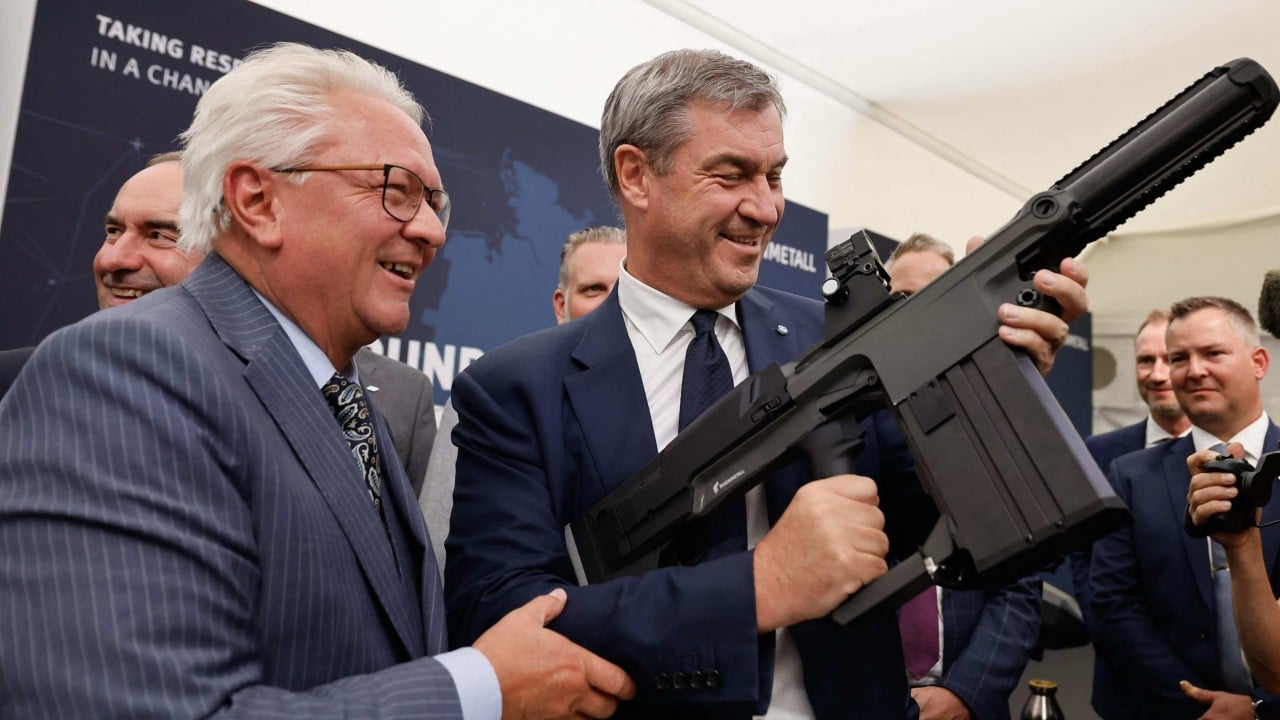


 3 sources
Morning Edition · Sunday, August 9, 2026Published at 2:07 AM EDT · New York
Rheinmetall's chief executive says he will not step back after threats, as a drone explodes beside a gas pipeline in Bulgaria
Armin Papperger now works under round-the-clock protection while European energy infrastructure absorbs the spillover from a war on the continent's eastern edge.
Armin Papperger, chief executive of the German arms manufacturer Rheinmetall, said on Sunday that he will not withdraw from his role despite continuing threats to his safety that keep him under permanent protection. German authorities have previously linked plots against him to Russia. Moscow has denied involvement in such plots.
A separate incident on Saturday showed how such threats can become physical, several hundred kilometres to the south east. A drone crossed from Romania into Bulgarian airspace and exploded about 1,000 metres from a compressor station on the Trans-Balkan gas pipeline, near the Kardam border crossing. It carried a significant quantity of explosives and caused no casualties. Bulgaria's defence ministry said debris analysis showed a type widely used by the Ukrainian military, while adding that nothing currently suggests the incident was deliberate. Ukraine's foreign ministry said its armed forces did not intentionally direct any assets toward Bulgaria and promised an explanation.
Turkish officials separately said a drone attack the previous day on two civilian vessels in the Black Sea injured crew members. The Trans-Balkan line connects Turkey to Ukraine and now carries gas in the reverse of its original direction.
Two costs are accumulating for European industry. Defence manufacturers are paying for executive protection, plant security and vetting on a scale they did not budget for, and pipeline operators, ports and grid managers across the Black Sea rim are paying for surveillance and hardened defences against a threat that arrives from the air and cannot be attributed with confidence.
Veracity: Plausible
74/100- If true, who benefits
European defence contractors and security vendors gain from a threat environment that justifies higher protection budgets and faster rearmament, Moscow gains if an unattributable drone raises the cost of Ukrainian gas transit routes without triggering an Article 5 response, and Kyiv gains from denying any intent toward a European Union member.
- The nuance
Bulgaria's defence ministry identified the device as a Maya decoy drone of a type used by Ukrainian forces and said nothing indicated intent, which is a different claim from a deliberate strike carrying a large explosive load, and the Rheinmetall threats trace to 2024 intelligence reporting that the Kremlin publicly dismissed, so pairing the two events implies a common author that neither government has established.
An open-source-intelligence read of how likely this story is true with its real nuance, not a judgment of any outlet. It assesses the claim, weighing independent and adversarial reporting. How we label confidence.
What this means
Synthesized from: South China Morning Post · The Hindu · France 24
Townsquare
Start a discussion in Townsquare.
More from this edition
- American payrolls fell by 23,000 in July, and traders abandoned bets on another Federal Reserve rate rise
- Iran says the Strait of Hormuz stays closed until Washington changes course, as the UAE accuses it of striking an Abu Dhabi tanker
- France heads into a budget confrontation with debt interest costs set to reach 74 billion euros in 2027
- Saudi Arabia, Pakistan and Turkey sign a mutual-defence pact that treats an attack on one as an attack on all
- Russian strikes kill four near Kyiv while Ukrainian drones injure 13 in Belgorod
- Shanghai cancels about 1,300 flights and Zhejiang halts port operations as Typhoon Dolphin approaches
- A breakaway bitcoin chain mined two blocks and stopped, ending the BIP-110 fork attempt
Comments
0No comments yet.