← The Global Intelligence Brief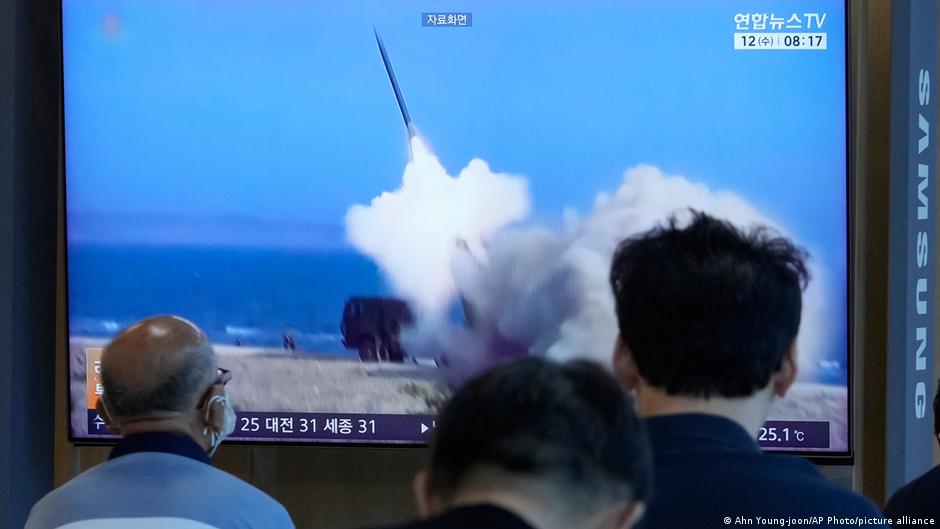


 4 sources
Morning Edition · Wednesday, August 12, 2026Published at 1:04 AM EDT · New York
North Korea Fires a Second Ballistic Missile in a Week Before Joint United States-South Korea Drills
The projectile flew about 690 kilometres from the Wonsan area and, according to Japan's Defence Ministry, did not land inside Japan's exclusive economic zone.
North Korea launched a ballistic missile toward the sea off its east coast on Wednesday, its second test in less than a week, The Hindu reported. The launch came two days after Seoul and Washington announced that their annual large-scale exercises will begin on 17 August.
South Korea's Joint Chiefs of Staff and Japan's Defence Ministry said the missile was fired from the Wonsan area, flew roughly 690 kilometres and reached an altitude of about 90 kilometres, France 24 reported. Deutsche Welle reported that Tokyo assessed the projectile fell just outside Japan's exclusive economic zone.
Seoul's presidential office called the launch a provocation that violates United Nations Security Council resolutions and urged Pyongyang to stop, TASS reported. North Korea has consistently described the joint exercises, which run from 17 to 27 August, as preparation for an invasion, and has timed tests to coincide with them for years.
The launches themselves are routine. What has changed is the surrounding context. Japan is expanding its defense industry and its neighbors are raising military budgets, so each test now contributes to a procurement cycle rather than only prompting a diplomatic protest.
Part of a tracked trend
Indo-Pacific Arms Race Accelerates
Over the next 3-6 months a sharpening regional arms race drives Japan and its neighbors to expand militaries and export weapons—Tokyo moving to sell missiles—as maritime confrontations with China multiply and Asian rearmament gathers pace.
Veracity: Corroborated
94/100- If true, who benefits
Missile-defense, radar and munitions manufacturers in Japan and South Korea, which convert each launch into budget justification, and Pyongyang, which extracts deterrence signaling at low cost.
- The nuance
The trajectory data is confirmed by Seoul and Tokyo and reported consistently, so the dispute is only over framing, with Seoul calling the launch a violation of Security Council resolutions and Pyongyang calling the 17 to 27 August Ulchi Freedom Shield exercises invasion rehearsal.
An open-source-intelligence read of how likely this story is true with its real nuance, not a judgment of any outlet. It assesses the claim, weighing independent and adversarial reporting. How we label confidence.
What this means
Repeated tests give Japan and South Korea domestic justification to keep raising defense budgets and to loosen export rules on their own weapons, which turns a recurring security concern into sustained industrial demand for missile-defense, radar and munitions manufacturers in both countries. The market effect is gradual and shows up in multiyear procurement plans rather than in daily prices. A test that lands inside Japan's exclusive economic zone would be the more consequential risk, since that has historically produced an immediate reaction in Japanese equities and the yen.
Synthesized from: The Hindu · Deutsche Welle · TASS · France 24
Townsquare
Start a discussion in Townsquare.
More from this edition
- Brent Nears $90 as Iran Restates Its Terms for Reopening the Strait of Hormuz
- Gold Holds Above $4,400 Before the United States Publishes July Inflation Data
- Washington Presses Kyiv to Spare Tankers Loading Kazakh Crude at Novorossiysk
- Six Crew Killed on a Cargo Ship in the Bab al-Mandeb as Red Sea War-Risk Premiums Pass 1 Percent
- Trump Returns to Sanctions on Iran as American Weapons Stockpiles Thin
- China's Gig Economy Now Absorbs Tens of Millions of Workers Leaving Formal Jobs
- Yen Trades Near 159 per Dollar as Tokyo's Joint Intervention Loses Effect
- Bitcoin Stalls Near $64,000 While a Cross-Chain Bridge Loses $200,000 to Fake Deposits
Comments
0No comments yet.