← The Global Intelligence Brief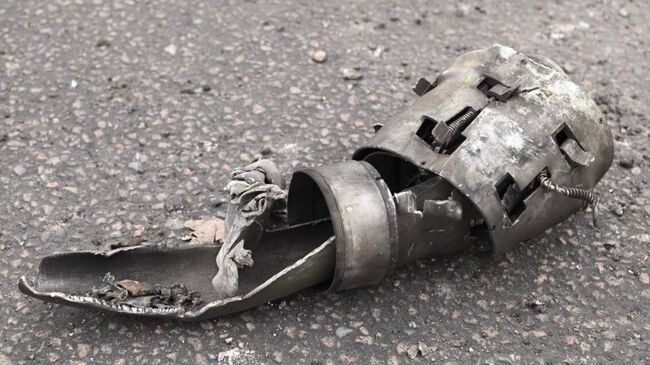


 4 sources
Morning Edition · Tuesday, August 18, 2026UpdatedPublished at 7:42 AM EDT · New York
Russia Reports 150 Drones Over the Moscow Region and Renewed Airport Shutdowns
Moscow's mayor called it the largest drone attack on the region in two years, with 620 aircraft involved and three people injured, including a child, in accounts that cannot be independently verified.
Updated at 7:42 AM EDT
The Russian-reported drone count for the overnight attack rose sharply, from the roughly 150 cited by the regional governor this morning to 620 cited by Moscow's mayor, who called it the largest such attack in two years, with airport-closure details updated accordingly.
Sergei Sobyanin, the mayor of Moscow, said 620 drones targeted the Moscow region between Monday evening and 5 a.m. Tuesday, calling it the largest such attack on the capital in two years. He said air defence units destroyed 180 of the drones overnight, with more intercepted afterward. Andrey Vorobyov, the governor of the Moscow region, said three people were injured, among them a 10-year-old girl, according to the state agency TASS. A drone struck a warehouse operated by the online retailer Wildberries in the Bogorodsky district, and two residential buildings in Kirzhach, in Vladimir region, were also damaged, the agency reported.
Air traffic absorbed the disruption. Flight operations at Moscow's Vnukovo, Domodedovo and Zhukovsky airports were temporarily halted, Sheremetyevo operated under partial restrictions, and additional restrictions were introduced at Krasnodar for flight safety reasons. RIA Novosti reported that 15 people died in Belgorod region over the past week in attacks attributed to Ukrainian forces, and that the foreign ministry official Rodion Miroshnik named the regions with the highest number of casualties.
All of these accounts come from Russian officials and state agencies, and none has been confirmed by independent monitors. Ukraine has not commented publicly on the individual strikes described. What can be observed from outside is the pattern: an attack that Russian officials themselves describe as their largest in two years, followed by renewed closures of airports serving Moscow, Krasnodar and other hubs, which impose costs on carriers and passengers whether or not any given drone reaches its target.
Those interruptions are now a routine feature of Russian civil aviation rather than exceptional events, and they fall on an airline sector already operating under sanctions that restrict access to Western aircraft parts and maintenance.
Part of a tracked trend
The War Reaches Russia's Interior
The Ukraine war increasingly manifests inside Russia through drone strikes and attacks on soft targets far from the front, steadily raising the country's domestic risk premium and internal-security costs.
Veracity: Plausible
73/100- If true, who benefits
Moscow gains domestically from casualty figures that cast the war as an attack on civilians far from the front, and Kyiv gains from the same night being described abroad as evidence that its long-range campaign reaches the Russian interior.
- The nuance
The core count holds up in Russian reporting, with the Moscow region governor saying air defence destroyed more than 150 drones over the region on August 18 and the mayor reporting 13 over the city, but every casualty number including the 15 deaths cited for Belgorod region comes from officials of one belligerent and other Russian accounts gave lower weekly tolls, and Russian statements consistently omit what the drones were aimed at, which Ukrainian accounts describe as logistics and industrial sites such as the Wildberries warehouse struck days earlier.
An open-source-intelligence read of how likely this story is true with its real nuance, not a judgment of any outlet. It assesses the claim, weighing independent and adversarial reporting. How we label confidence.
Synthesized from: TASS · RIA Novosti · TASS (Russian) · RIA Novosti
Townsquare
Start a discussion in Townsquare.
More from this edition
- Thirty-Year Treasury Yield Reaches 5.31 Percent, Highest Since 2007, as Oil Climbs
- Trump's 50 Percent Tariffs on $20 Billion of Canadian Goods Take Effect in First Use of Section 338
- Trump Threatens to Bomb Oman as Talks to Reopen the Strait of Hormuz Stall
- Trump Orders Joint Drills With South Korea Cut, Citing His Relationship With Kim Jong Un
- Synchrony Puts Its Store Cards Inside ChatGPT as AI Agents Gain Spending Authority
- China's Zhipu Claims Parity With Western Models on Cyber Defence and Publishes Its Own Standard
- Global Private Equity Stops Writing New Equity Cheques in China
Comments
0No comments yet.