← The Global Intelligence Brief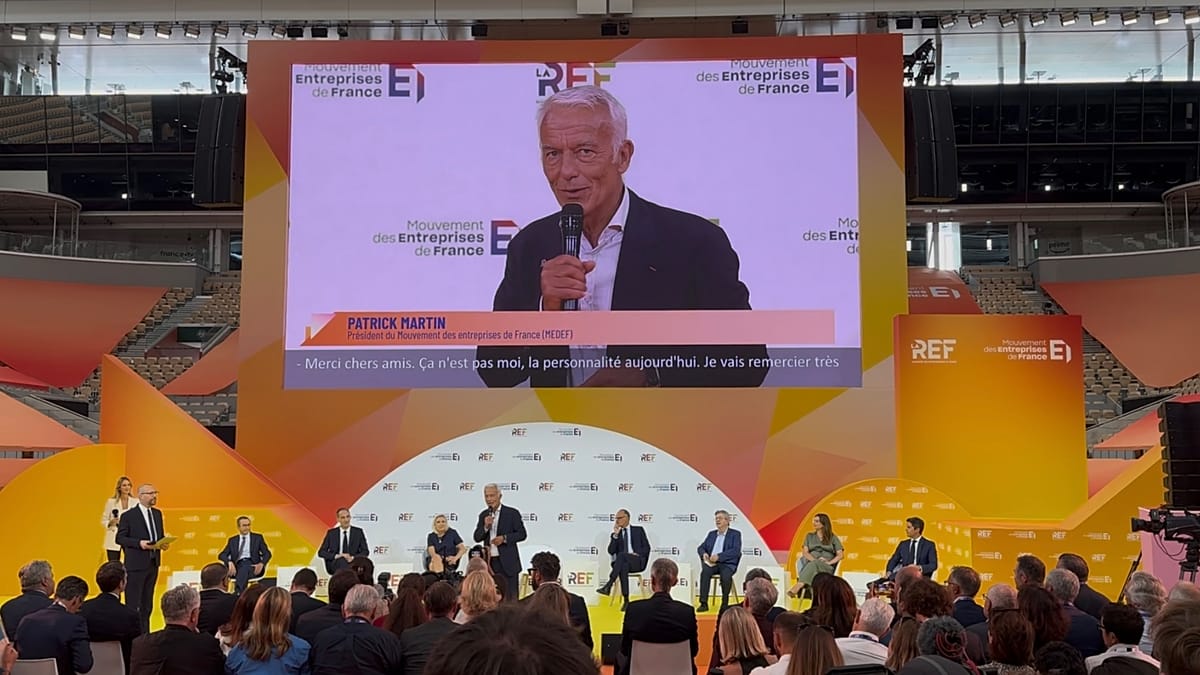
 1 source
Morning Edition · Friday, August 28, 2026Published at 1:07 AM EDT · New York
Seven French Presidential Candidates Argue Over Debt and Pensions in First Debate
Marine Le Pen used the business-lobby event to present a 125 billion euro cost-cutting plan, eight months before the first round of voting.
Seven leading candidates to succeed President Emmanuel Macron met on Thursday for the first debate of the French presidential campaign, Euronews reported, and spent most of it on the public finances. The event was organized by MEDEF, the main French business federation, which set the terms of the argument before it began.
Marine Le Pen, leader of the National Rally, told the audience her party would present a cost-cutting plan worth 125 billion euros, or about $146 billion, and sought to reassure business leaders that they had nothing to fear from her. Jean-Luc Mélenchon, who leads the hard-left France Unbowed, told the same audience to raise wages to keep France out of recession, and said tax reductions under Macron had cost roughly the size of the deficit. Édouard Philippe, the centre-right former prime minister, called that proposal dangerous and said the French would have to work longer for the budget to balance, according to France 24.
The disagreement is not about whether France has a debt problem. Every candidate accepted the constraint and then proposed a different group to pay for it: spending cuts, higher wages funded by employers, or a longer working life. Opinion polls consistently place Le Pen first in the April first round and competitive in the May runoff, as Arab News noted in its account of the debate.
France borrows in euros it does not control, which removes an option many indebted governments have used in the past. That leaves taxation, spending restraint or a confrontation with European fiscal rules, and the campaign is now a public argument about which one to choose.
Veracity: Corroborated
90/100- If true, who benefits
Marine Le Pen gains from appearing acceptable to employers, and the business federation that staged the event gains by making deficit reduction, rather than wages or taxation of capital, the frame every candidate had to answer.
- The nuance
The 125 billion euro figure is a campaign announcement with no published breakdown, France 24 and Reuters record other commitments the article leaves out (a 5 billion euro cut to France's European Union contribution, Jean-Luc Mélenchon's pledge to disobey European rules), and no specific poll is cited for the claim that Le Pen leads.
An open-source-intelligence read of how likely this story is true with its real nuance, not a judgment of any outlet. It assesses the claim, weighing independent and adversarial reporting. How we label confidence.
What this means
French government bonds are priced on the assumption that whoever wins can pass a budget, and this debate showed three incompatible routes to the same deficit target. Holders of French debt and euro-area banks with large sovereign portfolios are the exposed parties, through the spread France pays over German bonds. The decisive question is whether the next president arrives with a parliamentary majority. With one, any of these plans can be legislated and the spread stabilizes. Without one, France repeats the pattern of suspended reforms and collapsing governments that has already forced pension changes to be postponed.
Source: Euronews
Townsquare
Start a discussion in Townsquare.
More from this edition
- Russia Fires 598 Drones and 31 Missiles at Ukraine, Killing at Least 25 in Kyiv
- Warsh Delivers His First Jackson Hole Speech With US Profits at a Postwar High
- Venezuela Examines Leaving OPEC as Washington Negotiates Long-Term Access to Its Oilfields
- Qatar's Prime Minister Presses Mediation in Tehran as Trump Says No Talks Are Under Way
- Nepal and Tibet Flood Toll Passes 460 With More Than 1,400 Missing as a New Lake Threatens Rescuers
- Ripple-Backed XRP Treasury Company Clears the SEC and Sets a September 30 Shareholder Vote
- Lavrov Says Russia Issued No Ultimatum to Washington After CIA Director's Moscow Visit
Comments
1Aug 28, 5:07 AM · edited
Holding the campaign's opening debate inside the main business federation means fiscal consolidation became the default frame of the election eight months before a single vote is cast.