← The Global Intelligence Brief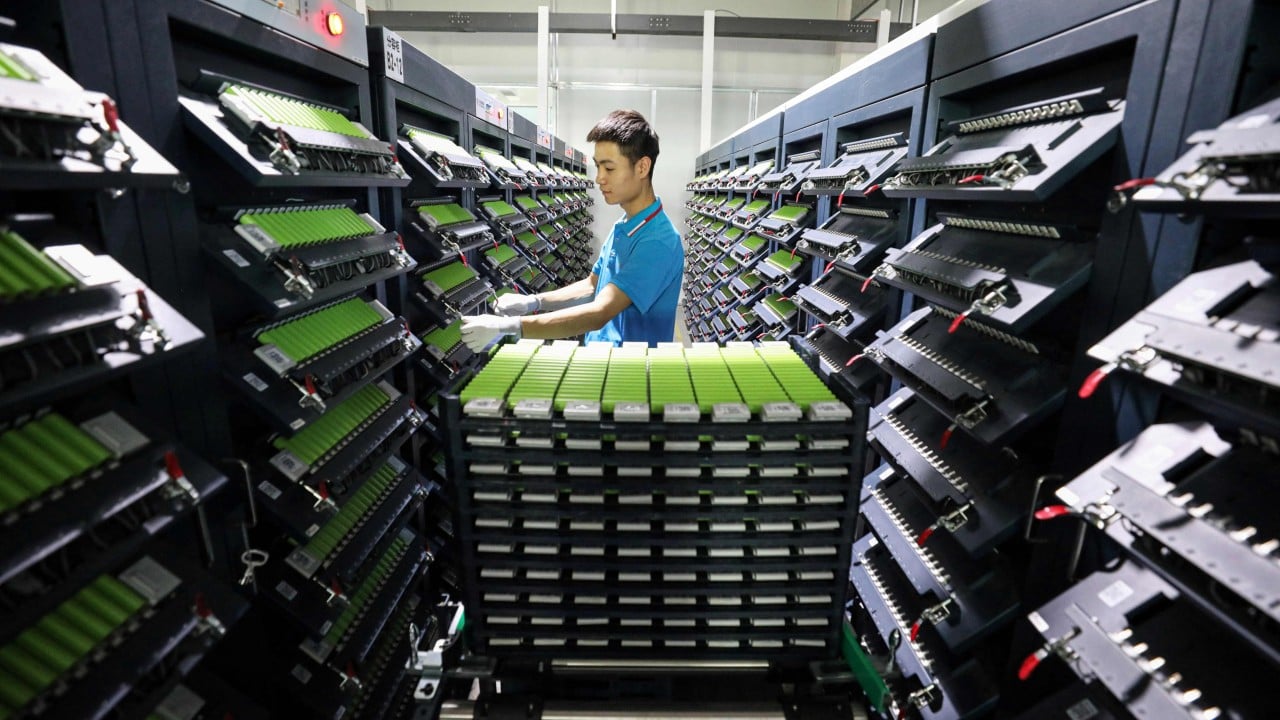

 2 sources
Morning Edition · Tuesday, September 15, 2026Published at 1:19 AM EDT · New York
China Opens 500-Tonne Rubidium and Caesium Line as It Tightens Exit Rules for Sensitive Staff
The Jiangxi plant extracts the two metals from lithium-processing waste, and new State Council rules let authorities bar departures on technology-security grounds.
A demonstration plant in Jiangxi province has begun extracting rubidium and caesium from lithium-processing waste. The South China Morning Post reported that it is the first continuous tower extraction and separation line of its kind, with annual capacity of 500 tonnes for low-grade feedstock. Both metals are used in atomic clocks, specialty glass, drilling fluids and vacuum equipment, and both have historically been produced in small quantities from a narrow set of deposits.
Recovering them from waste changes the supply calculation. Lithium refining already runs at scale in China, so the feedstock exists as a byproduct with no current use. A country that turns tailings into a supply of critical metals gains volume without opening a new mine and without creating a new import dependency.
At the same time, Beijing has tightened the rules governing who may leave the country. Kommersant reported that new State Council regulations took effect allowing authorities to restrict departures where national or technological security is at risk. Read alongside the export controls Western governments have placed on advanced chips, the direction is symmetrical: Washington restricts what technology can enter China, and Beijing restricts what knowledge can leave it.
The two moves belong to the same program: domestic substitution for inputs China does not control, and legal barriers around the people who hold the resulting expertise.
Part of a tracked trend
China Builds a Parallel Technology Stack
United States export controls push China to develop its own chips, computing hardware and artificial-intelligence systems, accelerating a split of global technology into competing spheres that reshapes supply chains and standards.
Veracity: Corroborated
88/100- If true, who benefits
Ganfeng Lithium and the Chinese Academy of Sciences gain from a state-publicized industrial success, Beijing gains a second front of supply leverage to set against Western chip controls, and critical-minerals subsidy advocates in Washington, Brussels and Tokyo gain a fresh dependence to cite.
- The nuance
The 500-tonne figure is the nameplate capacity of a demonstration line announced through Chinese state-linked outlets rather than audited output, and the exit regulation, 19 articles issued on July 31 and effective September 15, mainly codifies and extends exit-ban powers Chinese authorities already used, so reading the two measures as one symmetrical answer to export controls is an interpretation, not an established policy link.
An open-source-intelligence read of how likely this story is true with its real nuance, not a judgment of any outlet. It assesses the claim, weighing independent and adversarial reporting. How we label confidence.
What this means
Every additional material China can supply domestically removes one point of leverage from export-control policy and adds one to Beijing's own list of potential restrictions, as its rare-earth licensing has already shown. Buyers of specialty metals in Japan, South Korea, Europe and the United States face the same position they now hold with rare earths: dependence on a single jurisdiction that has shown it will use supply as policy. The exit rules affect multinational employers directly, because staff rotation and the transfer of technical knowledge through people become harder to plan.
Synthesized from: South China Morning Post · Kommersant
Townsquare
Start a discussion in Townsquare.
More from this edition
- US 10-Year Yield Touches 5 Percent as Bond Selling Spreads to Japan and Europe
- Saudi Arabia Issues Danger Alerts for Yanbu and Five Other Cities as Brent Trades Near $107
- China's Investment Decline Deepens to 7.2 Percent as August Retail Sales Miss Forecasts
- Bitcoin Falls to $77,800 Before Senate Procedural Vote on Crypto Market Rules
- Kioxia Weighs $10 Billion US Listing Days After Chip Stocks Fell on AI Warnings
- NATO Jets Shoot Down Drone Over Lithuania as Russia Strikes Fuel Stations in Kyiv
- Berlin Seeks Guarantees on Jobs as UniCredit Approaches Control of Commerzbank
- Poland Lost $230 Million Trying to Buy Venezuelan Oil With Cryptocurrency
Comments
0No comments yet.