← The Global Intelligence Brief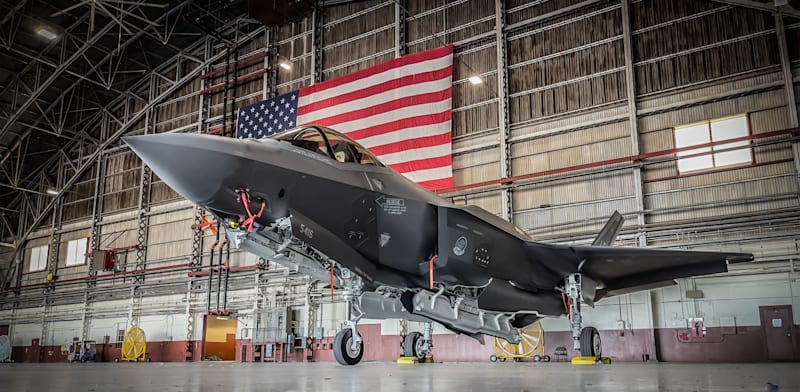


 3 sources
Morning Edition · Friday, September 18, 2026Published at 1:18 AM EDT · New York
Washington clears a $24.3 billion sale of 48 F-35 jets to Saudi Arabia
The package includes 49 engines, cryptographic equipment and electronic warfare support, and now needs approval from Congress, where espionage concerns are already being raised.
The State Department approved a possible sale of 48 F-35 Lightning II fighter aircraft to Saudi Arabia valued at $24.3 billion and notified Congress, Middle East Monitor reported. The department's own release lists 49 Pratt and Whitney F135 engines, cryptographic equipment, electronic warfare support, training and logistics, and states that the sale serves American objectives by improving the security of a major ally outside the North Atlantic Treaty Organization (NATO).
Riyadh has sought the aircraft for years, and BBC News Hindi noted that the jet is widely regarded as the most advanced fighter in active service, which is why the request has been contested in Washington for so long. Israeli coverage focused on what the sale would change in regional military capability. Globes examined which capabilities Saudi Arabia would gain beyond stealth (low detectability to radar), and reported in the same briefing that Iran has shot down at least two American unmanned aircraft in recent days, according to CBS.
Two objections shape the congressional fight ahead. American intelligence analysts have warned that Chinese access to F-35 technology could follow from Saudi Arabia's technology partnerships with Beijing, as Breaking Defense reported. Separately, successive American administrations have committed to preserving Israel's qualitative military advantage, a commitment that a Saudi fifth-generation fleet tests directly.
The deal also shows how security relationships are being priced. Saudi Arabia is buying at a moment when Gulf shipping lanes are disrupted, its own export pipeline has been damaged, and Washington is asking regional partners for practical help reopening the Strait of Hormuz.
Veracity: Corroborated
93/100- If true, who benefits
Lockheed Martin, Pratt and Whitney and their supplier base gain a backlog measured in decades, Riyadh gains a capability it has sought for years and a lever in its own bargaining with Washington, and Israeli defence firms stand to gain from whatever compensating package Congress extracts.
- The nuance
A State Department notification authorises a possible sale and starts a 30-day congressional review, which is not a signed contract or a delivery schedule, and the espionage argument rests on intelligence assessments reported secondhand that Riyadh rejects, while the briefing's secondary claim that Iran downed two American aircraft is single-sourced and separate from the verified capture of an American underwater drone.
An open-source-intelligence read of how likely this story is true with its real nuance, not a judgment of any outlet. It assesses the claim, weighing independent and adversarial reporting. How we label confidence.
What this means
Synthesized from: Globes · BBC News Hindi · Middle East Monitor
Townsquare
Start a discussion in Townsquare.
More from this edition
- Bank of Japan lifts its policy rate to 1.25 percent, the highest since 1993
- Trump says he is close to deciding whether to "annihilate" Iran's government as a second tanker is hit in Hormuz
- Venezuela nears agreement to move $4 billion of gold reserves to New York
- Bitcoin holds above $77,000 after the Bank of Japan hike while ether and XRP funds lose money
- American inflation runs at 3.4 percent with petrol up 27 percent as the Fed tightens into an energy shock
- Russia and China veto the United Nations panel that monitors Iran sanctions
- At least eight NATO members start buying defence equipment outside the United States
Comments
0No comments yet.