← The Global Intelligence Brief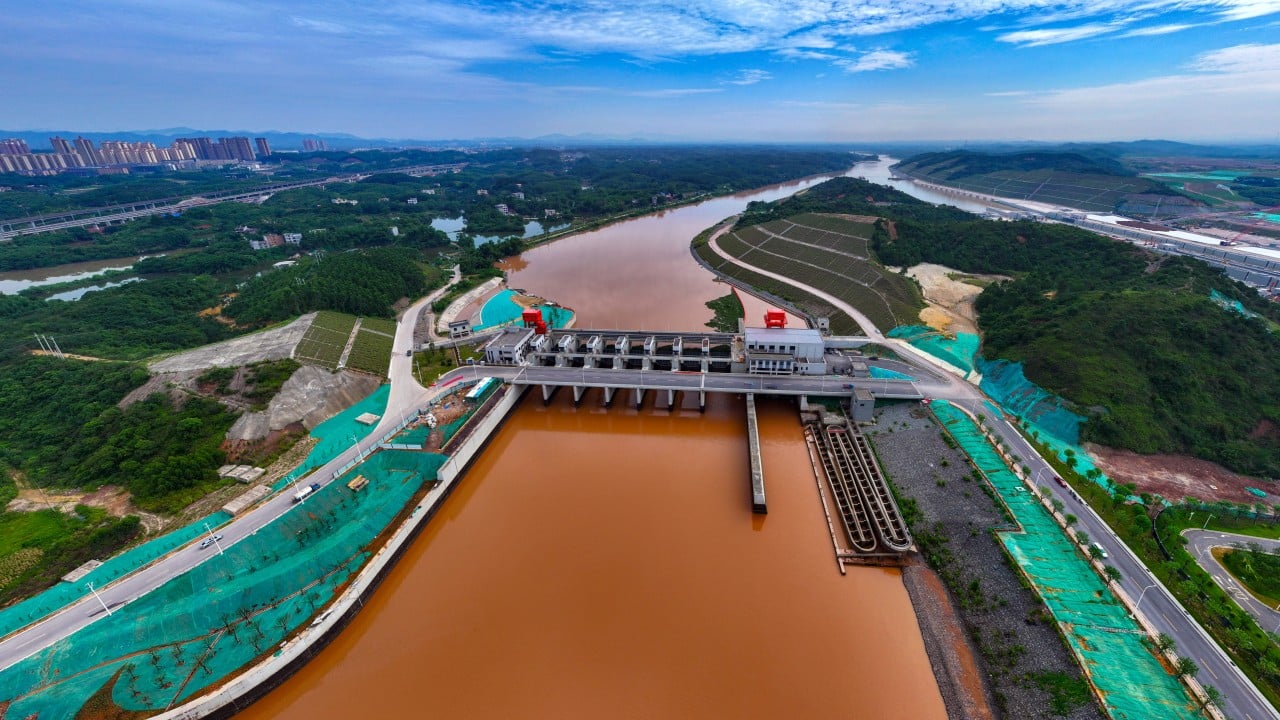


 3 sources
Morning Edition · Friday, September 18, 2026Published at 1:18 AM EDT · New York
China opens the Pinglu Canal, its first river-to-sea waterway since 1949
The 134-kilometre channel cost 72.7 billion yuan and cuts more than 560 kilometres from the route between landlocked southwest China and the sea.
China has opened the Pinglu Canal, a 134.2-kilometre waterway running from Nanning in the Guangxi Zhuang Autonomous Region to the Beibu Gulf, built at a cost of 72.7 billion yuan, about $10.75 billion. Xinhua reported that it is the first canal connecting a Chinese river system directly to the sea since 1949.
The engineering reflects a freight-cost calculation. The channel takes vessels of up to 5,000 tonnes and shortens the inland journey from southwest China to the coast by more than 560 kilometres compared with routing through Guangdong ports. Chinese authorities expect logistics costs to fall by 18 to 30 percent and transport savings above 5 billion yuan a year. The canal's operator told the South China Morning Post that the effect on the landlocked interior could resemble what the Yangtze did for Shanghai, a comparison that will take years of throughput data to test.
The destination matters as much as the distance. The canal connects southwest China more directly to the Association of Southeast Asian Nations (ASEAN), now China's largest trading-partner grouping, and shortens the route to nearly 700 million consumers, as Al Jazeera explained.
Seen alongside tariffs on Chinese goods entering Western markets, the project redirects trade geography. Beijing is lowering the cost of shipping interior production toward Southeast Asia rather than toward the Pacific routes that serve North America and Europe.
Part of a tracked trend
China Anchors a Parallel Bloc
China keeps deepening ties with neighbors and Global South states through high-level diplomacy, assembling a bloc that runs parallel to Western-led alliances and hardens a multipolar order.
Veracity: Corroborated
86/100- If true, who benefits
Chinese state construction firms and Beibu Gulf port operators capture the spending and the traffic, manufacturers in Guangxi, Yunnan and Guizhou gain a freight advantage, and Beijing gains a physical argument for routing interior production toward Southeast Asia rather than toward tariffed Western markets.
- The nuance
The opening, the 134-kilometre length and the 72.7 billion yuan cost are confirmed across Xinhua, the South China Morning Post and Al Jazeera, but the 18 to 30 percent cost reduction and the 5 billion yuan annual saving are official Chinese projections with no independent throughput data behind them yet, and the 5,000-tonne vessel limit caps what the route can actually absorb.
An open-source-intelligence read of how likely this story is true with its real nuance, not a judgment of any outlet. It assesses the claim, weighing independent and adversarial reporting. How we label confidence.
Synthesized from: South China Morning Post · Xinhua · Al Jazeera
Townsquare
Start a discussion in Townsquare.
More from this edition
- Bank of Japan lifts its policy rate to 1.25 percent, the highest since 1993
- Trump says he is close to deciding whether to "annihilate" Iran's government as a second tanker is hit in Hormuz
- Venezuela nears agreement to move $4 billion of gold reserves to New York
- Bitcoin holds above $77,000 after the Bank of Japan hike while ether and XRP funds lose money
- American inflation runs at 3.4 percent with petrol up 27 percent as the Fed tightens into an energy shock
- Russia and China veto the United Nations panel that monitors Iran sanctions
- Washington clears a $24.3 billion sale of 48 F-35 jets to Saudi Arabia
Comments
0No comments yet.