← The Global Intelligence Brief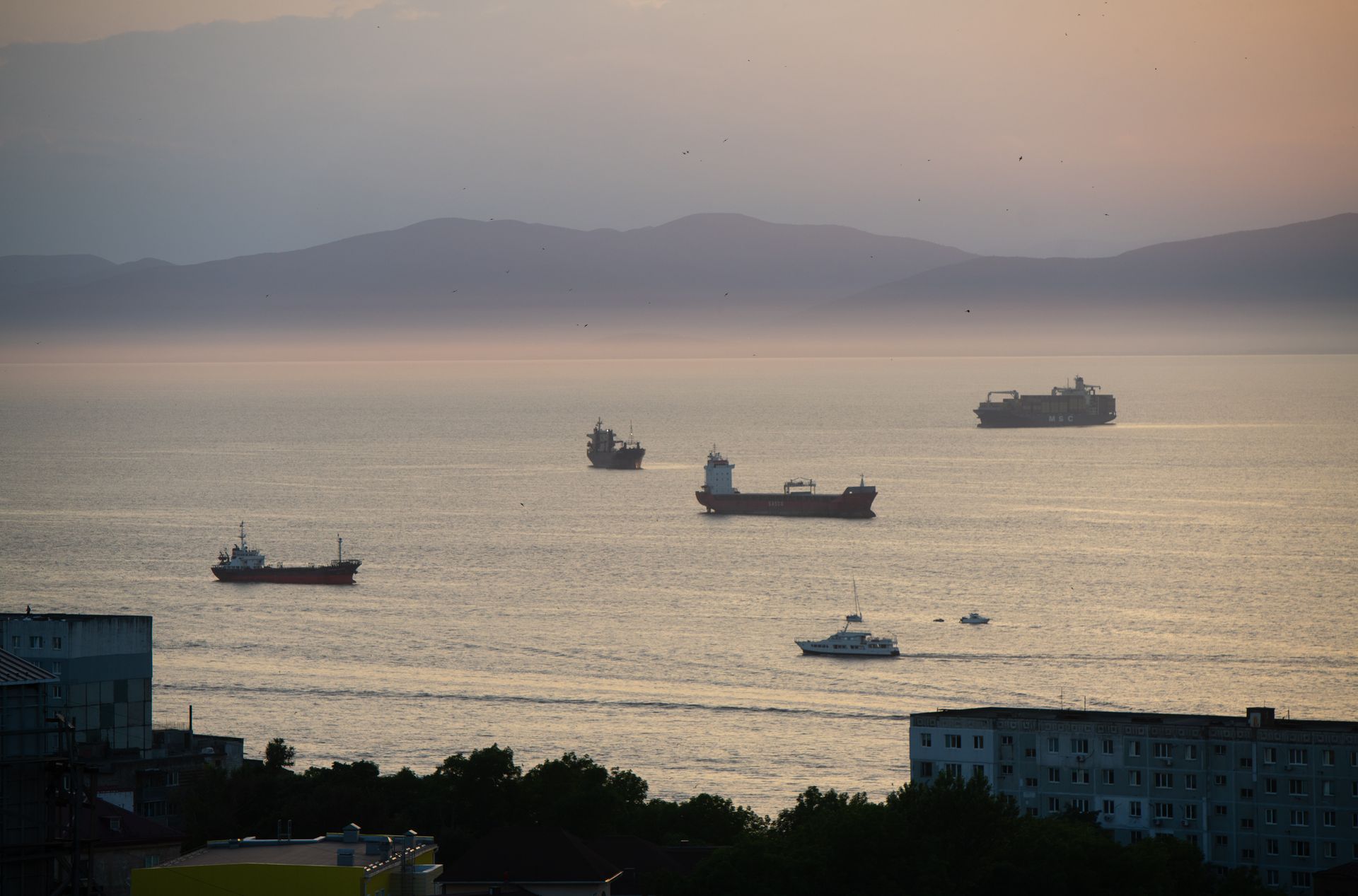

 2 sources
Morning Edition · Tuesday, October 6, 2026Published at 1:03 AM EDT · New York
South Korean ports loaded 176,000 tonnes of fuel onto Russian tankers, including ships under UK and EU sanctions
The shipments, mostly diesel, appear to be legal under South Korean law because Seoul's export controls on Russia cover electronics, machinery and vehicles, not fuel.
More than 176,000 tonnes of fuel, mostly diesel, were loaded at South Korean ports onto Russian tankers that are under sanctions. The figure comes from an analysis of port records and ship-tracking data reported by the Kyiv Independent from a Guardian investigation. Seven Russian tankers, three of them sanctioned by the United Kingdom and the European Union, made 14 trips from Russia's Far East ports to South Korea and back.
The Guardian's reporting describes how the cargoes moved. The sanctioned tanker Layla made two trips carrying a total of 57,000 tonnes of diesel from Ulsan to Vladivostok. On the first trip it told South Korean authorities it was going to Vladivostok. On the second it gave Niigata, Japan, as its destination. A third sanctioned tanker, the Chongchon, never docked at a terminal. It took on about 26,000 tonnes in early August through a ship-to-ship transfer from an unsanctioned tanker, the Celeste I, at an anchorage off the southern port of Yeosu.
The trade does not appear to break South Korean law. Seoul's export controls on Russia cover electronics, machinery and vehicles, not refined fuel, so loading a ship listed by London or Brussels is not illegal in a Korean port. The research group Centre for Research on Energy and Clean Air (CREA) contributed analysis to the findings. The reporting reviewed did not include a public response from the South Korean government.
Veracity: Corroborated
76/100- If true, who benefits
If the framing holds, South Korean refiners earn margins on legal sales, and Russia's Far East gets diesel that its own refineries cannot supply after Ukrainian strikes. Kyiv gains material to press Seoul and its allies to close the gap.
- The nuance
UA.News and AOL carry the Guardian's port and tracking data. The 176,000 tonnes cover only July and August, and the trade appears legal under South Korean law because the tankers are on UK and EU lists, not Korean ones. The false destinations (Japan, Singapore) point to concealment by the shipowners, not by Seoul.
An open-source-intelligence read of how likely this story is true with its real nuance, not a judgment of any outlet. It assesses the claim, weighing independent and adversarial reporting. How we label confidence.
What this means
The flow runs the opposite way from Russia's usual trade, since Russia normally exports diesel. The desk reads it as consistent with Ukraine's strikes on Russian refineries, including the September attack on the Moscow refinery, and with the long distances that make supplying the Russian Far East from western Russia expensive. South Korean refiners earn the margin, and Russia's Far East gets supply that its own refineries are not providing. Sanctions only bind in countries whose laws adopt them. When a partner's lists differ from its own laws, enforcement falls to shipping insurers, flag states (the countries where ships are registered) and diplomatic pressure. In 2023 and 2024, pressure from Washington led banks in Turkey and the United Arab Emirates to restrict Russia-linked trade without any change in local law. The likelier outcome is that London and Brussels raise the matter with Seoul within weeks, and Korean terminals and insurers quietly stop loading listed ships over the following months. The trade would then shift to unsanctioned tankers and transfers at sea, the method the Chongchon already used. The read is wrong if Seoul publicly declines to act, which would show that fuel sales to Russia are something allied governments will tolerate.
Synthesized from: Kyiv Independent · The Guardian via inkl
Townsquare
Start a discussion in Townsquare.
More from this edition
- US 10-year Treasury yield reaches 5.34%, the highest since 2002, as the bond sell-off raises borrowing costs for junk-rated companies
- Brazil's Bovespa rises 7.7% to a record after Flávio Bolsonaro finishes ahead of Lula in the first round
- Yemeni government forces say they have retaken the Bab el-Mandeb coast as Gulf crude moves out of the region on routes that avoid Hormuz
- Gold futures fall below $4,150 an ounce for the first time since September 28 as Treasury yields and the dollar rise
- US withdraws bombers from RAF Fairford in Britain over an Iranian drone threat, and Trump tells a rally Iran could "take out" Los Angeles
- Saudi Arabia, Turkey and Pakistan invoke the Mecca defence pact for the first time and agree to deploy forces to the kingdom quickly
- Bank of Japan prepares to declare that underlying inflation has reached its 2% target
Comments
0No comments yet.