← The Global Intelligence Brief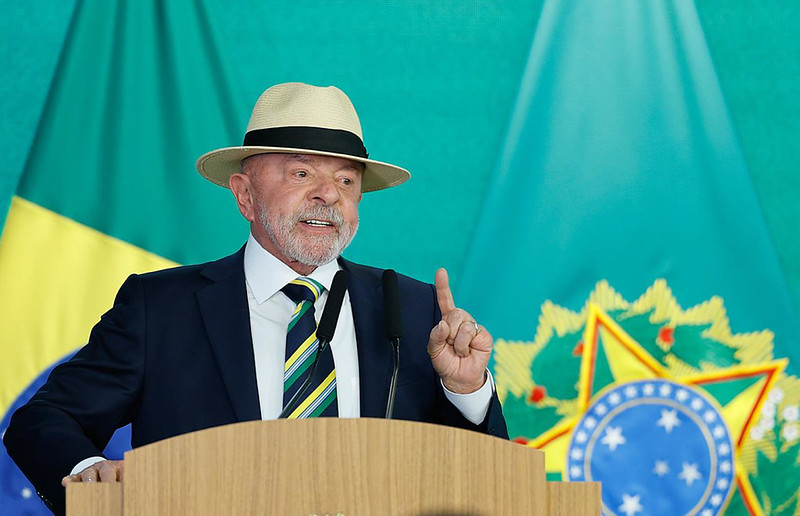


 3 sources
Morning Edition · Friday, October 16, 2026Published at 1:18 AM EDT · New York
Brazil's Senate votes 75-1 to cut the work week to 40 hours, ten days before the Lula-Flávio Bolsonaro runoff
Folha reports that Jair Bolsonaro favors economist Adolfo Sachsida to run the Finance Ministry if his son wins on October 25, while Lula says he expects a tariff deal with Washington but will not rule out retaliation.
Brazil's Senate on Wednesday voted 75 to one to cut the maximum working week from 44 to 40 hours with no reduction in pay. The change ends the six-day schedule with one day off, known in Brazil as "6x1," and guarantees two days off for formal-sector workers. Only one senator voted against the bill ten days before the presidential runoff, which shows how popular the measure is with voters.
The runoff on October 25 is close. A Datafolha poll published on October 8 showed Flávio Bolsonaro of the Liberal Party (PL) with 49% against 45% for President Luiz Inácio Lula da Silva. Other surveys from late September showed the two candidates tied. Investors are watching who would manage the economy as much as who wins. Folha de S.Paulo, citing six people in the campaign, reported that former president Jair Bolsonaro's choice for finance minister in a government led by his son is Adolfo Sachsida, a lawyer and economist who served in the elder Bolsonaro's government.
Lula is campaigning on his trade record. He told reporters that he believes Brazil will reach an agreement with the United States on tariffs but would not rule out reciprocal measures. He said trade with the United States fell while Brazil's trade with other markets grew. The opposition campaign faces its own pressure. Folha reported that a federal police investigation found that an online betting company owned by a lawyer under investigation in a social-security fraud case paid for Flávio Bolsonaro's flights in Europe in 2025.
Part of a tracked trend
Emerging-Market Elections Turn on Fiscal Credibility
In large emerging markets, polarised elections keep making fiscal rules and congressional arithmetic, rather than the identity of the winner, the main determinant of currency and local-rate pricing.
Veracity: Plausible
70/100- If true, who benefits
If the cut becomes law, formal-sector workers gain two days off at the same pay and both campaigns gain with voters before the runoff, while retailers, food-service firms and small employers bear the cost, which could raise the risk premium on the real and on local bond yields.
- The nuance
Wednesday's vote was the first of two required Senate rounds on a constitutional amendment, and Brazilian press reports say the Chamber of Deputies already passed the text in May with a 14-month transition. The 75-to-one tally could not be independently confirmed.
An open-source-intelligence read of how likely this story is true with its real nuance, not a judgment of any outlet. It assesses the claim, weighing independent and adversarial reporting. How we label confidence.
What this means
Moving from 44 to 40 hours at the same pay raises hourly labor costs by about 10% for workers on full schedules. Retail, food service and small firms, which rely most on the six-day schedule, will bear most of that cost. It will feed into services inflation at a time when Brazil's central bank is already fighting imported energy inflation. The exposed assets are the real and the local interest-rate curve, which trade on fiscal and inflation credibility more than on the winner's identity. Both candidates' coalitions supported the measure, so the vote reveals the shared limits on fiscal and labor reform in Brazil more than either side's program. The precedent is the 1988 constitution, which reduced the work week from 48 to 44 hours and was followed by a long period of high inflation, though many other causes contributed. The likelier outcome is that markets react within days of the runoff to the named economic team rather than to the result alone. A finance minister who commits to the fiscal framework would narrow local risk premiums under either winner. That depends on the lower house passing the work-week change without offsetting tax relief for employers. It would be proved wrong if the real weakens after the vote regardless of who is appointed, which would show that investors expect the labor change to raise inflation under any government.
Synthesized from: MercoPress · Folha (Mercado) · InfoMoney
Townsquare
Start a discussion in Townsquare.
More from this edition
- CoreWeave's default insurance reaches distress levels as the AI debt sell-off spreads to South Korea's Kospi
- Fed Chair Warsh gives no signal on an October move after US consumer prices rise 3.7% from a year earlier
- WTI crude jumps 3% on a large US inventory draw while Brent stalls as Washington weighs easing Russian tanker sanctions
- Zelensky says Ukraine will resume strikes on Russian refineries as Trump says the war will be settled without him
- Bitcoin falls below $80,000 and recovers to $82,500 alongside Seoul chip stocks while silver extends a 12% monthly decline
- Bank of Japan's Koeda says the neutral rate is "considerably above 1%" and warns the board against excessive caution
- EU revives debate on confiscating frozen Russian assets as Belgium maintains its objection before the October 23-24 summit
Comments
0No comments yet.