← The Global Intelligence Brief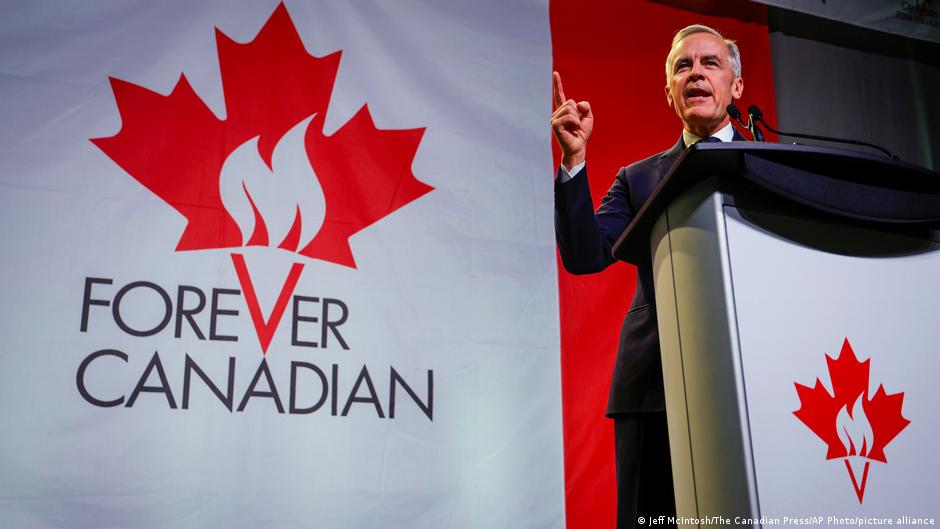


 4 sources
Morning Edition · Friday, October 16, 2026Published at 1:18 AM EDT · New York
Carney says the United States is trying to break Canada as Alberta votes on starting a path toward separation
Albertans vote on Monday, October 19, on whether to instruct their government to begin the legal process toward a future separation referendum, and the prime minister is spending the final week campaigning in the province.
Canadian Prime Minister Mark Carney has accused the United States of trying to break Canada so that it can "own us". He urged voters in oil-rich Alberta not to start a process toward separation in Monday's referendum. Deutsche Welle reported that Carney described Washington's approach as a divide-and-rule tactic. He said the vote comes at the “worst time” for the country.
The vote is a first step and does not decide independence. Albertans will choose whether to remain a province or to instruct their government to begin the legal process toward a later referendum on separation. Advance voting runs through Saturday. Carney plans to spend the final week in Alberta, according to the CBC.
Alberta holds most of Canada's oil production and much of its export revenue. That is why both sides treat the vote as a test of national economic unity. Supporters of separation argue that federal policy has taken more from the province than it returns. Carney's government argues that US pressure on Canadian trade and sovereignty makes this the moment of greatest risk from division. Carney did not cite specific US actions in the remarks reported.
Other US allies face the same kind of pressure on territory. In Britain, Conservative leader Kemi Badenoch called it "humiliating" that Reform UK leader Nigel Farage proposed offering Trump the Chagos archipelago in exchange for him to stop talking about the Falklands. In both countries, governments are treating American statements about territory as a factor in domestic politics.
Part of a tracked trend
Washington Presses on Allied Sovereignty
US pressure on allies' territory and resources will keep producing sovereignty disputes inside the Western bloc, raising the political risk premium on allied jurisdictions that investors once treated as close to risk-free.
Veracity: Corroborated
75/100- If true, who benefits
If US pressure is driving the vote, Washington gains leverage in trade talks with Ottawa and over Alberta's oil, Carney's government gains a national-unity message, and Alberta and federal bondholders would pay any added political risk premium.
- The nuance
The article says Carney cited no specific US actions, yet such actions are on record: Treasury Secretary Scott Bessent called Alberta "a natural partner for the U.S.", and State Department officials met the separatist Alberta Prosperity Project. Separatists, for their part, blame Ottawa, the ballot asks about independence and not about joining the United States, and Premier Danielle Smith put support for separation near 22%.
An open-source-intelligence read of how likely this story is true with its real nuance, not a judgment of any outlet. It assesses the claim, weighing independent and adversarial reporting. How we label confidence.
Synthesized from: Deutsche Welle · ABC News · CBC · MercoPress
Townsquare
Start a discussion in Townsquare.
More from this edition
- CoreWeave's default insurance reaches distress levels as the AI debt sell-off spreads to South Korea's Kospi
- Fed Chair Warsh gives no signal on an October move after US consumer prices rise 3.7% from a year earlier
- WTI crude jumps 3% on a large US inventory draw while Brent stalls as Washington weighs easing Russian tanker sanctions
- Zelensky says Ukraine will resume strikes on Russian refineries as Trump says the war will be settled without him
- Bitcoin falls below $80,000 and recovers to $82,500 alongside Seoul chip stocks while silver extends a 12% monthly decline
- Bank of Japan's Koeda says the neutral rate is "considerably above 1%" and warns the board against excessive caution
- EU revives debate on confiscating frozen Russian assets as Belgium maintains its objection before the October 23-24 summit
Comments
0No comments yet.