← The Global Intelligence Brief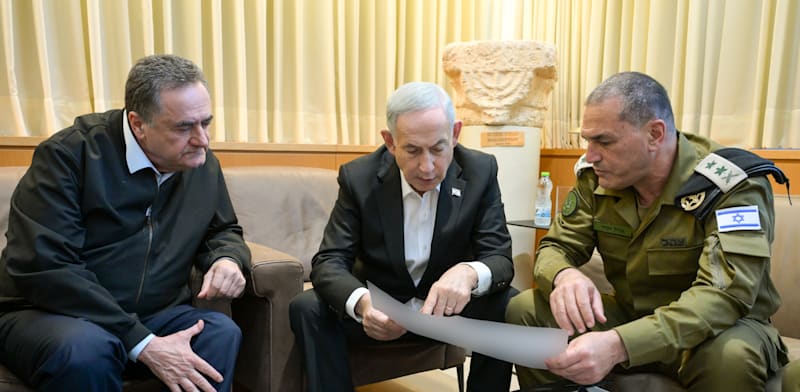


 4 sources
Morning Edition · Monday, October 26, 2026Published at 1:15 AM EDT · New York
Israel's army chief demands written authorization before an Iran-linked order, a day before Israelis vote
Chief of Staff Eyal Zamir asked for legal documentation and political signatures, and Prime Minister Benjamin Netanyahu denies any dispute as the shekel weakens before Tuesday's election.
Israel's military chief of staff, Lieutenant General Eyal Zamir, asked for an in-depth discussion before he would carry out a directive from Prime Minister Benjamin Netanyahu's government, Globes reported on Monday. According to the Hebrew business daily, Zamir also requested legal documentation and the signatures of the political leadership for an operation that could lead to a confrontation with Iran. People familiar with the details told Globes that military officers fear an attempt to use the Iran issue to build political momentum. Israelis vote on Tuesday, October 27.
Netanyahu rejected the account. He told Channel 14 that "there was no fight between us" and called the reports nonsense. During the campaign he has said he ordered the Mossad and the military to work toward toppling Iran's government, and he has claimed that Iran restarted its nuclear program. Neither claim has been independently confirmed.
Some Israeli commentators question the strategy itself. An opinion piece in Ynet argued that what Israel did not achieve in the last two campaigns against Iran is unlikely to be achieved in another round of fighting. The author called on the next government to reexamine its basic assumptions about Iran. Separately, Netanyahu threatened a major offensive in the West Bank after two Israeli soldiers were killed. A Consortium News essay republished by ZeroHedge described the threat as an election-timed pretext, which is the author's interpretation. The military announced a general closure of the West Bank for Palestinians on election day.
Markets are pricing some of this risk in. Globes reported that the shekel weakened against the dollar ahead of the vote.
Part of a tracked trend
Fragile US-Iran Detente
The US-Iran settlement is a managed, reversible arrangement rather than a durable peace, so repeated rounds of brinkmanship and renegotiation will keep regional risk live and intermittently price back into energy markets.
Veracity: Plausible
65/100- If true, who benefits
Netanyahu's electoral rivals gain from the story that a military order was timed to the vote. Netanyahu gains from appearing tough on Iran while he denies any dispute. Holders of the shekel and of Israeli sovereign debt would bear the cost of any action timed to the election.
- The nuance
The Times of Israel and other outlets repeat the report, but every version relies on unnamed sources, and nobody has disclosed what the directive actually ordered. Netanyahu calls the report nonsense. Hebrew reporting adds a constraint the article leaves out: Israel cannot strike Iran without US coordination, so Washington may limit the government's options more than Zamir does.
An open-source-intelligence read of how likely this story is true with its real nuance, not a judgment of any outlet. It assesses the claim, weighing independent and adversarial reporting. How we label confidence.
Synthesized from: Globes (Hebrew) · Ynet (Hebrew) · ZeroHedge · Globes (Hebrew) Markets
Townsquare
Start a discussion in Townsquare.
More from this edition
- Lula wins a fourth term in an upset, and investors who bet on Bolsonaro rush to unwind Brazil positions
- Gold falls below $4,000 and bitcoin trades near $80,000 as oil-driven inflation revives Fed hike bets
- Brent slips to about $115 despite new Houthi claims of strikes on Saudi oil infrastructure
- Kremlin says Russia could resume gas sales to Europe weeks after Washington waived sanctions on its diesel
- SpaceX borrows $40 billion to buy AI chips as Musk predicts failures among smaller cloud rivals
- Vučić concedes Serbia's election to a student-led list and warns sanctions on Russia could follow by spring
- Infosys cuts its growth forecast again and its shares fall 4% as AI squeezes India's outsourcing model
Comments
0No comments yet.