← The Global Intelligence Brief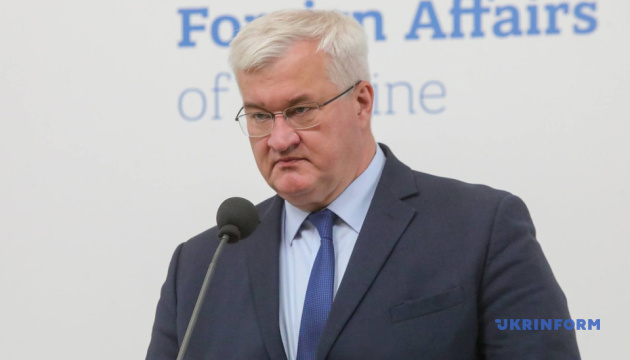

 3 sources
Morning Edition · Monday, October 26, 2026Published at 1:15 AM EDT · New York
Kremlin says Russia could resume gas sales to Europe weeks after Washington waived sanctions on its diesel
Kremlin spokesman Dmitry Peskov said supply depends on spare volumes because Asian buyers are absorbing Russian gas, while Kyiv rejects Moscow's expectation that Washington will press Ukraine to concede.
Dmitry Peskov, the Kremlin's spokesman, said Russia is ready to consider supplying gas to the European Union if it has spare volumes and if Europe shows interest, Kommersant reported. He added that "volumes are sometimes taken." According to Expert, Peskov described alternative markets as "very hungry," with many supply requests. He said European buyers would find ways to buy Russian gas through spot markets even without direct contracts.
The offer comes as Washington has eased pressure on Russian energy. On October 9, President Donald Trump announced a deal with President Vladimir Putin under which Russia would supply more than 4 million tons of diesel to world markets. The Treasury Department waived sanctions on Russian diesel through April 2027, and Trump called off planned penalties on buyers of Russian oil and gas. US media attributed the move to fuel prices before the November midterm elections. Diesel prices had risen after Ukrainian strikes on Russian refineries forced Moscow to ban diesel exports. The first tanker under the deal is heading to New York.
Kyiv rejects the political conclusion Moscow draws from these moves. Yuri Ushakov, a foreign-policy aide to Putin, said Russia had expected the United States to pressure Ukraine after Trump's meeting with Putin in Alaska. Foreign Minister Andrii Sybiha replied that the war cannot be ended by stopping Ukraine's resistance. The fighting over energy infrastructure continued overnight. Russian forces struck an energy facility in the Kamianets-Podilskyi district of Ukraine's Khmelnytskyi region, causing emergency power cuts, Ukraine's state news agency reported.
Part of a tracked trend
Sanctions Bend to Pump Prices
Each time high fuel prices threaten Washington's domestic politics, it trades temporary sanctions relief for Russian energy supply. Russian barrels regain Western market access step by step, and the deterrent value of US sanctions declines.
Veracity: Corroborated
76/100- If true, who benefits
Moscow benefits if the US diesel waiver becomes a precedent for gas. Russian exporters and spot traders profit from European demand that sanctions cannot fully block. The White House gains lower fuel prices before the midterm elections.
- The nuance
Peskov's conditional offer repeats a line the Kremlin used in April 2026, so it is not a new policy. The size of the diesel deal is uncertain. Reporting describes an initial 300,000 tons followed by staged increases under General License 135, and analysts say those volumes are too small to move prices much. I could not verify the 4 million ton total independently.
An open-source-intelligence read of how likely this story is true with its real nuance, not a judgment of any outlet. It assesses the claim, weighing independent and adversarial reporting. How we label confidence.
What this means
Moscow is testing whether the US diesel waiver can become a precedent for gas. Peskov's wording puts Russia in the position of seller of last resort: Asia comes first, and Europe gets what remains at spot prices. European governments face a choice between keeping their phase-out of Russian gas and accepting cheaper supply during an energy-driven cost-of-living squeeze. That pressure falls hardest on high-deficit governments already facing street protests. Washington's waiver shows that sanctions give way when domestic fuel prices threaten an election, which lowers the credibility of every future sanctions threat. The 2022 to 2023 price-cap period is the precedent: Russian barrels found buyers through intermediaries, and enforcement weakened as prices rose. The likelier outcome over the next few months is that formal EU policy stays in place while Russian molecules return through spot and transshipment channels, especially in a cold winter. A US reversal that reinstates penalties on Russian energy buyers after the midterms would prove this wrong.
Synthesized from: Kommersant · Ukrinform · Ukrinform (energy)
Townsquare
Start a discussion in Townsquare.
More from this edition
- Lula wins a fourth term in an upset, and investors who bet on Bolsonaro rush to unwind Brazil positions
- Gold falls below $4,000 and bitcoin trades near $80,000 as oil-driven inflation revives Fed hike bets
- Brent slips to about $115 despite new Houthi claims of strikes on Saudi oil infrastructure
- Israel's army chief demands written authorization before an Iran-linked order, a day before Israelis vote
- SpaceX borrows $40 billion to buy AI chips as Musk predicts failures among smaller cloud rivals
- Vučić concedes Serbia's election to a student-led list and warns sanctions on Russia could follow by spring
- Infosys cuts its growth forecast again and its shares fall 4% as AI squeezes India's outsourcing model
Comments
0No comments yet.