← The Global Intelligence Brief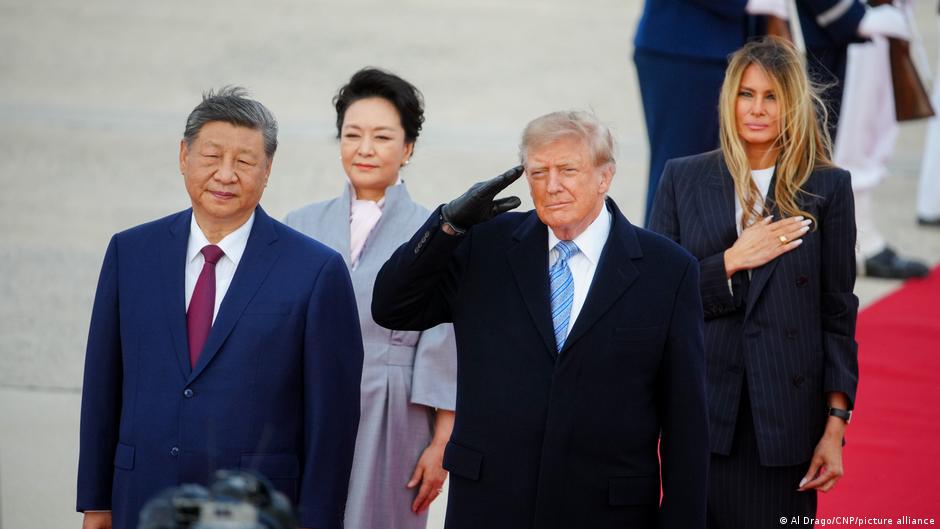


 3 sources
Morning Edition · Saturday, November 7, 2026Published at 12:12 AM EST · New York
Washington Tells Beijing to Meet Its Busan Trade Commitments on Rare Earths and Farm Goods "Immediately"
US officials say China has fulfilled about two-thirds of the 2025 accord, Beijing objects to new US restrictions, and some US tariff exemptions expire on November 10 ahead of a planned Xi-Trump meeting in Shenzhen.
The United States warned China that it must "immediately" meet the terms of the trade truce agreed in Busan in 2025, saying Beijing has not delivered the promised increase in supplies of rare earths and other critical products, the Financial Times reported. Treasury Secretary Scott Bessent and Trade Representative Jamieson Greer made the demand on a video call with Chinese Vice Premier He Lifeng on November 6, according to a summary of the call. Greer's office singled out agricultural purchases and critical minerals. US officials told the FT that China has met about two-thirds of its commitments. Beijing disputes that figure.
Deutsche Welle reported that China, for its part, expressed concern over what it called US "economic, trade restrictive" measures. China's Commerce Ministry has said it is open to buying more US farm goods if Washington carries out the reciprocal tariff cuts. The complaint has a record behind it. In August, the ministry announced countermeasures against what it described as the US Federal Communications Commission's repeated expansion of "national security" restrictions after Busan, covering telecommunications, testing laboratories, drones, routers and undersea cables. Those countermeasures included tighter export controls on drones and drone components.
The deadline pressure is real. US tariff exemptions for some Chinese products expire on November 10, and Washington has not said whether it will extend them. Diplomacy is moving in parallel. Beijing said discussions are under way on a meeting among Xi Jinping, Donald Trump and Vladimir Putin, and Trump is expected to travel to Shenzhen to meet Xi for the third time this year, The Hindu reported. The broader truce is set to expire in January.
Veracity: Plausible
74/100- If true, who benefits
Washington uses the charge that China has fallen short as leverage before the Shenzhen summit and the truce's January 10 expiry, and US rare-earth producers such as MP Materials gain if Chinese supply stays limited.
- The nuance
The "two-thirds" compliance figure comes only from US officials. Beijing ties its farm purchases to US tariff cuts, and the Chinese readout said He Lifeng would keep consulting toward "stable and positive" ties without admitting any shortfall, according to The Standard.
An open-source-intelligence read of how likely this story is true with its real nuance, not a judgment of any outlet. It assesses the claim, weighing independent and adversarial reporting. How we label confidence.
What this means
China's leverage is processing capacity for rare earths and critical minerals that US defence, automotive and electronics supply chains cannot replace within a few years. Washington's leverage is tariff relief and access to US farm and technology markets. The midterm defeat weakens Trump's position at home, and Beijing has less reason to deliver early, because a president without Congress needs a summit result more than China does. The precedent is the 2020 Phase One deal, when China fell well short of its purchase targets and Washington chose not to collapse the agreement. The desk's read is that both sides extend specific deadlines piece by piece through the Shenzhen meeting, with China releasing rare-earth export licences in amounts calibrated to keep talks alive, over the next two months. That depends on Washington extending the November 10 exemptions. If the exemptions lapse and Beijing answers with new export controls, the truce breaks before January and this read is wrong.
Synthesized from: Financial Times · Deutsche Welle · The Hindu
Townsquare
Start a discussion in Townsquare.
More from this edition
- US Payrolls Jump by 165,000 and Make a December Federal Reserve Rate Increase the Market's Base Case
- US Strikes Iranian Air Defences on Qeshm Island as Brent Ends Its Worst Week Since April 2020
- Voters Reject Data Centres in 40 of 41 Ballot Measures as an AI Sell-Off Sends Japan's Nikkei Into a Bear Market
- China's Central Bank Extends Gold Buying to 24 Straight Months as Bitcoin Falls Below $75,000
- Paraguay's Senate Removes President Santiago Peña Over the Ueno Bank Collapse, and Prosecutors Order Him Held Under House Arrest
- Ukrainian Drones Reportedly Hit the Saratov Refinery as a Russian Ballistic Missile Injures Three in Kyiv
- Japan Moves to Pay the International Criminal Court Early as US Sanctions Threaten the Court's Access to Dollar Settlement
Comments
1Nov 7, 5:12 AM · edited
Because Beijing ties more farm purchases to US tariff cuts, letting the November 10 exemptions lapse would likely slow the agricultural deliveries Washington is demanding before Shenzhen.