← The Global Intelligence Brief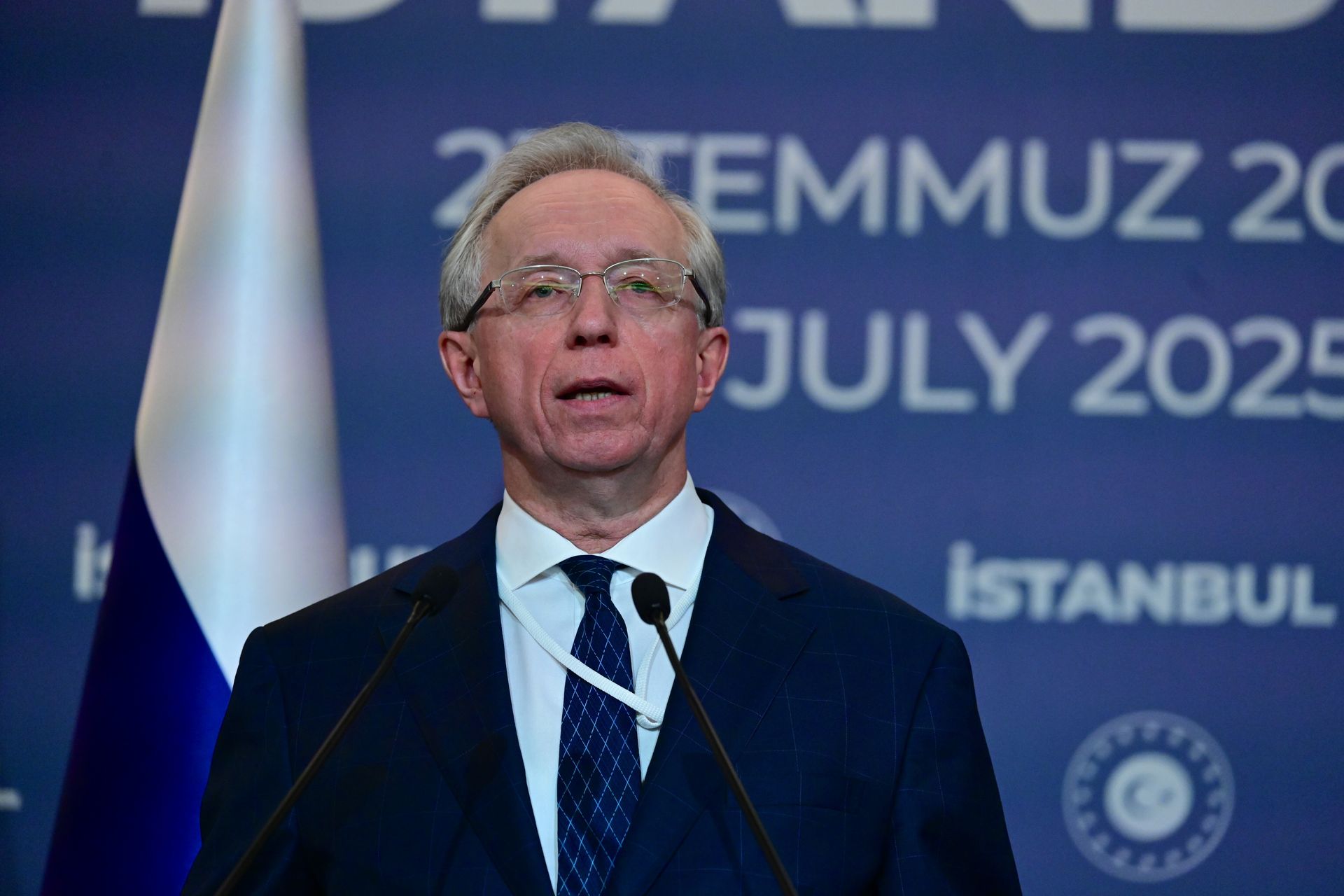


 4 sources
Morning Edition · Sunday, November 8, 2026Published at 12:20 AM EST · New York
Russia Adds Arms-Control Chief Ryabkov to Its Team for Abu Dhabi Talks With the US and Ukraine
The talks on Tuesday and Wednesday are the first since February, and they follow drone damage to a bridge on the road to Crimea and new Russian strikes on the Kyiv region.
Moscow is sending more senior officials to the next round of talks. Sergei Ryabkov, the Russian deputy foreign minister responsible for relations with the United States and for arms control, will join the negotiations for the first time. Reuters, citing Kremlin spokesman Dmitry Peskov, reports that Kremlin aide Vladimir Medinsky will again lead the delegation. It will also include Deputy Foreign Minister Mikhail Galuzin, military intelligence chief Igor Kostyukov and Yuri Zhigarlovsky, a senior General Staff officer. The talks, set for Tuesday and Wednesday, are the first since February. The Kremlin has not disclosed what it will propose.
Ryabkov's appointment matters because of his portfolio. He also handles the Iran nuclear file and US-Russia strategic stability. His presence suggests Moscow wants to discuss Ukraine together with its wider agenda with Washington, not as a separate file.
The fighting continued before the talks. Yuri Slyusar, governor of Russia's Rostov region, said drone strikes damaged the road surface of the bridge over the Mius River on the highway to Crimea, Kommersant reported. Earlier this year Ukraine repeatedly attacked the land route that supplies Crimea. Russian strikes damaged infrastructure in the Kyiv region and destroyed a kindergarten in the capital, Euronews reports, as attacks on Ukraine's energy grid resumed. Ukrainian regions faced scheduled power cuts on Sunday.
In Washington, the new Democratic majority adds a separate source of pressure. Senator Richard Blumenthal said he will introduce legislation supporting Ukraine and controls on Starlink, and said Trump needs "new negotiators." He said "Congress must lead without delay." Kyiv's supporters want Congress to limit what the White House can concede. Moscow's choice of delegates suggests it intends to negotiate with the executive branch while the executive still controls US policy.
Part of a tracked trend
Great Powers Negotiate Ukraine Over Europe's Head
Washington, Moscow and Beijing increasingly treat the end of the Ukraine war as a bargain among themselves, so European governments and Kyiv keep losing influence over the terms while being asked to fund the outcome.
Veracity: Corroborated
85/100- If true, who benefits
If Moscow is widening the agenda, it can offer cooperation on arms control and Iran in exchange for Ukraine terms agreed directly with the White House, before the Democratic Congress can attach conditions to aid and sanctions.
- The nuance
Anadolu's report of the Kremlin announcement confirms the delegation list. The reading that Ryabkov's presence links Ukraine to arms control and Iran is the desk's inference, because the Kremlin has not said what he will discuss. On Oct. 28, Ryabkov himself called discussion of an Abu Dhabi meeting premature.
An open-source-intelligence read of how likely this story is true with its real nuance, not a judgment of any outlet. It assesses the claim, weighing independent and adversarial reporting. How we label confidence.
What this means
The real bargaining is between Washington and Moscow, and the delegation list shows Russia trying to widen the agenda to arms control and Iran, where it has things the US wants. Europe and Kyiv have little direct input. The new factor is a Democratic Congress that can tie aid and sanctions to conditions, which strengthens Kyiv's position in Washington but gives Russia a reason to try to lock in terms with the White House quickly. Meanwhile the strikes on each other's infrastructure raise costs inside both economies, through Crimea's supply route and Ukraine's power grid. The February round produced a prisoner exchange and no political breakthrough. The desk's read is that this round produces technical results, such as prisoner swaps or talks on limiting strikes on energy infrastructure, and not a ceasefire. That depends on Moscow's territorial demands staying unchanged. An announced ceasefire framework, or a joint US-Russia statement on arms control, would prove this wrong and show that the wider bargain is moving ahead of the Ukraine terms.
Synthesized from: Kyiv Independent · Kyiv Independent · Kommersant · Euronews
Townsquare
Start a discussion in Townsquare.
More from this edition
- Strong October Jobs Report Lifts Odds of a December Fed Rate Hike to About 77%
- Democratic Sweep Hits AI Chip Stocks as Protests Against Data Centers Spread in Europe
- Paraguay Jails Ousted President Peña as Ueno Bank Collapse Leaves Most of the Country Unable to Reach Deposits
- US Disables Cargo Ship Leaving Iranian Port and Sets Up Task Force for Iran's Land and Caspian Routes
- Goldman Cuts Its 2026 Gold Forecast to $4,150 as Metals Keep Falling and Bitcoin Holds Near $76,000
- Germany Starts Winter Well Short of Its Gas Storage Target as Tanker Attack Tests Pakistan's Hormuz Deal With Iran
- French Police Fire Tear Gas as Protests Spread After the National Assembly Rejects the 2027 Budget
Comments
0No comments yet.