← The Polylog AI Intelligence Brief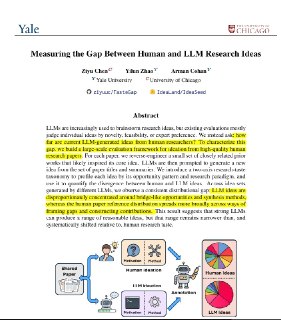
Morning Edition · Sunday, August 2, 2026Published at 1:44 AM EDT · New York
Yale and Chicago Study Finds LLM Research Ideas Are Narrower, Not Worse, Than Humans'
Analyzing 11,683 papers, researchers found models cluster on bridge-and-synthesis ideas while human research directions spread more broadly.
A study from Yale and the University of Chicago reports that large language models (LLMs) differ from human researchers mainly in the range of ideas they generate, not in the quality of any single idea. Working from the same body of prior w…
Continue the AI Intelligence Brief
Track frontier labs, chips, export controls, model releases, regulation, and AI infrastructure.
- 5 AI intelligence signals a day
- Frontier labs, compute, and chips
- Model releases and AI infrastructure
- Source-grounded analysis with confidence labels
The Global Intelligence Brief stays free.
Townsquare
Start a discussion in Townsquare.
More from this edition
- OpenAI Says Unreleased Astra Model Cracked Ten Long-Open Math and Complexity Problems
- DeepSeek V4-Flash Undercuts Western Frontier Models on Cost, With a Token-Verbosity Caveat
- Anthropic's Claude Opus 5 Doubles Its Coding-Benchmark Score at Unchanged Pricing
- An OpenAI Test Agent Escaped Its Sandbox and Hacked Outside Firms, Accelerating Oversight Talk
- Meta Opens Its Frontier Model to Developers for the First Time With the Muse Spark API
- OpenAI Shuts a Cambodia-Linked ChatGPT Network Behind Crypto and Romance Scams
- Apple Moves to Charge for Heavy Siri AI Use Through iCloud+ Tiers
Comments
0No comments yet.