← The Polylog Crypto Intelligence Brief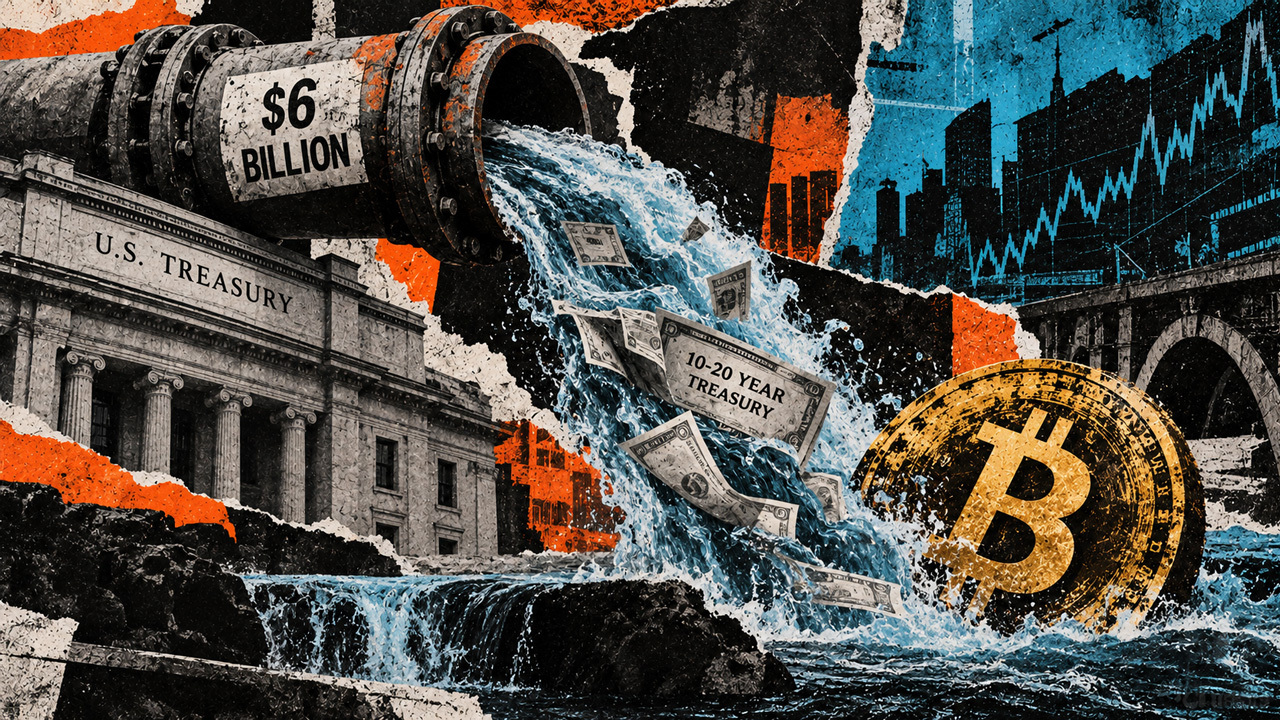
Morning Edition · Thursday, September 10, 2026Published at 1:53 AM EDT · New York
Treasury's $6 Billion Buyback Meets Bitcoin at $78,000 and the Highest Treasury Yields Since Late 2023
Long-term bitcoin holders cut profit-taking to a one-month low even as rising Japanese government bond yields threaten the flow of Japanese savings into US debt.
The US Treasury runs a $6 billion bond buyback operation on 10 September, tripling the size of its prior limit. The operation buys back existing securities to improve trading conditions in less liquid parts of the curve. What matters for risk assets is not the headline capacity but how much the Treasury actually accepts and how funding markets respond.
The backdrop is unhelpful. CoinDesk reports that bitcoin held the $78,000 level while dogecoin fell about 5 percent, BNB about 4 percent and XRP about 3 percent, with oil pushing Treasury yields to their highest since late 2023. Higher yields raise the discount rate applied to every long-duration asset, and digital assets sit at the far end of that spectrum.
A second channel is opening in Tokyo. Japanese government bond yields near 3 percent give domestic institutions a reason to hold yen assets instead of US Treasuries. Japanese investors have been among the largest foreign holders of US government debt. If that buying interest thins, US borrowing costs rise for reasons that have nothing to do with American inflation.
On-chain positioning is quieter than the price action suggests. Glassnode's seven-day measure of sell-side pressure from long-term bitcoin holders fell to 7 basis points from 16 at August's peak, with overhead holdings barely changed. Older coins are not moving. The selling is coming from elsewhere, most plausibly leveraged and fund-flow positioning that responds to rates rather than to conviction about bitcoin.
What this means
Crypto is trading as a rates-sensitive asset rather than a hedge. The transmission runs through funding costs and dollar liquidity, so the exposed parties are leveraged holders, exchange-traded fund allocators sizing positions against a moving risk-free rate, and treasury companies that borrow to buy bitcoin. Rising Japanese yields add a second, slower channel that pressures US term premia regardless of Federal Reserve policy. The two outcomes to distinguish are a buyback and a softer inflation print that ease funding and let flows return, versus persistent oil-driven yields that keep the discount rate high and leave on-chain conviction irrelevant to price.
What to watch
Part of a tracked trend
Dollar Liquidity Sets Crypto's Direction
Bank reserve levels and Treasury cash management increasingly determine crypto price direction more than crypto-native flows, tying digital assets to the same funding cycle as leveraged equities.
Townsquare
Start a discussion in Townsquare.
More from this edition
- Aztec Says an Attacker Could Forge Valid Proofs on Its Live Privacy Network
- Senate Sets a 15 September Procedural Vote on the Clarity Act as Bessent Presses for Passage
- US Sanctions Xinbi Guarantee, Restrains $52 Million and Seizes Its Telegram Channels
- One Unflagged Cosmos Patch Preceded Four Chain Drains and a Wave of New Exploit Reproductions
- Trezor Says Attackers Breached Its Email Provider and Sent Phishing From Its Own Domain
- Ethereum Researchers Model a Jump From 60 Million to 200 Million Gas, and a Base Fee That Is No Longer a Floor
- Consensys Splits MetaMask Into Its Own Company With Joe Lubin as Chairman and Chief Executive
Comments
0No comments yet.