← The Global Intelligence Brief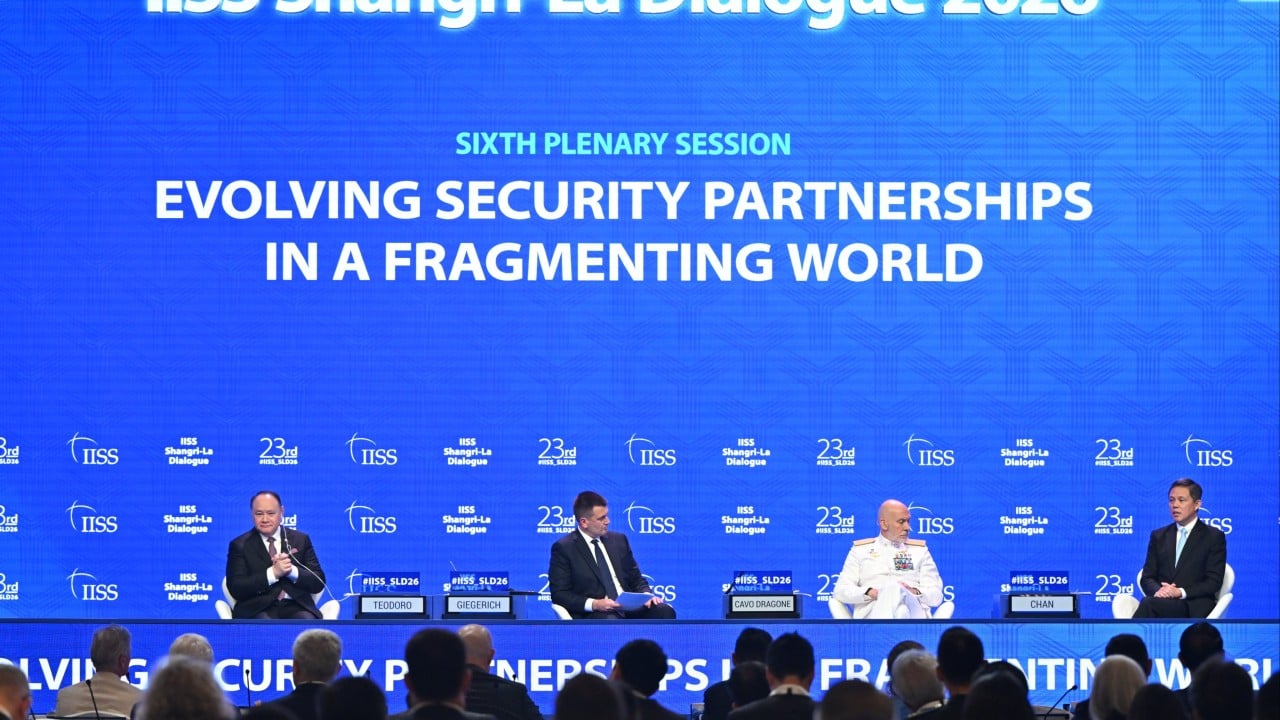


 3 sources
Evening Edition · Sunday, May 31, 2026Published at 11:57 AM EDT · New York
US Tells Asian Allies to Spend 3.5 Percent of Output on Defense
At the Shangri-La Dialogue in Singapore, Defense Secretary Pete Hegseth said the era of subsidizing wealthy nations is over and pressed partners to meet a higher spending target in response to China's military buildup.
The Shangri-La Dialogue, Asia's main annual security forum, ended in Singapore with two issues dominating the agenda, defense budgets and how firmly each country will commit to regional security, the South China Morning Post reported.
United States Defense Secretary Pete Hegseth set the priorities, calling on allies to raise military spending to 3.5 percent of gross domestic product and declaring that "the era of the United States subsidizing the defense of wealthy nations is over." He praised South Korea's pledge to reach that level, the Philippines for a 12 percent increase, and Japan and Australia for deepening cooperation, while warning that allies who "free-ride" will face a different relationship with Washington.
Al Jazeera noted that Hegseth's framing fits a broader US position that pairs demands for higher allied spending with a more transactional view of alliances. He justified the push by pointing to what he called China's historic military buildup and "rightful alarm" across the Asia-Pacific.
The message comes as Asian rearmament is already accelerating, with Japan moving to export missiles and neighbors expanding their fleets. Sustained increases on this scale reshape national budgets and order volumes for defense manufacturers across the region.
Veracity: Corroborated
92/100- If true, who benefits
Washington, which shifts defense costs onto allies, alongside Asian and US shipbuilders, missile makers and electronics suppliers who gain order volume.
- The nuance
Hegseth's remarks and the 3.5 percent target are confirmed by NBC News, but the figure is aspirational, only South Korea has firmly pledged it, and most allies have made no formal commitment to that level or timeline.
An open-source-intelligence read of how likely this story is true with its real nuance, not a judgment of any outlet. It assesses the claim, weighing independent and adversarial reporting. How we label confidence.
What this means
A coordinated rise in Asian defense spending is a multiyear fiscal and industrial shift, not a single event. It expands demand for shipbuilders, missile makers and electronics suppliers, while widening deficits in economies that adopt the higher target. It also signals that Washington is shifting cost onto allies as it manages competition with China.
Synthesized from: South China Morning Post · Al Jazeera · NPR
Townsquare
Start a discussion in Townsquare.
More from this edition
- Oil Falls as a US-Iran Framework Nears, Promising to Reopen Hormuz
- A Weak Dollar Keeps the Hard-Money Trade Intact Even as Metals Cool
- Israel Captures Beaufort Castle and Pushes North of the Litani in Lebanon
- Bitcoin's Shrinking Volatility Is Framed as a Sign of Maturity
- An Analyst Reads US Energy Strategy as a Quiet Contest With China
- Colombia Votes in a Tight Race That Will Test Investor Sentiment
- Satellite Images Show Israel Expanding Control Over Southern Gaza
- China Marks 20 Years of a Domestic Jet Engine That Cut Reliance on Imports
Comments
0No comments yet.