← The Global Intelligence Brief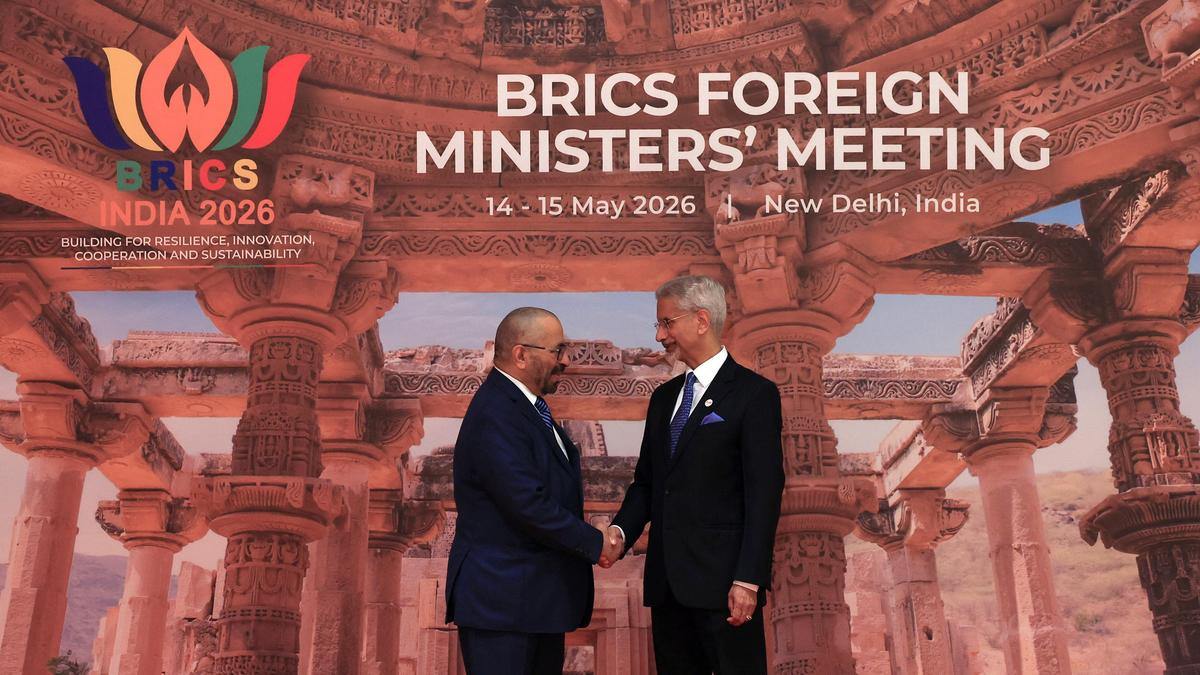

 2 sources
Morning Edition · Tuesday, June 23, 2026Published at 6:13 AM EDT · New York
BRICS Foreign Ministers Meet in India as War and Oil Test the Bloc's Unity
Diplomats from the expanded grouping gathered amid divisions over the Iran conflict, energy prices and the bloc's direction.
Foreign ministers of the BRICS grouping, which brings together Brazil, Russia, India, China and South Africa along with newer member states, met in India as the bloc confronted the strains of the Iran conflict, falling oil prices and its own internal divisions, according to The Hindu.
The expanded bloc now includes economies with sharply different interests, from energy exporters that benefit from high oil prices to importers that gain from cheaper crude. That divergence complicates efforts to present a unified position on trade, sanctions and the management of regional conflicts.
Russia used the gathering to press its broader case. Its foreign minister, Sergei Lavrov, criticized what he described as the international community's neglect of the Palestinian cause, RIA Novosti reported, part of a wider Russian effort to position itself alongside the Global South against Western priorities.
Despite the disagreements, the bloc's continued expansion and its discussions of trade settlement outside the dollar reflect a gradual and uneven shift toward a more multipolar order. Progress is incremental, and the visible divisions are as significant as the statements of unity.
Veracity: Corroborated
80/100- If true, who benefits
Russia's effort to align with the Global South against Western priorities, and the broader multipolar and dedollarization storyline.
- The nuance
The gathering and its divisions are real but occurred in mid-May 2026 and ended without a joint statement over the Iran-UAE split, so presenting it as a current-week event overstates its recency, and Lavrov's Palestinian remarks are Russian positioning.
An open-source-intelligence read of how likely this story is true with its real nuance, not a judgment of any outlet. It assesses the claim, weighing independent and adversarial reporting. How we label confidence.
What this means
BRICS remains a coalition of states with conflicting economic interests rather than a unified bloc, which limits how fast it can build alternatives to Western institutions. Even so, its steady enlargement and recurring talk of non-dollar trade settlement mark a slow erosion of a single-currency global system.
What to watch
Synthesized from: The Hindu · RIA Novosti
Townsquare
Start a discussion in Townsquare.
More from this edition
- Technology Selloff Spreads Across Global Markets as SpaceX Rally Reverses
- China Blacklists United States Rare-Earth Miners in Retaliation for Pentagon List
- Iran Says No United Nations Inspections of Bombed Nuclear Sites Are Scheduled
- Brent Crude Falls Toward Three-Month Low as United States and Iran Signal Progress
- NATO Heads to a Summit Strained by Trump and a Widening Security Gap
- India Deepens Russian Energy Ties as Trade Talks With Washington Reach a Critical Stage
- Guinea Bans Raw Gold Exports in a Push for More Domestic Value
- Bitcoin Miner Hut 8 Settles Investor Suit Over United States Merger for 2.35 Million Dollars
Comments
0No comments yet.