← The Global Intelligence Brief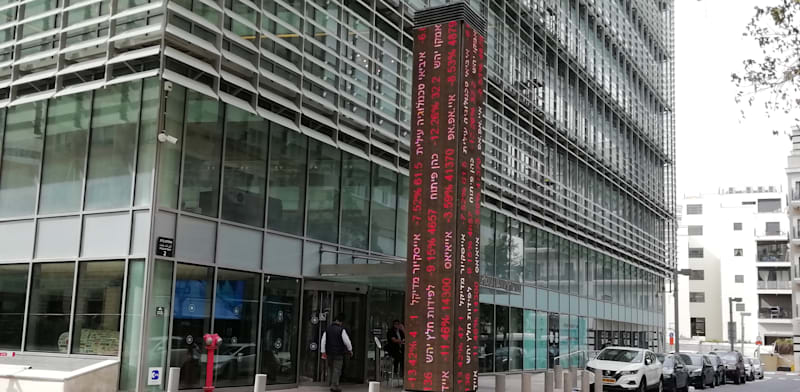

 2 sources
Morning Edition · Tuesday, July 7, 2026Published at 6:17 AM EDT · New York
Gold Holds Near $4,150 and Bitcoin Steadies as Equities Slip on Chip Doubts
Hard assets kept their bid while stock markets from Seoul to Tel Aviv retreated and the shekel weakened past three to the dollar.
Equity markets across Asia and the Middle East fell on Tuesday as caution about technology valuations spread. In Israel, the benchmark Tel Aviv 35 index lost about 1.2 percent, the chip-inspection firm Camtek dropped more than 7 percent, and the United States dollar rose past three shekels, according to Globes. The paper reported that the Seoul market declined after Samsung's preliminary results and lowered United States stock futures with it.
As shares fell, gold and bitcoin held their value. Gold traded near 4,150 dollars an ounce, close to where it has held in recent sessions as investors awaited minutes from the Federal Reserve's June meeting, per market data compiled by Trading Economics. Silver eased to roughly 61 dollars an ounce after a stronger prior session, and bitcoin traded around 64,000 dollars, up modestly on the day and higher over the past week, according to price data reported by Fortune.
The divergence between falling equities and steady metals fits a pattern that recurs when confidence in a single market narrative weakens. As doubts about the artificial-intelligence trade prompt investors to reduce exposure to richly valued shares, demand persists for assets whose supply cannot be expanded by policy. That preference tends to strengthen when central banks are expected to keep interest rates below inflation, and the Federal Reserve minutes are the next test of that expectation.
What this means
When crowded equity trades weaken, the behavior of gold and bitcoin shows whether investors are moving to cash and government bonds or to assets outside the reach of monetary policy. Metals and bitcoin holding their levels while technology shares fall is evidence that demand for hard assets is structural rather than a brief reaction, and it reflects persistent doubt about the purchasing power of state currencies.
What to watch
- The Federal Reserve's June meeting minutes, because any signal of delayed rate cuts would raise the dollar and pressure both metals and bitcoin, while a signal of earlier easing would do the opposite.
- The dollar's move against the shekel and other smaller currencies, an early indication of whether a global shift back to the dollar is underway as risk appetite falls.
- Whether gold and bitcoin continue to rise together on down days for equities, which would confirm that investors treat them as substitutes for one another rather than competing trades.
Observations to monitor, not financial advice.
Synthesized from: Globes (Israel) · Euronews
Townsquare
Start a discussion in Townsquare.
More from this edition
- Samsung's Record AI-Memory Profit Meets Investor Doubt, Erasing $100 Billion in Value
- Hong Kong Expands Yuan Funding as Beijing Builds Channels Around the Dollar
- Europe's Economists Warn of Recession Risk as Aging and Thin Budgets Bite
- Explosions Wound at Least 18 in Damascus During Macron's Landmark Syria Visit
- NATO Meets in Ankara Pledging $40 Billion for Counter-Drone Defense
- Japanese and Chinese Coast Guards Confront Each Other Near Disputed Islands
- Moscow Claims Fresh Gains in Donbas and Kharkiv as It Builds a Border Buffer
- Modi and Prabowo Deepen India-Indonesia Ties With Missiles and Payment Links
Comments
0No comments yet.