← The Global Intelligence Brief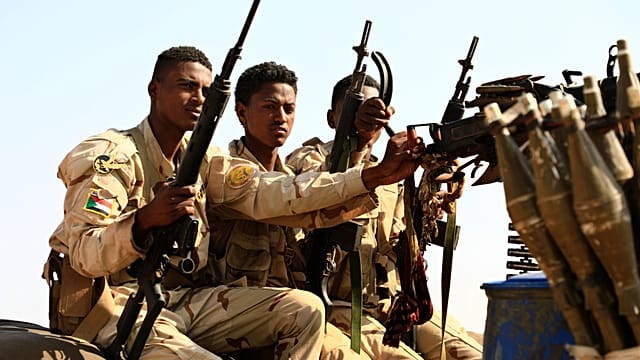
 1 source
Morning Edition · Tuesday, July 7, 2026Published at 6:17 AM EDT · New York
UN Rights Body Condemns Escalating Violence in Sudan's El-Obeid
The Human Rights Council approved a measure denouncing attacks by the Rapid Support Forces and its allies around the North Kordofan city.
The United Nations Human Rights Council approved without a vote a measure condemning escalating violence by Sudan's paramilitary Rapid Support Forces (RSF) and its allies in and around el-Obeid in the North Kordofan region, Africanews reported. The council's action, taken by consensus, reflects rare international agreement on the gravity of the fighting even as the war between the RSF and Sudan's armed forces continues with little sign of resolution.
El-Obeid sits on routes linking the capital region to the western Darfur and Kordofan areas, and control of such junctions has been contested throughout the conflict. The war has displaced millions and produced one of the world's largest humanitarian emergencies, with famine conditions reported in parts of the country and aid access repeatedly obstructed.
The conflict's economic effects extend beyond Sudan's borders. The fighting has disrupted farmland and the supply of gum arabic, a Sudanese export used widely in food and beverage manufacturing, and it has strained neighboring states absorbing refugees. A consensus condemnation has moral weight but no enforcement power, and Sudan's fragmentation continues to unsettle a region already under pressure from conflict and displacement.
Veracity: Corroborated
90/100- If true, who benefits
The resolution's Western sponsors and Sudan's regular army gain by concentrating censure on the RSF, while displaced civilians gain an inquiry that carries no enforcement.
- The nuance
The measure passed by consensus, but China disassociated itself, and it names RSF abuses more prominently than the army's role in the broader war.
An open-source-intelligence read of how likely this story is true with its real nuance, not a judgment of any outlet. It assesses the claim, weighing independent and adversarial reporting. How we label confidence.
What this means
Sudan's war is fracturing a large African state along the corridors that connect its regions, with consequences for global supplies of commodities such as gum arabic and for the stability of neighbors absorbing refugees. International condemnation without enforcement underscores how little external leverage exists to halt a conflict that will keep generating humanitarian and economic spillovers.
What to watch
Source: Africanews
Townsquare
Start a discussion in Townsquare.
More from this edition
- Samsung's Record AI-Memory Profit Meets Investor Doubt, Erasing $100 Billion in Value
- Gold Holds Near $4,150 and Bitcoin Steadies as Equities Slip on Chip Doubts
- Hong Kong Expands Yuan Funding as Beijing Builds Channels Around the Dollar
- Europe's Economists Warn of Recession Risk as Aging and Thin Budgets Bite
- Explosions Wound at Least 18 in Damascus During Macron's Landmark Syria Visit
- NATO Meets in Ankara Pledging $40 Billion for Counter-Drone Defense
- Japanese and Chinese Coast Guards Confront Each Other Near Disputed Islands
- Moscow Claims Fresh Gains in Donbas and Kharkiv as It Builds a Border Buffer
Comments
0No comments yet.