← The Global Intelligence Brief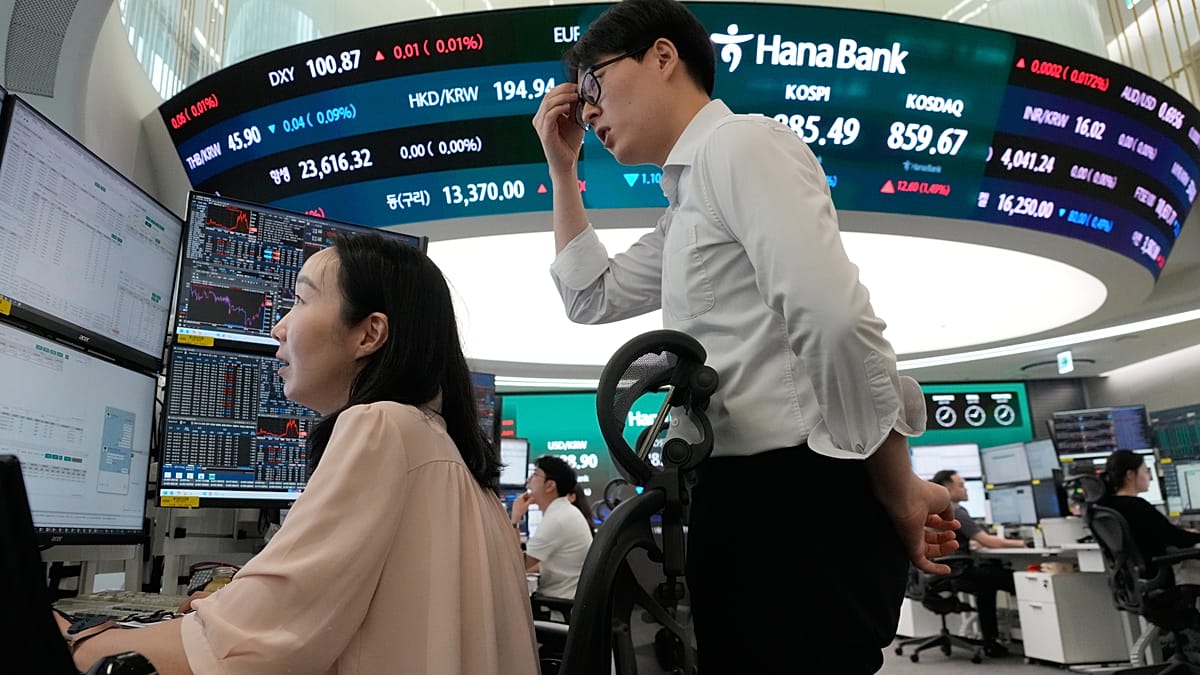


 3 sources
Morning Edition · Tuesday, July 7, 2026Published at 6:17 AM EDT · New York
Samsung's Record AI-Memory Profit Meets Investor Doubt, Erasing $100 Billion in Value
The chipmaker forecast profit nearly nineteen times higher, yet its shares fell as markets questioned how long the artificial-intelligence memory boom can run.
Samsung Electronics said its operating profit for the April to June quarter reached about 89 trillion won (roughly 51 billion euros), close to nineteen times the 4.7 trillion won it earned a year earlier and more than its combined profit of the prior three years, according to Euronews. The increase came from the memory chips used in artificial-intelligence data centers, where prices have risen sharply. Citi Research estimated that average selling prices for dynamic random-access memory (DRAM), the working memory in servers and phones, rose 44 percent from the previous quarter, and prices for NAND flash storage rose 53 percent.
Investors did not treat the results as a reason to buy. They removed more than 100 billion dollars from Samsung's market value, CNBC reported, on concern that the capital spending by large technology firms driving those prices cannot continue indefinitely and that heavy investment could reduce future profit margins. The reaction pushed the Seoul market lower and lowered United States stock futures during Asian trading.
The strain is visible far beyond Seoul. In Russia, the technology group Yandex told RBC that rising memory costs have increased the production cost of its smart devices, and that it is holding retail prices steady for now but does not rule out increases. The same chip shortage that raises Samsung's earnings is increasing input costs across the consumer-electronics chain.
From a sound-money perspective, a boom concentrated in one input, financed by heavy borrowing and equity issuance to fund artificial-intelligence capacity, resembles malinvestment, meaning capital directed toward a single expectation faster than actual demand can justify it. The record profit and the falling share price are two answers to the same question, whether the buildout is sound investment or overextension.
What this means
Samsung is the clearest measure of whether the artificial-intelligence hardware cycle is a durable expansion or a concentrated investment that exceeds real demand. When a company reports its strongest profit in years and its stock still falls, the market is pricing the year ahead, not the last quarter, and it is signaling doubt about the sustainability of data-center spending that has benefited chipmakers, utilities and industrial suppliers worldwide.
What to watch
- Second-quarter capital-spending guidance from the largest United States cloud companies, because their budgets set the demand that memory prices depend on, and any cut would confirm the sustainability concerns now pressuring Samsung.
- DRAM and NAND contract prices in the next monthly cycle, since a peak and reversal would show the pricing power behind these profits is weakening.
- Whether consumer-device makers beyond Yandex begin passing memory costs to buyers, an early sign the chip shortage is turning into broader goods inflation.
Observations to monitor, not financial advice.
Synthesized from: Euronews · CNBC · RBC (Russia)
Townsquare
Start a discussion in Townsquare.
More from this edition
- Gold Holds Near $4,150 and Bitcoin Steadies as Equities Slip on Chip Doubts
- Hong Kong Expands Yuan Funding as Beijing Builds Channels Around the Dollar
- Europe's Economists Warn of Recession Risk as Aging and Thin Budgets Bite
- Explosions Wound at Least 18 in Damascus During Macron's Landmark Syria Visit
- NATO Meets in Ankara Pledging $40 Billion for Counter-Drone Defense
- Japanese and Chinese Coast Guards Confront Each Other Near Disputed Islands
- Moscow Claims Fresh Gains in Donbas and Kharkiv as It Builds a Border Buffer
- Modi and Prabowo Deepen India-Indonesia Ties With Missiles and Payment Links
Comments
0No comments yet.