← The Global Intelligence Brief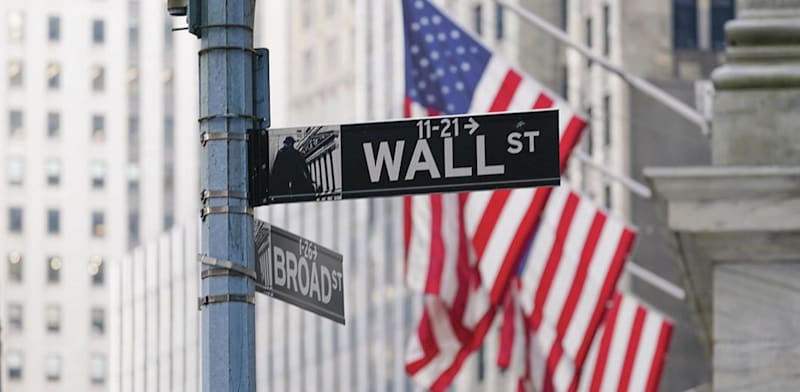
 3 sources
Morning Edition · Wednesday, July 8, 2026UpdatedPublished at 11:26 AM EDT · New York
Wall Street Opens Lower as Chip Stocks Fall and Bond Yields Climb
The central bank's latest minutes, released Wednesday, showed a divided committee, with nearly half of policymakers expecting at least one more interest-rate increase in 2026.
Updated at 11:26 AM EDT
Markets have closed and the Fed's June meeting minutes, awaited this morning, were released, showing a divided committee under chair Kevin Warsh leaning toward another rate increase.
United States stocks closed lower on Wednesday, with the Nasdaq Composite leading the declines as oil prices rose. The Dow Jones Industrial Average fell 0.3%, about 131 points, to end at 52,925.15, the S&P 500 lost 0.5% to 7,503.85, and the Nasdaq Composite dropped 1.2% to 25,818.69 as semiconductor and other large technology shares faced selling pressure. Yields on US government bonds rose as markets increased their wagers on a rate increase.
The market's caution reflected two pressures at the same time. The overnight strikes on Iran raised energy costs, which feeds inflation, while investors weighed the minutes of the Federal Reserve's June 16 to 17 policy meeting, released during the session. The record showed a committee under its new chair, Kevin Warsh, that held its benchmark rate at 3.50% to 3.75% but adopted a more restrictive tone, removing earlier signals that rate cuts were near. Nine of the nineteen policymakers expected at least one more increase before the end of 2026, and officials revised their forecast for the inflation gauge the Federal Reserve watches most closely (the PCE price index) up to 3.6% for the year.
Even so, the reaction was measured rather than severe. Analysts described equity losses as contained relative to the size of the oil move, and in Tel Aviv, bank and technology shares rose even as real-estate indexes fell and the dollar weakened, a divergence that suggests investors are discriminating between sectors rather than selling broadly. After the minutes, traders still assigned roughly a 76% probability that the central bank would hold rates at its next meeting. Large technology firms, meanwhile, are increasingly funding the artificial-intelligence buildout through bond issuance rather than cash.
What this means
Rising yields alongside falling equities is the market pricing in a longer period of high interest rates, and the mechanism is the energy-driven inflation feeding directly into rate expectations. Rate-sensitive and high-multiple sectors, chipmakers above all, lose most because their valuations depend on low future interest rates. The fact that technology giants are financing AI capital spending with debt increases the risk. If rates stay elevated, the cost of that borrowing rises while the returns on the spending remain unproven, the conditions under which malinvestment appears in a later earnings cycle.
What to watch
- The Federal Reserve minutes for language on whether members see the energy shock as temporary or as a reason to keep rates restrictive.
- The spread between semiconductor shares and the broad index, a gauge of whether the selling is concentrated in AI-linked companies or spreading.
- Corporate bond issuance from the largest technology firms, which shows how much the AI buildout now depends on debt markets staying open.
Observations to monitor, not financial advice.
Synthesized from: Globes · Globes (markets) · Globes (Tel Aviv)
Townsquare
Start a discussion in Townsquare.
More from this edition
- Iran Strikes US Bases in Bahrain and Kuwait as Trump Declares Truce "Over"; Brent Tops $78
- IMF Cuts 2026 Global Growth to 3% and Lifts Inflation Forecast to 4.7%
- Tanzania Adds Nearly 28 Tons of Gold to Reserves as Bullion Trades Near $4,100
- Trump Criticizes Allies at NATO Summit and Repeats Demand for Greenland
- US Will License Ukraine to Produce Patriot Interceptors, Trump Says
- Millions Mourn Iran's Slain Supreme Leader as Coffin Moves Through Iraq
- Xi Tells Scientists to Make China a Leading Science Power by 2035
- Canadian Police Say No Evidence Links Indian Government to Nijjar Killing
Comments
0No comments yet.